English
 Arabic
 French
 Spanish
 Portuguese
 Deutsch
 Turkish
 Dutch
Dutch
 Italiano
 Russian
 Romaian
 Portuguese (Brazil)
 Greek
Greek
North America Swimwear Market Size, Share, Trends, and Forecast 2026–2035
Other |
2026-06-22 02:53:36
Running an ecommerce business on manual inventory tracking is a bit like navigating a city without a map — it works until it doesn't, and when it goes wrong, it goes wrong at the worst possible time. A customer places an order for something that sold out two days ago. A warehouse team is sitting on six months of dead stock nobody ordered more of. A bestseller runs dry over a long weekend and three days of sales disappear.
These aren't edge cases. They happen constantly in operations that rely on spreadsheets, manual counts, and human memory to manage stock. Automated inventory management exists specifically to close these gaps — and in a market where customers expect same-day updates and next-day delivery, the gap between manual and automated isn't a minor efficiency difference. It's a competitive one.
The cost of managing inventory manually rarely shows up in one obvious line on a balance sheet. It spreads across the business in ways that are easy to overlook until they start compounding.
Overselling is the most visible problem. A customer completes a purchase, the payment clears, and then someone has to send an email explaining the item is actually out of stock. That customer doesn't just lose confidence in the product — they lose confidence in the business. Getting them back costs more than the original sale was worth.
Overstocking is less dramatic but equally damaging over time. Capital tied up in excess inventory isn't sitting idle, it's actively costing money through storage fees, product depreciation and the opportunity cost of cash, that could be working elsewhere. Seasonal products that don't sell through become write-offs. Perishable or trend-sensitive goods lose value with every week they sit on a shelf.
Then there's the labour cost. Manual stock counts, reconciling discrepancies between sales channels, chasing suppliers for updates, all of this takes time that operations teams could spend on work, that actually moves the business forward.
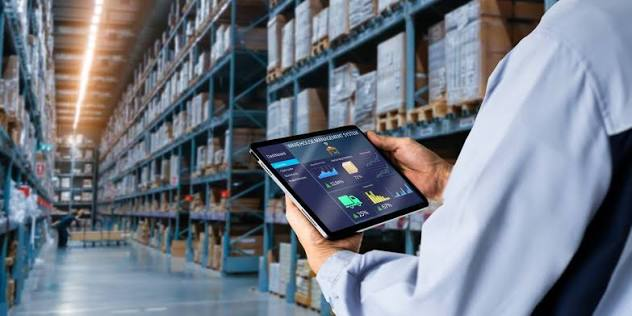
At its core, automated inventory management, replaces manual data entry and reactive decision-making, with real-time visibility and rules-based responses. When a unit sells, stock levels update instantly, across every sales channel — website, marketplace, wholesale portal, wherever. When stock drops below a threshold, the system flags it or triggers a reorder, automatically. When a supplier sends a shipment update, it feeds directly into available inventory projections.
This matters most in businesses that operate across multiple channels simultaneously. Selling the same product on a branded website, Amazon, and through a wholesale account at the same time is genuinely difficult to manage manually. Stock allocated to one channel isn't automatically unavailable to another unless someone updates it, and that update almost always happens a beat too late. Automated systems handle this allocation in real time, preventing the kind of overselling that damages seller ratings and customer relationships at the same time.
Demand forecasting is another function that automation significantly improves. Rather than relying on someone's gut feel about what to reorder and when, automated systems analyse historical sales data, seasonal patterns, and current velocity to generate reorder recommendations grounded in actual numbers. That doesn't eliminate the need for human judgement — there are always external factors a system can't anticipate — but it gives the people making those decisions a much better starting point than a manually updated spreadsheet.
The connection between inventory accuracy and customer experience is more direct than most operators realise until they've experienced both sides of it.
Accurate stock data means product listings show real availability. Customers aren't checking out items that are already gone. Delivery estimates are based on what's actually in the warehouse. Returns triggered by incorrect stock information drop. Each of these things sounds incremental in isolation, but together they shape how customers perceive a brand — and whether they come back.
For ecommerce inventory management specifically, speed of response is everything. A stockout that gets caught and resolved within an hour through automated alerts is a very different problem from one that festers undiscovered over a weekend. Automated systems don't sleep, don't miss notifications, and don't need to be reminded to check something. They run the same checks continuously regardless of whether the operations team is in the office.
Supplier management also improves meaningfully. When a business has clear, real-time visibility into what it has, what it's selling, and what it needs, purchase orders go out earlier and with more accuracy. That means fewer emergency orders at premium prices, fewer stockouts caused by supplier lead times catching the business off guard, and better negotiating leverage with suppliers over time.
Not every ecommerce business needs the same level of automation. A small operation running a handful of SKUs from a single location can get away with simpler tools. But the moment a business starts scaling — adding SKUs, adding channels, adding warehouse locations, adding international markets — manual inventory management stops being a minor inconvenience and starts being a genuine ceiling on growth.
The businesses that scale cleanly are almost always the ones that built proper inventory systems before they needed them, not after the problems started showing up. Getting automated inventory infrastructure from MySellingHub in place while the operation is still manageable makes the transition significantly smoother.