English
 Arabic
 French
 Spanish
 Portuguese
 Deutsch
 Turkish
 Dutch
Dutch
 Italiano
 Russian
 Romaian
 Portuguese (Brazil)
 Greek
Greek
The Secret Behind Gamdie’s Popularity
Games |
2025-10-30 19:23:06
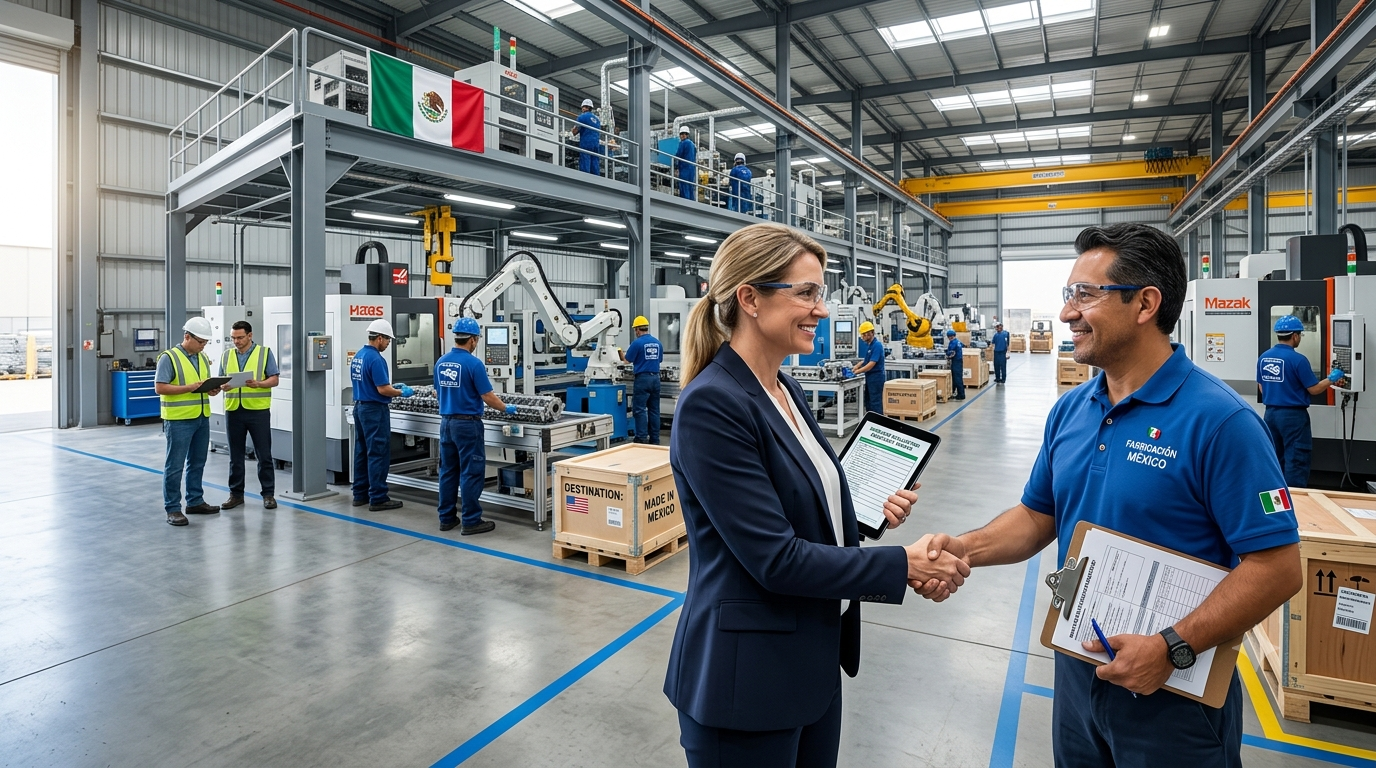
There's a specific kind of silence that happens on a call when a Mexican manufacturer can't answer a question they should have been ready for. It's brief, maybe two or three seconds, but experienced buyers learn to hear it immediately. That pause is often the moment a partnership decision quietly gets made — long before any contract is signed.
Mexico now accounts for a growing share of U.S. manufacturing imports, and interest in nearshoring shows no sign of slowing down. But interest alone doesn't protect you from a bad partnership. The buyers who avoid painful surprises aren't necessarily the most experienced ones — they're the ones asking sharper questions earlier in the process.
If you're preparing to hire a Mexican manufacturer, the questions below are the ones that matter most. Ask them early, ask them directly, and pay close attention not just to the answers but to how confidently they're given.
In this guide, you will learn:
The 12 essential questions to ask any prospective Mexican manufacturer
Why certain "obvious" questions get skipped and what that costs buyers later
How to interpret vague or evasive answers
Common mistakes buyers make during the questioning process
A real-world example of how the right question changed a company's decision
Practical tips for structuring your discovery calls
Most sales presentations are built to answer the questions a manufacturer wants to talk about — capacity, technology, client logos. They're rarely built to proactively answer the questions that actually predict long-term success: financial stability, subcontracting practices, or how they've handled past failures.
Buyers who rely on the presentation alone end up with an incomplete picture. Buyers who come prepared with pointed questions get a much clearer, more honest read on what they're actually signing up for.
This single question reveals more than almost any other. A facility running at 95% capacity has little room to absorb your order without delays elsewhere. Ask for a specific percentage, not a general "we have plenty of room."
Actionable Takeaway: If a manufacturer can't give you a rough utilization figure, treat that as a sign they aren't closely tracking their own operational data — which raises questions about how closely they track other things, too.
A reference from a company ten times your size tells you little about how you'll be treated. Ask specifically for a comparable-size reference, and actually call them.
Don't accept a verbal list. Ask to see the actual certificates, issuing bodies, and audit dates. Certifications lapse more often than buyers assume.
This is one of the most commonly skipped questions — and one of the most important. Undisclosed subcontracting was at the center of the case study below, and it's a far more common practice than most buyers realize.
Listen for a clear, specific process: inspection protocols, defect thresholds, and remediation steps. Vague answers here often mean there's no real process at all.
Labor turnover in Mexican manufacturing hubs varies significantly by region and can directly affect quality consistency. A manufacturer that tracks and manages this proactively is generally a stronger long-term bet.
Peso-to-dollar volatility can affect contract pricing over time. Clarify upfront whether pricing is fixed in USD, tied to the peso, or subject to periodic renegotiation.
Ask for an actual number, not an impression. A manufacturer confident in their performance will usually have this readily available.
The person pitching you in sales meetings often isn't the person managing your account day to day. Ask directly who that will be, and try to speak with them before signing.
This tells you how flexible the relationship will actually be once you're a live client rather than a prospective one.
If duty-free import/export matters for your supply chain, this certification is essential and worth confirming directly rather than assuming.
This is arguably the most revealing question on the list. Every manufacturer has faced a problem at some point. How they describe it — honestly, specifically, and with a clear explanation of what changed afterward — tells you far more than a polished highlight reel ever will.
Actionable Takeaway: Don't ask all 12 questions in a single rushed call. Spread them across two or three conversations so you have time to actually absorb and follow up on the answers, rather than checking boxes.
There's more than one way to structure how you gather this information, and the right approach depends on your team's bandwidth and experience level.
|
Approach |
Best For |
Tradeoff |
|
Self-led questioning (buyer asks directly) |
Companies with prior manufacturing/sourcing experience |
Requires strong internal expertise to interpret answers correctly |
|
Third-party audit or consultant-led discovery |
First-time nearshoring buyers |
Added cost, but reduces risk of missed red flags |
|
Hybrid approach (buyer questions + consultant review) |
Mid-size companies balancing cost and risk |
Slightly slower process, but well-rounded evaluation |
Vague or rounded-off numbers. "Around 80%, I think" instead of a specific utilization figure often signals the data isn't actually tracked.
Defensiveness when asked about past problems. A manufacturer unwilling to discuss a past failure honestly is more concerning than one who describes a real issue and how they fixed it.
Reluctance to provide comparable references. This often means their typical client base doesn't actually match what they're pitching to you.
Inconsistent answers across different people on their team. If the sales contact and the plant manager give noticeably different answers to the same question, that's worth investigating further.
Rushing you toward a decision. Genuine manufacturing partners understand due diligence takes time; pressure to sign quickly is a red flag, not a sign of enthusiasm.
Skipping this questioning process doesn't usually cause immediate failure — it shows up months later, in the form of missed deadlines that get quietly explained away or quality issues that somehow always have a reasonable-sounding excuse.
A home goods company was deep into negotiations with a manufacturer in Guadalajara, impressed by the facility's size and technology. Before finalizing the contract, the company's sourcing manager asked question #4 directly: did they subcontract any part of production?
The initial answer was a quick "no." But when pressed for detail — specifically asking which part of the facility handled final assembly versus components — the manufacturer's plant manager acknowledged that roughly 20% of components were sourced from a third-party supplier during peak periods, something the sales team hadn't disclosed.
That single follow-up question led the company to negotiate explicit subcontracting disclosure clauses into the contract, along with the right to approve any third-party involvement in production. Eighteen months later, when the manufacturer did need to subcontract briefly during a demand spike, the company was informed in advance exactly as agreed, with no surprises and no quality disruptions.
Without that one question — and the follow-up that came with it — the company would have had no contractual protection when subcontracting eventually happened anyway.
|
Question Area |
Confident Answer Looks Like |
Vague Answer Looks Like |
|
Capacity |
"We're running at roughly 70% utilization" |
"We have plenty of capacity" |
|
On-time delivery |
"94% on-time over the past year" |
"We're pretty reliable" |
|
Subcontracting |
"We subcontract X component during peak season, disclosed in advance" |
"No, we handle everything in-house" (without detail) |
|
Past problems |
Specific example with root cause and resolution |
"We haven't really had any major issues" |
Send questions in advance for at least one call, so you get thoughtful, prepared answers rather than only off-the-cuff responses.
Take detailed notes on tone, not just content. Hesitation, defensiveness, or over-rehearsed answers all carry useful information.
Include a technical team member on at least one call, not just procurement or sales staff, so specification-level questions get accurate answers.
Follow up in writing after verbal answers to confirm details in an email — this also creates a useful paper trail if discrepancies show up later.
Trust patterns over single answers. One vague response isn't necessarily disqualifying; a pattern of vague or shifting answers across multiple questions usually is.
What's the single most important question to ask a Mexican manufacturer? Asking about current capacity utilization tends to be the most revealing single question, since it directly affects how much attention and priority your order will realistically receive.
Should I ask these questions before or after receiving a formal quote? Ideally before. Understanding capacity, certifications, and subcontracting practices upfront helps you interpret the quote accurately rather than comparing numbers in isolation.
How do I know if a manufacturer is being evasive versus simply cautious? Evasiveness usually involves vague, rounded, or shifting answers across different team members. Genuine caution typically comes with a clear explanation of why they're not sharing certain details yet.
Is it rude to ask a Mexican manufacturer about past production problems? No — reputable manufacturers expect and respect thorough due diligence. A partner who reacts defensively to reasonable questions is revealing something worth paying attention to.
How many of these questions should I ask before signing a contract? All 12 are worth covering in some form, though the depth of follow-up should scale with your order size and risk exposure. Larger, longer-term contracts warrant deeper investigation.
Hiring a Mexican manufacturer is a significant decision, and the quality of that decision depends heavily on the quality of the questions you ask before signing anything. The buyers who avoid painful surprises aren't necessarily lucky — they're the ones who took the time to ask, listen carefully, and follow up when an answer felt incomplete.
If you're preparing for these conversations and want extra confidence heading in, consider bringing in an experienced sourcing consultant to help structure your questions and interpret the answers. A little extra diligence now is almost always cheaper than the alternative later.