English
 Arabic
 French
 Spanish
 Portuguese
 Deutsch
 Turkish
 Dutch
Dutch
 Italiano
 Russian
 Romaian
 Portuguese (Brazil)
 Greek
Greek
Fugazi Clothing | Fugazi Official Website | Sale UpTo 40% off
Literature |
2025-11-01 14:00:28
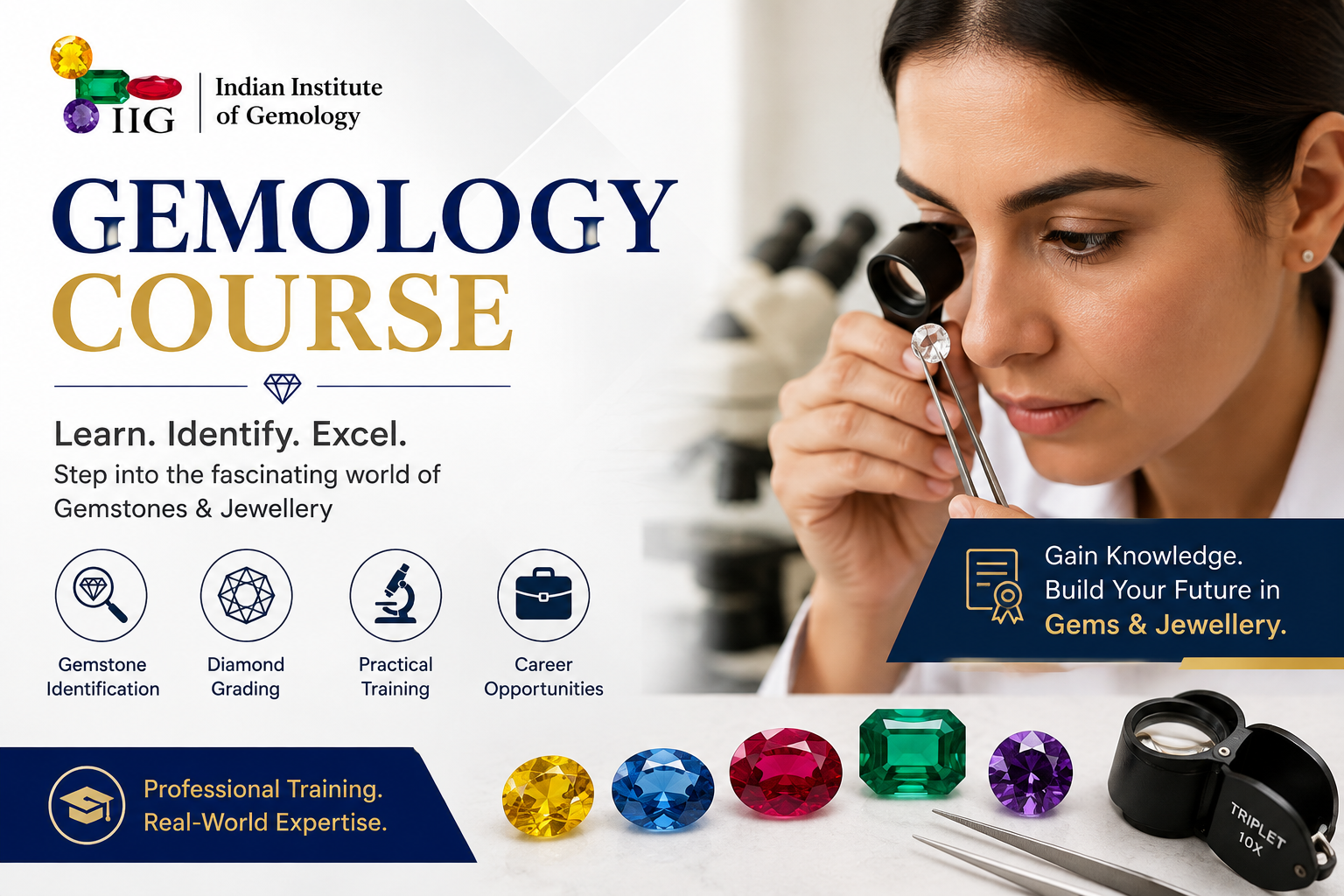
A Gemology Course trains you to identify, grade, and value gemstones like diamonds, rubies, sapphires, and emeralds using scientific tools such as refractometers and spectroscopes. Courses typically run from a few weeks (certificate) to several months (diploma), require no strict prior degree, and lead to careers as gemologists, jewelry valuers, or gem lab analysts. The Indian Institute of Gemology (IIG) in Delhi offers one of India's most recognized gemology programs, combining lab-based training with industry exposure.
Gemology is the applied science of identifying, evaluating, and grading natural and synthetic gemstones. It sits at the intersection of geology, chemistry, and craftsmanship.
With India's gems and jewelry sector contributing significantly to export earnings and employing millions across manufacturing, retail, and trade, trained gemologists are in steady demand — not just in Delhi's jewelry hubs but globally, from Antwerp to Bangkok.
A gemology course isn't just for aspiring jewelers. It's valuable for:
Jewelry business owners who want to buy and price stones confidently
Retail and export professionals verifying gem authenticity
Hobbyists and collectors who want expert-level knowledge
Career switchers looking for a specialized, recession-resistant skill
A well-structured gemology course goes far beyond "look at a stone and guess its name." Here's what a genuine curriculum covers.
Core Gem Identification Skills
Physical and optical properties of gemstones (refractive index, specific gravity, pleochroism)
Use of gemological instruments: refractometer, polariscope, dichroscope, spectroscope, microscope
Distinguishing natural stones from synthetics, simulants, and treated gems
Diamond Grading (The 4Cs and Beyond)
Cut, Color, Clarity, and Carat weight assessment
Diamond grading using loupes and microscopes, aligned with international standards (GIA/IGI-style methodology)
Fluorescence and inclusion mapping
Colored Stone Expertise
Ruby, sapphire, emerald, and semi-precious stone identification
Origin determination basics (Kashmir sapphire vs. Ceylon sapphire, Colombian vs. Zambian emerald)
Treatment detection — heat treatment, oiling, fracture filling, dyeing
Practical and Business Skills
Gem valuation and pricing methodology
Report writing and certification standards
Basics of jewelry design appreciation and market trends
Expert Insight: Employers in the gem trade consistently rank hands-on instrument practice above theoretical knowledge alone. A course heavy on lab hours — not just lectures — produces job-ready gemologists faster.
|
Course Type |
Typical Duration |
Best For |
|
Certificate in Gemology |
4–8 weeks |
Beginners, jewelry retailers, hobbyists |
|
Diploma in Gemology |
3–6 months |
Career-focused students, lab aspirants |
|
Diamond Grading Course |
4–6 weeks |
Diamond traders, appraisers |
|
Advanced/Professional Gemology |
6–12 months |
Those aiming for gem lab or valuation roles |
Most institutes structure courses around weekday, weekend, or fast-track batches, making it feasible for working professionals to enroll without quitting their jobs.
Delhi isn't just India's capital — it's one of the country's most active jewelry and gem trading hubs, home to established markets, wholesale traders, and export houses. Studying gemology here offers practical advantages:
Direct market access: Students can visit jewelry markets and trading centers to see real transactions and stone assessments firsthand.
Industry mentorship: Delhi's gem trade concentration means more opportunities to learn from practicing gemologists and valuers.
Placement and networking: Proximity to jewelry manufacturers, export firms, and retail chains improves internship and job prospects.
This is precisely why searches for the best gemology course in Delhi have grown — students want both academic rigor and real-world market exposure in one place.
Not every course delivers the same value. Before enrolling, evaluate institutes on these criteria:
Instrument access: Does the course provide hands-on time with a refractometer, polariscope, and spectroscope — not just demonstrations?
Faculty credentials: Are instructors practicing gemologists or valuers, not just academic teachers?
Curriculum depth: Does it cover both diamonds and colored stones, plus treatment/synthetic detection?
Certification recognition: Is the certificate respected within the trade and by employers?
Practical exposure: Does the program include market visits, lab practicals, or internship support?
Batch size: Smaller batches typically mean more individual instrument time.
The Indian Institute of Gemology (IIG) in Delhi is built around these exact priorities — combining structured theory with extensive lab practice and exposure to the local gem trade, making it a strong option for students who want practical, industry-relevant training rather than a purely academic certificate.
A gemology qualification opens several professional routes:
Certified Gemologist — working independently or with a jewelry brand
Gem Grading Lab Analyst — assessing and certifying stones at testing laboratories
Jewelry Valuer/Appraiser — for insurance, resale, or auction purposes
Jewelry Buyer/Merchandiser — sourcing gemstones for retail or export businesses
Gemstone Trader/Entrepreneur — buying, grading, and selling stones independently
Jewelry Designer with Gem Expertise — a strong differentiator for design careers
Many graduates also use gemology knowledge to strengthen existing family businesses in jewelry manufacturing or retail, where informed sourcing directly improves profit margins.
Start with a certificate course before committing to a longer diploma, to confirm genuine interest.
Practice identifying stones with a basic loupe and refractometer outside class hours — repetition builds speed.
Visit gem and jewelry trade shows to see real market pricing and negotiation.
Keep a personal reference log of stone properties you've tested; it becomes an invaluable field guide.
Ask about post-course mentorship or internship support before enrolling — this often matters more than the certificate itself.
1. What is the duration of a typical gemology course?
Most certificate courses run 4–8 weeks, while diploma programs can take 3–6 months, depending on depth and lab-hour requirements.
2. Do I need a science background to study gemology?
No strict science degree is required. A basic interest in chemistry or geology helps, but reputable courses teach the fundamentals from scratch.
3. Is gemology a good career option in India?
Yes. India's large jewelry manufacturing and export sector creates consistent demand for certified gemologists, valuers, and lab analysts, especially in trading hubs like Delhi, Mumbai, and Surat.
4. What is the best gemology course in Delhi for beginners?
Look for a course offering hands-on instrument training, colored stone and diamond grading modules, and market exposure — criteria the Indian Institute of Gemology's programs are structured around.
5. How much can a certified gemologist earn?
Earnings vary by role and experience — entry-level lab analysts and valuers typically start modestly, while experienced independent gemologists, appraisers, and traders can earn significantly more based on client base and specialization.
Gemology is a rare career path that blends science, business acumen, and craftsmanship — and it's more accessible than most people assume. Whether you're aiming to work in a gem lab, start a jewelry business, or simply understand what you're buying, the right course makes all the difference between surface-level knowledge and genuine expertise.
If you're searching for a gemology course with real lab practice and market-relevant training, the Indian Institute of Gemology in Delhi offers a curriculum designed around industry needs, not just textbooks.