English
 Arabic
 French
 Spanish
 Portuguese
 Deutsch
 Turkish
 Dutch
Dutch
 Italiano
 Russian
 Romaian
 Portuguese (Brazil)
 Greek
Greek
Ultra-Fine Copper Powder Market Outlook Driven by Advanced Electronics and Sustainable Energy Technologies
Other |
2026-07-06 06:40:51
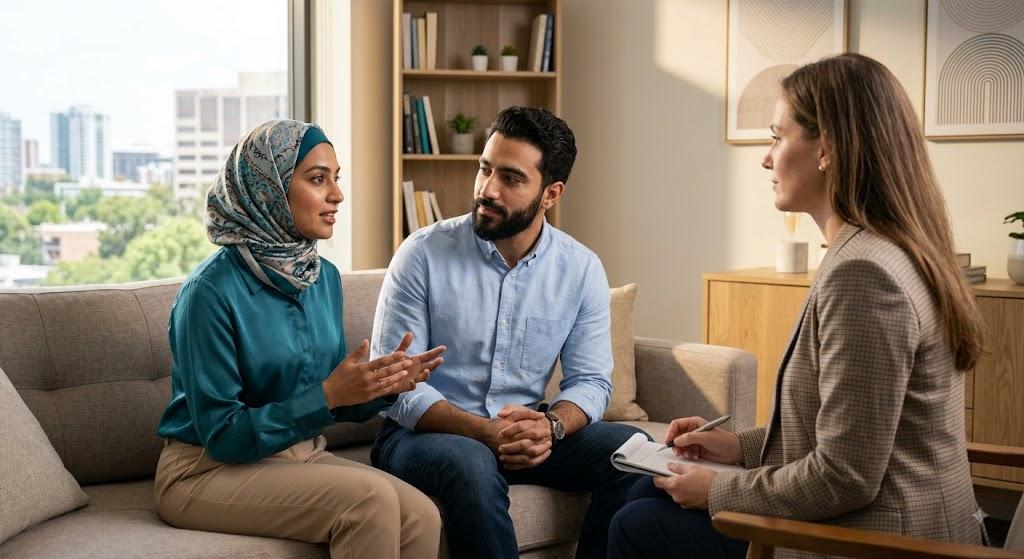
 Every marriage experiences challenging periods. Work pressure, financial concerns, parenting differences, extended family expectations, communication difficulties, and major life changes can place strain on a relationship. For couples living away from their home country, adapting to a different environment can add another layer of pressure. Marital therapy, also known as couples therapy or marriage counselling, provides a structured setting where partners can work through relationship difficulties with professional guidance.
A common misconception is that couples therapy is only for relationships facing serious problems. Another is that a therapist will decide who is right or wrong. In reality, a trained marital therapist acts as a neutral professional who helps both partners communicate more effectively, understand different perspectives, and work towards mutually agreed goals.
Couples seek therapy for many reasons. These can include repeated arguments, communication breakdowns, loss of trust, emotional distance, disagreements about parenting, or difficulties adjusting to major life changes.
Therapy can also be useful when there is no major crisis. Some couples choose professional support because they want to strengthen communication and address smaller concerns before they become more difficult.
Early sessions usually give both partners an opportunity to explain their concerns and describe the relationship from their own perspective. The therapist may explore the couple's history, strengths, communication patterns, and areas of ongoing tension.
As therapy progresses, sessions may focus on several important areas.
Communication: Couples can learn how to express concerns clearly without blame and listen to each other without immediately becoming defensive.
Conflict patterns: The therapist can help identify recurring cycles that cause disagreements to escalate and introduce healthier ways to respond.
Understanding needs: Each partner can learn to communicate emotional and practical needs more openly and respectfully.
Rebuilding connection: Couples may develop practical strategies to improve trust, cooperation, emotional closeness, and shared decision-making.
The specific approach depends on the couple's circumstances and the goals they establish with their therapist.
Communication problems are often at the centre of relationship difficulties. Partners may talk frequently but still feel unheard or misunderstood. Conversations can quickly become arguments when one person feels criticised and the other becomes defensive.
Marital therapy provides a structured environment for slowing these interactions down. Couples can learn to identify what is happening beneath an argument and communicate concerns in ways that are more likely to lead to understanding.
These skills can then be practised outside the therapy room in everyday conversations.
Marriage can bring together different cultures, languages, family traditions, and expectations. This can be particularly relevant for couples living in multicultural communities.
A culturally sensitive therapist recognises that every relationship exists within a wider family and social context. Extended family involvement, expectations around parenting, religious or cultural traditions, and different communication styles may all influence a couple's experience.
Effective therapy should respect the couple's values rather than impose a single idea of what a successful marriage should look like.
There is no requirement to wait until a relationship reaches a crisis before seeking help. Couples may consider therapy when they notice persistent arguments, emotional distance, difficulty communicating, unresolved disagreements, or a decline in trust.
For couples exploring relationship counseling uae, professional guidance can provide a neutral environment to discuss concerns and develop healthier ways of interacting.
Those searching for marital therapy uae may also benefit from choosing a qualified therapist who understands relationship dynamics and can adapt the therapeutic approach to the couple's individual circumstances.
Seeking support does not mean a relationship has failed. It can simply mean that both partners recognise an issue and are willing to work on it together.
The outcome of couples therapy depends on many factors, including the nature of the concerns, the length of time problems have existed, the therapeutic approach, and both partners' willingness to participate.
Many couples find that therapy helps them communicate more constructively, understand recurring patterns, and develop practical strategies for managing disagreements. Progress can take time, and a qualified therapist should provide realistic guidance about what therapy can and cannot achieve.
Seeking support earlier can sometimes make it easier to address problems before patterns become deeply established.
Couples can access marital therapy at Al Soor Specialist Clinic, a multidisciplinary mental health clinic located on Mina Road in Al Soor. The clinic has been serving the community since 2011 and provides psychiatry, clinical psychology, psychotherapy, marital therapy, child guidance, speech therapy, and occupational therapy services.
Care is provided in a private, professional, supportive, and non-judgmental environment, with attention to each couple's individual circumstances and cultural background.
If a relationship has started to feel strained, distant, or stuck, reaching out for professional support is not an admission of failure. It can be a constructive decision that gives both partners an opportunity to communicate, understand each other, and work towards a healthier relationship.
This article was prepared by the team at Al Soor Specialist Clinic. The clinic provides psychiatry, clinical psychology, psychotherapy, marital therapy, child guidance, speech therapy, and occupational therapy services. Learn more at mentalhealthwithalsoor.com.