English
 Arabic
 French
 Spanish
 Portuguese
 Deutsch
 Turkish
 Dutch
Dutch
 Italiano
 Russian
 Romaian
 Portuguese (Brazil)
 Greek
Greek
Silver Diamond Earrings That Elevate Elegance and Timeless Style
Other |
2026-03-28 06:08:26
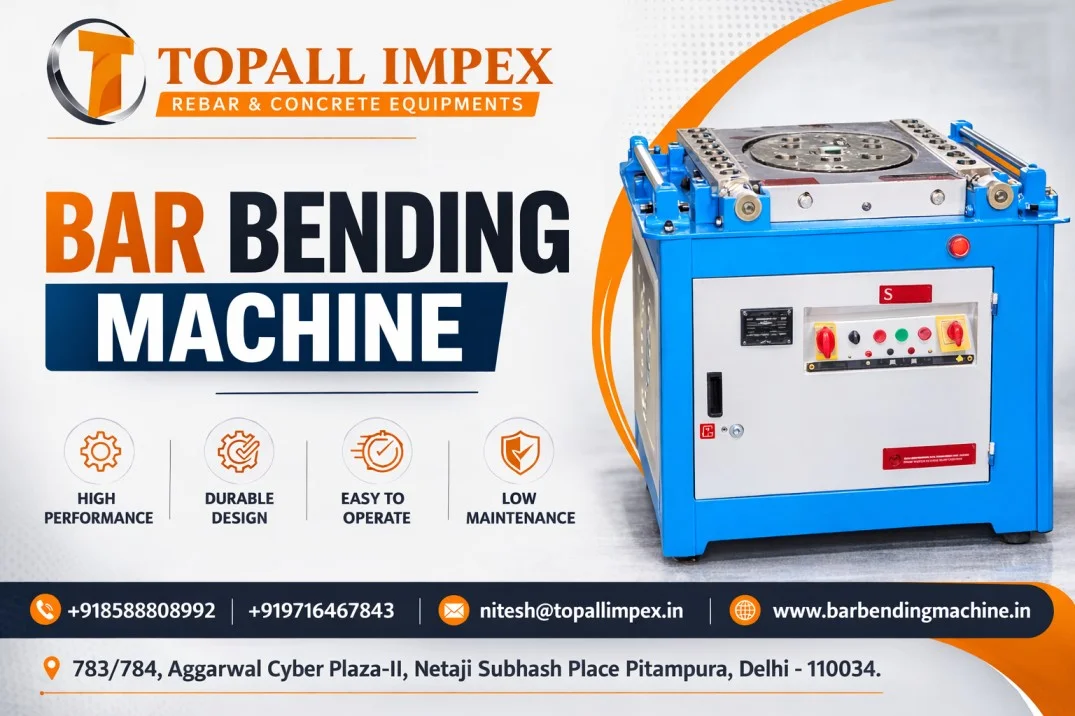
Compare manual vs automatic bar bending machines by cost, accuracy, speed, labor, and efficiency. Choose the right machine for your project—read now!
Bar bending is an essential process in construction projects where reinforcement bars or rebars need to be shaped according to specific designs. The quality and accuracy of rebar bending directly affect construction efficiency, structural requirements, and material usage. Traditionally, manual bar bending methods were widely used, but automatic bar bending machines have become increasingly popular as construction companies look for greater productivity and consistency.
Choosing between a manual and automatic bar bending machine depends on several factors, including project size, production requirements, budget, labor availability, and the level of precision needed. Understanding the differences between these two options can help contractors and construction businesses make a practical investment decision.
A manual bar bending machine is designed to bend reinforcement bars with greater mechanical assistance than completely hand-operated methods, while still requiring significant operator involvement. The worker generally positions the bar, sets the bending arrangement, and controls the bending operation.
Manual machines are often preferred for smaller construction projects, workshops, repair work, and applications where the volume of rebar bending is relatively low.
One of the biggest advantages of a manual machine is its simplicity. Operators can understand and manage the machine without extensive technical training, making it suitable for businesses that do not require continuous high-volume production.
An automatic bar bending machine uses advanced mechanical, electrical, or programmable systems to perform bending operations with reduced manual intervention. Depending on the machine model, operators can set bending angles, dimensions, and sequences before the machine performs the required operation.
Automatic machines are particularly useful for large construction projects, reinforcement fabrication facilities, infrastructure projects, and businesses handling high volumes of rebar.
Modern automatic machines can significantly streamline rebar fabrication by allowing multiple bars to be processed efficiently according to predefined requirements.
The major difference between manual and automatic bar bending machines is the level of automation and operator involvement. However, several other factors should be considered before choosing one.
Manual machines are suitable when bending requirements are limited. However, production can become slower when large quantities of reinforcement bars need to be processed.
Automatic machines can complete repetitive bending operations much faster. This makes them a better choice for contractors working with tight project deadlines or high daily production requirements.
Winner: Automatic bar bending machine
Accuracy is critical when reinforcement bars must follow specific construction drawings and specifications. Manual operations may depend heavily on the operator's experience and consistency.
Automatic machines can provide more repeatable bending results when correctly set up and operated. This reduces variations between multiple bars and helps maintain consistency throughout a project.
Winner: Automatic bar bending machine
Manual bar bending requires more operator involvement. Workers need to position bars, control the process, measure dimensions, and monitor bending operations.
Automatic machines reduce repetitive manual tasks. Although trained personnel are still required for operation, setup, supervision, and maintenance, overall labor dependency can be lower.
Winner: Automatic bar bending machine
Cost is one of the most important considerations for construction businesses. Manual machines generally have a lower initial purchase price and can be more accessible for small contractors.
Automatic machines typically require a higher investment because of their advanced control systems, automation features, and higher production capabilities.
However, the initial price should not be the only consideration. Businesses should also evaluate operating costs, productivity, labor savings, maintenance, and expected machine utilization.
Winner: Manual bar bending machine for lower initial investment
Manual machines generally have straightforward operating mechanisms. Workers can learn basic operation relatively quickly, depending on the equipment design.
Automatic machines may require training to understand control systems, programming, settings, and safety procedures. Once operators are trained, however, automatic operation can make repetitive bending tasks more convenient.
Winner: Manual for simplicity; automatic for streamlined production
For occasional or low-volume bending requirements, investing in a highly automated machine may not always be necessary.
For projects involving large quantities of reinforcement steel, automatic machines can offer significant productivity advantages.
Winner: Automatic bar bending machine for high-volume production
A manual machine may be economical when production requirements are limited. But as production increases, businesses may face greater labor requirements and longer processing times.
Automatic machines can provide better long-term efficiency for companies that consistently process large quantities of rebar. Higher productivity can help businesses complete more work within the same operating period.
Winner: Automatic bar bending machine for high-volume users
Manual bar bending machines continue to have an important role in the construction industry. Their main advantages include:
They can be a practical choice for small contractors, local fabrication workshops, and projects where production volume does not justify advanced automation.
Automatic machines are designed for businesses that prioritize productivity, precision, and repeatability.
Key benefits include:
For large infrastructure, commercial, industrial, and residential construction projects, these advantages can make automatic equipment a valuable addition to a rebar fabrication operation.
There is no single answer because the right machine depends on your operational requirements.
Choose a manual bar bending machine if:
Choose an automatic bar bending machine if:
Before purchasing a bar bending machine, consider more than just the machine price. Evaluate the diameter and type of bars you commonly process, required bending angles, production volume, motor and power requirements, operating environment, machine durability, maintenance requirements, spare parts availability, and manufacturer support.
It is also important to choose equipment from a reliable supplier that can provide installation guidance, operator training, technical assistance, and after-sales support. A machine that meets your production requirements but lacks dependable service support may create unnecessary downtime in the future.
Both manual and automatic bar bending machines have their own advantages. Manual machines can be an economical and practical solution for small-scale construction and low-volume rebar bending. Automatic machines, on the other hand, are better suited to businesses that require high productivity, consistent results, and efficient large-scale operations.
The best choice ultimately depends on your project size, production volume, workforce, budget, and long-term business goals. Before making a purchase, compare machine specifications, operating costs, productivity, maintenance requirements, and supplier support.
For businesses handling increasing volumes of reinforcement steel, an automatic bar bending machine can provide the speed and consistency needed to improve overall fabrication efficiency. For smaller operations with limited requirements, a manual bar bending machine may provide the right balance between affordability and functionality.
The key is to choose a machine that matches your actual workload—not simply the machine with the most features. A well-matched bar bending machine can help improve productivity, reduce operational challenges, and support more efficient construction processes.