English
 Arabic
 French
 Spanish
 Portuguese
 Deutsch
 Turkish
 Dutch
Dutch
 Italiano
 Russian
 Romaian
 Portuguese (Brazil)
 Greek
Greek
The Cost of Freedom: A Comprehensive Guide to Motorcycles Insurance Cost Factors
Other |
2026-08-19 13:47:18
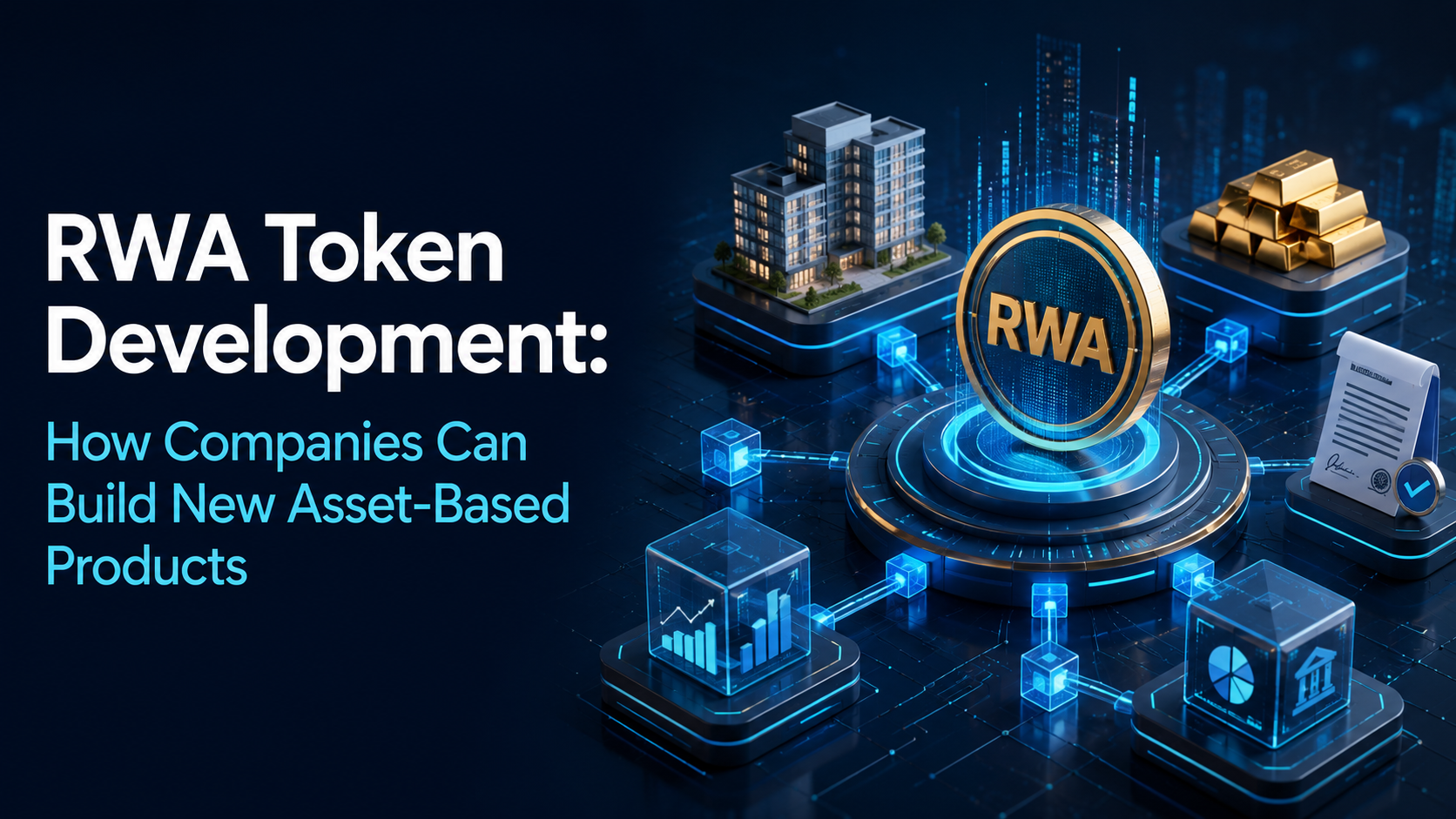
Companies are looking at digital assets for reasons that go beyond cryptocurrency trading. Real estate, commodities, private credit, art, infrastructure, intellectual property, and other assets can now be represented through blockchain-based tokens. This creates a different way to structure financial products, ownership models, investment programs, and asset access.
RWA Token Development focuses on converting rights connected to physical or financial assets into digital tokens. The process involves more than writing a smart contract. A company needs to decide what an asset represents, how ownership or economic rights are recorded, who can purchase the tokens, how compliance is handled, and where secondary transactions can take place.
RWA Tokenization can give businesses a framework for creating products around assets that traditionally have been difficult to divide, transfer, or access. However, the product model needs to be planned carefully. Legal structures, asset verification, custody, token design, investor rules, blockchain selection, and platform functions all influence the final product.
This article explains how companies can approach RWA Token Development and create asset-based products suited to different business models.
RWA Token Development is the process of designing and launching blockchain-based tokens that represent ownership, rights, claims, income participation, or other interests associated with real-world assets. The token itself does not automatically represent legal ownership. Its meaning depends on the legal agreement, asset structure, jurisdiction, and rights assigned to token holders.
For example, a company holding a commercial property may create tokens linked to shares in a legal entity that owns the property. Another business could issue tokens representing claims against private credit instruments. A commodity business may use tokens to represent rights connected to stored inventory.
The first step is therefore defining the relationship between the physical or financial asset and the digital token. Once this relationship is established, the company can decide how the token should be issued, transferred, stored, and redeemed.
Companies should begin by deciding what product they want customers or investors to receive. The asset category alone does not determine the product structure.
A real estate company might create fractional investment tokens that represent interests in rental income. A private credit firm could issue tokens connected to debt instruments. An art business may create tokens linked to ownership interests in collectible assets. A commodities company could create tokens associated with verified units of inventory.
The product should define several factors:
This product-first approach helps the company decide which technical and legal components are needed later.
The value proposition of an asset-based token depends heavily on the asset behind it. Companies therefore need a process for collecting documentation and verifying ownership or contractual rights before issuing tokens.
For real estate, this may include title records, valuation reports, property agreements, insurance documents, tax records, and financial statements. For private credit, documentation may include loan agreements, borrower information, repayment terms, collateral records, and risk assessments.
Commodity-based products may require warehouse records, inspection reports, quantity information, and custody details. Each asset class has its own documentation requirements.
Real World Asset Tokenization should therefore begin with asset preparation rather than token creation. The company needs to establish how asset information will be recorded and updated throughout the product's lifecycle.
A token should have a defined legal relationship with its underlying asset. Companies commonly use legal entities, contractual rights, trusts, funds, or other structures depending on the asset and jurisdiction.
Suppose a company wants to tokenize a property. It could create a legal entity that owns the property and issue tokens representing interests associated with that entity. Investors would then hold digital tokens connected to contractual or legal rights rather than simply receiving an entry on a blockchain.
Legal professionals should determine whether the token represents equity, debt, revenue participation, beneficial ownership, contractual claims, or another type of interest. Securities regulations, investor restrictions, tax obligations, transfer rules, and reporting requirements can also influence the structure.
A well-defined legal model gives the technical system something precise to represent.
Token economics should reflect the actual asset and the product's commercial purpose. Companies need to determine the total token supply, unit value, investor allocation, income distribution method, transfer restrictions, redemption process, and other token rules.
For example, a property valued at $10 million could be represented through 1 million units, with each unit linked to a defined economic interest. The number of tokens alone does not determine value. The legal rights, income potential, asset valuation, expenses, and market demand all matter.
Some products may distribute rental income or interest payments to eligible token holders. Others may provide redemption rights after a specific period. Some may restrict transfers to verified participants.
Token economics should therefore be connected to the financial model of the underlying asset instead of being treated as a separate blockchain exercise.
The blockchain becomes the technical environment where token records and transactions are maintained. Companies can evaluate networks based on transaction costs, smart contract capabilities, ecosystem support, wallet compatibility, transaction speed, privacy requirements, and regulatory considerations.
Ethereum-based networks remain common for tokenized asset applications, while other networks may be considered depending on the product's requirements.
The choice should also account for future integrations. If the company plans to connect its token platform with custody providers, identity systems, payment services, analytics tools, or trading venues, network compatibility becomes important.
The objective is not simply to select a popular blockchain. The network should fit the transaction pattern and operational requirements of the asset-based product.
Smart contracts define how tokens behave on the selected blockchain. A contract may handle issuance, transfers, ownership records, distribution rules, whitelisting, freezing, redemption, and other functions.
Asset-backed products often require restrictions that are not common in ordinary cryptocurrency tokens. For instance, a company may allow transfers only between verified wallets. Certain jurisdictions may be restricted. Some investors may have holding limits or lock-in periods.
Smart contracts should therefore reflect the legal and business rules of the product.
Before deployment, contracts should go through testing and security review. Errors in token logic can affect ownership records and transactions, making contract quality an important part of RWA Token Development.
Asset-based financial products frequently require identity verification and investor eligibility checks. A platform may need KYC and AML procedures before users can purchase or transfer tokens.
A typical workflow can include account registration, identity verification, sanctions screening, investor classification, wallet approval, token purchase, and transaction monitoring.
Permissioned token systems can restrict transfers to approved wallets. The platform can maintain records showing which users are eligible to hold particular assets.
This approach is especially relevant when tokens represent regulated financial interests. Compliance rules vary between jurisdictions, so companies should determine their regulatory obligations before finalizing the platform workflow.
The token represents an asset, but users also need information about that asset. A tokenization platform can display valuation information, ownership records, income data, documents, transaction history, and other relevant details.
For example, a real estate product could show property information, occupancy figures, rental income, expenses, valuation updates, and token ownership records.
Data may come from internal databases, custodians, property managers, valuation providers, auditors, or other external systems. The company should establish how information is collected, verified, updated, and displayed.
This connection between off-chain asset information and on-chain token records is an important part of Real World Asset Tokenization Services.
The customer interface should make the asset product understandable to its intended audience. Investors may need to review assets, complete verification, purchase tokens, view holdings, monitor distributions, and request redemptions.
The administration interface can provide functions for asset onboarding, investor management, token issuance, compliance review, transaction monitoring, document management, reporting, and distribution management.
Companies can also create different access levels for administrators, compliance teams, asset managers, issuers, and investors.
A practical interface reduces confusion around what the token represents and how the product operates.
Issuing a token does not automatically create a market for it. Companies need to decide whether tokens can be traded and, if so, where and under what conditions.
A business may operate a dedicated marketplace, integrate with an eligible secondary trading venue, or initially limit transfers between approved investors.
Liquidity depends on several factors, including investor demand, transfer restrictions, asset quality, product structure, market access, and regulatory conditions.
For this reason, companies should consider secondary transactions during the initial product design instead of treating them as a later feature.
Companies that do not have an internal blockchain team may work with an RWA Tokenization Company to manage different stages of development. Depending on the provider, services can include asset token design, smart contract development, platform development, wallet integration, compliance workflows, marketplace functions, and deployment.
RWA Tokenization Services can also be used for specific components rather than an entire platform. A company may already have a legal structure and asset management system but require blockchain development and token issuance functions.
When selecting an RWA tokenization development company, businesses should review its experience with the relevant asset category, smart contract standards, compliance requirements, platform architecture, security practices, and post-launch support.
A dedicated platform can bring asset onboarding, token issuance, investor management, trading, compliance, and reporting into one environment.
rwa tokenization platform development may include modules such as:
The exact module set depends on the product model. A private credit platform may require different functions from a real estate investment platform.
Testing should cover both the blockchain layer and the wider business workflow. Smart contracts need functional and security testing, while the platform needs testing for registration, verification, payments, token transfers, reporting, and administrative actions.
Companies should also test unusual scenarios. These may include failed payments, rejected investors, restricted wallets, incorrect asset data, redemption requests, contract pauses, and failed transactions.
A controlled pilot with a limited number of assets and users can provide useful feedback before a wider launch.
RWA Token Development does not end when tokens are issued. The company needs ongoing asset management, investor communication, compliance reviews, reporting, contract monitoring, and platform maintenance.
Underlying assets can change in value. Properties may change tenants. Loans may be repaid or restructured. Commodity inventories may move. Corporate actions may affect investor rights.
The platform therefore needs procedures for updating asset information and reflecting relevant events in token-holder records.
Ongoing management is particularly important because the token represents a relationship with an asset that continues beyond the initial issuance.
RWA Token Development gives companies several possible product directions. A real estate business could create fractional property investment products. A financial institution could develop tokenized credit products. An infrastructure company could represent participation in selected infrastructure assets. An art business could create investment products connected to collectible assets.
The same concept can also support fund interests, invoices, royalties, equipment financing, commodities, and other asset categories.
The important factor is the relationship between the asset, legal rights, token, investor, and platform. When these components are designed together, companies can create products that have a defined commercial purpose rather than simply issuing digital tokens.
RWA Token Development gives companies a practical framework for creating digital products linked to real-world assets, from property and private credit to commodities, infrastructure, collectibles, and other financial interests. The process involves asset verification, legal structuring, token economics, blockchain selection, smart contracts, investor compliance, platform development, trading arrangements, and ongoing asset administration. Companies can use RWA Tokenization to develop products that represent specific ownership or economic rights while maintaining a connection between on-chain records and off-chain assets. Working with an experienced RWA tokenization development company can also help businesses manage the technical requirements involved in launching such products. Blockchain App Factory provides RWA tokenization development services for companies planning asset tokenization platforms, token issuance systems, and related blockchain products.
RWA Token Development is the process of creating blockchain-based tokens that represent ownership, economic rights, claims, or other interests connected to real-world assets.
Real estate, private credit, commodities, infrastructure, art, collectibles, invoices, funds, equipment, and other eligible assets can be considered for tokenization, subject to the relevant legal and regulatory requirements.
RWA Tokenization refers to representing real-world asset rights through blockchain tokens. RWA Token Development covers the technical and product work involved in creating the token, smart contracts, platform, integrations, and related systems.
Companies may use Real World Asset Tokenization to create fractional investment products, digital ownership records, asset-based financial products, and controlled transfer mechanisms for eligible assets.
A platform may include asset onboarding, investor verification, token issuance, wallet management, smart contracts, asset information, portfolio management, trading, distributions, compliance, and administration modules.
RWA Tokenization Services can cover activities such as token design, smart contract development, platform creation, blockchain integration, compliance workflows, wallet integration, marketplace development, testing, and maintenance.
An RWA tokenization development company can handle the technical development of tokenization products, including smart contracts, blockchain infrastructure, user interfaces, administration systems, integrations, and platform deployment.
They can be tradable when the product structure and applicable regulations permit it. Companies may use approved secondary marketplaces or create controlled transfer mechanisms for eligible investors.
Legal structuring defines what the token represents and what rights token holders receive. It can also determine investor eligibility, transfer restrictions, taxation, reporting, and regulatory obligations.
The timeline varies according to asset type, legal structure, platform functions, blockchain network, compliance requirements, integrations, and testing scope. A simple token project may require less time than a full asset marketplace with investor and compliance systems.