English
 Arabic
 French
 Spanish
 Portuguese
 Deutsch
 Turkish
 Dutch
Dutch
 Italiano
 Russian
 Romaian
 Portuguese (Brazil)
 Greek
Greek
Print Cute Coloring Pages - Fun, Creative & Free Printable Designs
Art |
2026-08-19 05:20:10
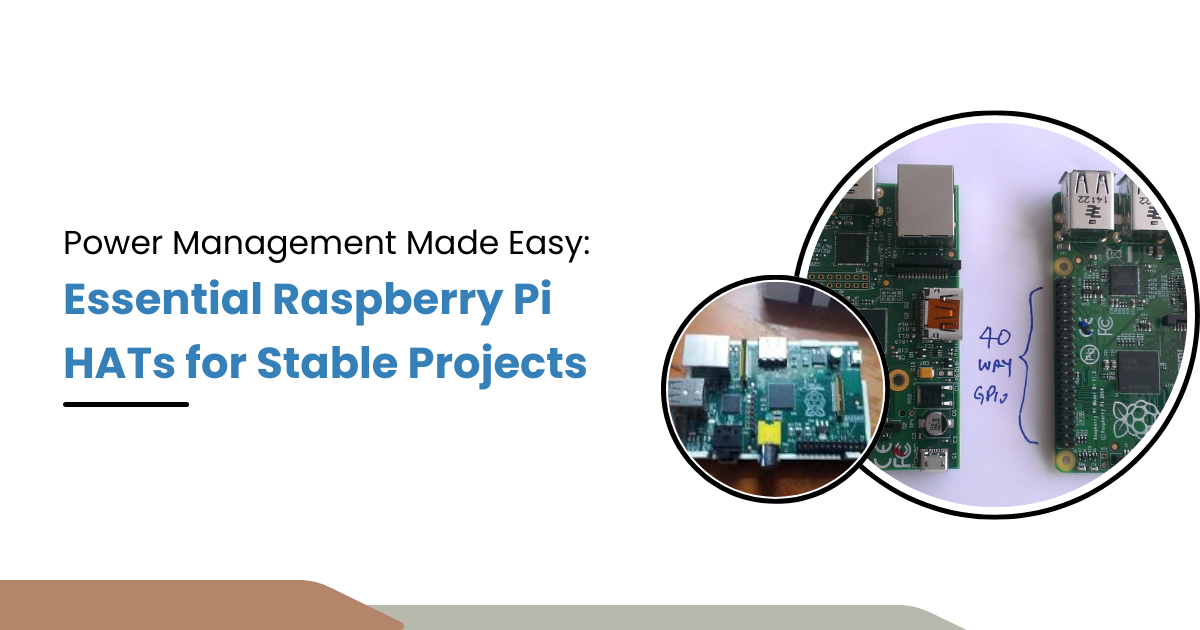
Raspberry Pi systems now run far beyond hobby environments. They include power kiosks, industrial gateways, smart agriculture nodes, and remote monitoring devices. These deployments demand stable power behavior, not just basic functionality.
Recent embedded market studies show that over 58% of edge computing failures relate to unstable power input or improper shutdown cycles. Another report found that nearly 35% of field Raspberry Pi deployments face storage corruption due to sudden power loss. In IoT environments, downtime caused by power instability can increase maintenance costs by 20–30% annually.
These numbers highlight a key reality. Processing power matters, but power integrity determines long-term reliability.
This is where Raspberry Pi HATs designed for power management play a critical role. They regulate supply, protect storage, enable remote deployment, and ensure controlled shutdown behavior. When paired with connectivity solutions such as a Raspberry Pi 4G LTE HAT, they allow stable operation even in unmanned locations.
Many developers underestimate the power of design during prototyping. A USB adapter may work on a desk. Field environments behave differently.
Real deployments face voltage fluctuations, battery drain cycles, unplanned outages, long cable losses, remote reboot challenges, and environmental noise. Unlike industrial PLCs, Raspberry Pi boards lack built-in protection layers and depend on clean input and proper shutdown sequences. Without controlled power, SD cards corrupt easily, file systems fail, devices hang during brownouts, remote nodes require manual reset, and maintenance visits increase. A stable system requires more than supplying five volts; it requires a supervised power architecture.
Raspberry Pi HATs are hardware add-ons that mount directly onto the GPIO header. They follow a defined mechanical and electrical specification. This ensures compatibility across Pi models.
Power-focused HATs extend functionality in areas such as:
Voltage regulation
Battery charging
Power path control
Safe shutdown signaling
Monitoring and telemetry
Remote switching
They convert a general-purpose board into a deployment-ready embedded controller.
A Raspberry Pi runs a full Linux operating system. It behaves like a computer, not a microcontroller. If power drops suddenly, write operations stop mid-cycle, file allocation tables break, boot partitions fail, and devices refuse to start. Field engineers often misdiagnose this as software instability. The root cause is uncontrolled power loss. Power management HATs solve this by detecting supply interruption, sending shutdown signals through GPIO, allowing OS-level safe halt, and disconnecting power only after shutdown.
This sequence prevents storage corruption.
Different deployments require different power strategies. Below are the most essential categories.
UPS HATs integrate lithium batteries and charging circuits. They keep systems alive during outages. Key capabilities include automatic switchover to battery, runtime monitoring via I2C, graceful shutdown during deep discharge, and recharge management. These are ideal for industrial gateways, surveillance systems, and remote telemetry stations. They ensure continuity without external UPS hardware.
Industrial environments rarely deliver clean voltage. Motors, relays, and long wiring introduce electrical noise. Power conditioning HATs provide wide input voltage tolerance, buck or boost conversion, transient suppression, and overcurrent protection. They stabilize the supply before it reaches the Pi board. This improves reliability in factories and outdoor enclosures.
Power over Ethernet reduces wiring complexity. A single cable carries data and energy. PoE HATs include isolated DC conversion, IEEE 802.3 compliance, thermal regulation, and surge protection. They simplify installations in buildings, campuses, and smart infrastructure.
Environmental monitoring and agriculture deployments often rely on solar energy. Solar-ready HATs manage MPPT-based charging, battery health tracking, load disconnect logic, and low-power sleep cycles. These extend the runtime while protecting battery life.
Many projects operate outside wired networks. Connectivity becomes as important as power stability.
A Raspberry Pi 4G LTE HAT enables:
Cellular data transmission
SMS-based control fallback
Remote diagnostics
Always-on connectivity
However, cellular modules introduce dynamic power demand. Transmission bursts can draw high current spikes.
Without proper regulation:
The Pi may reboot during modem transmission.
Network sessions may drop.
Data packets may corrupt.
Power management HATs paired with LTE HATs handle these load variations. They buffer energy and maintain voltage stability.
This combination allows Raspberry Pi systems to function reliably in:
Transportation monitoring
Oil and gas telemetry
Smart city infrastructure
Environmental sensing
Engineers should evaluate several parameters before selecting a solution.
A pipeline monitoring system was installed in a remote location where grid power and physical access were limited. The project required a design that could operate independently for long periods while maintaining reliable data transmission.
The deployment needed continuous sensing, cellular backhaul for data transmission, solar-based charging, and zero manual intervention. Engineers had to ensure that the system could survive harsh conditions without frequent maintenance.
The architecture combined a Raspberry Pi compute platform with a solar-enabled power management HAT, a Raspberry Pi 4G LTE HAT for connectivity, and industrial-grade sensors for field data collection. Each component played a defined role in maintaining operational stability.
The solar panel charged the battery through the power management HAT, which regulated the voltage before supplying it to the Raspberry Pi. The LTE HAT transmitted telemetry to the central server every five minutes. The power controller continuously logged battery health and system status. When energy levels dropped below safe thresholds, the controller initiated a managed shutdown to protect the file system and hardware.
The system operated for multiple years without storage corruption or unexpected failure. Maintenance visits decreased significantly because the device managed its own power lifecycle. Energy usage remained predictable, allowing accurate planning for seasonal variations.
This deployment illustrates that power architecture is not a secondary design choice. It directly determines reliability, maintenance cost, and long-term success in remote edge installations.
Data integrity remains a major concern in edge computing. Power-managed systems include watchdog-controlled restart, scheduled shutdown triggers, brownout detection, and event logging. These features convert reactive maintenance into planned servicing. Organizations benefit from lower field repair costs, improved uptime, and longer hardware lifecycle.
Modern Raspberry Pi deployments now run AI inference engines, video analytics, industrial protocol gateways, and data buffering applications. These workloads create variable CPU load and current demand. Power management HATs dynamically support load balancing, peak current smoothing, and controlled restart after faults. This ensures compute-heavy applications remain stable.
|
Feature |
Standard Adapter |
Power Management HAT |
|
Voltage Regulation |
Minimal |
Controlled and filtered |
|
Shutdown Protection |
None |
Automatic safe shutdown |
|
Battery Integration |
External |
Built-in |
|
Monitoring |
Not available |
Real-time telemetry |
|
Field Reliability |
Limited |
Deployment-ready |
|
Maintenance Needs |
High |
Reduced |
This comparison explains why production deployments rely on managed solutions.
Reliable Raspberry Pi systems require planning beyond compute specifications. Engineers must evaluate energy source variability, environmental exposure, connectivity load patterns, and maintenance accessibility. Power management becomes part of system architecture, not an accessory.
Many failures occur due to avoidable design oversights.
1. Using Consumer Power Banks: They lack regulation and may shut off during low load conditions.
2. Ignoring Peak LTE Current Draw: Cellular modules require surge capacity planning.
3. Skipping Shutdown Circuitry: Hard power cuts damage storage over time.
4. Undersizing Batteries: Improper sizing causes repeated deep discharge cycles.
Addressing these issues early improves deployment outcomes.
Power-managed infrastructure supports expansion without redesign. Teams can add new sensors without replacing the base system, upgrade connectivity modules, introduce analytics workloads, and extend deployments geographically. A modular HAT-based approach allows gradual upgrades while preserving stability.
Edge computing growth continues to drive innovation in power add-ons. Emerging developments include smart fuel-gauge integration, edge-controlled power orchestration, hybrid solar-grid switching, and remote firmware-based power tuning. These advancements will support increasingly autonomous deployments.
Stable power design determines whether a Raspberry Pi project succeeds in real environments. Many failures linked to software actually originate from unmanaged power conditions.
Raspberry Pi HATs built for power supervision transform small boards into dependable embedded platforms. They regulate supply, prevent corruption, manage batteries, and enable unattended operation.
When combined with connectivity solutions such as a Raspberry Pi 4G LTE HAT, they allow reliable deployment across remote and industrial settings.