English
 Arabic
 French
 Spanish
 Portuguese
 Deutsch
 Turkish
 Dutch
Dutch
 Italiano
 Russian
 Romaian
 Portuguese (Brazil)
 Greek
Greek
Turning Ordinary Nights into Lasting Memories for Life's Biggest Celebrations Ever
Food |
2026-08-19 08:48:41
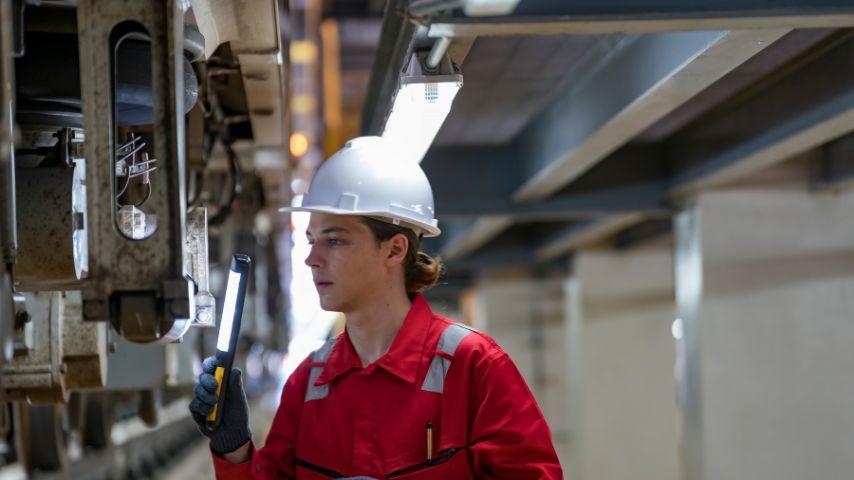
The landscape of industrial safety in Malaysia is governed by a clear mandate: protect people, assets, and the environment from major accidents. At the forefront of this mission is the Department of Occupational Safety and Health (DOSH), the regulatory body responsible for enforcing standards that keep high-hazard industries in check. For organizations operating in sectors like oil and gas, chemical manufacturing, and power generation, meeting DOSH's expectations is not just about avoiding fines—it is about ensuring operational integrity.
One of the most effective tools for aligning with these rigorous standards is the Hazard and Operability (HAZOP) study. However, a study is only as effective as the people conducting it. This is where competency-based HAZOP training becomes a critical asset. It bridges the gap between theoretical compliance and practical, on-the-ground safety.
This article explores how specialized HAZOP training directly supports DOSH's process safety expectations, ensuring your team is equipped to identify hazards, mitigate risks, and foster a resilient safety culture.
DOSH operates with a philosophy that prevention is better than cure. Their regulations, particularly the Control of Industrial Major Accident Hazards (CIMAH) Regulations 1996, place the burden of proof on the employer. Organizations must demonstrate that they have identified all potential risks and implemented adequate control measures.
DOSH inspectors look for evidence of a "systematic approach." They don't just want to see a safety report; they want to see the methodology behind it. They ask questions like:
Standards-aligned HAZOP is widely recognized by DOSH as the industry standard for answering these questions. But a HAZOP report filled with generic statements or missed scenarios raises red flags. Training ensures that the "systematic approach" DOSH demands is actually applied, rather than just simulated.
To understand the value of training, we must look at the specific competencies it builds and how they map to regulatory requirements.
DOSH expects a thorough examination of the process. A "gut feeling" or relying solely on past experience is insufficient.
How Training Helps:
Certified HAZOP courses drill participants in the use of "guide words"—terms like No, More, Less, and Reverse. Trainees learn to apply these words to every parameter of a process (Flow, Pressure, Temperature). This structured brainstorming forces the team to consider scenarios they might otherwise overlook.
For example, an untrained team might look at a pump and ask, "What if it stops?" A trained team applies the guide word Reverse and asks, "What if the pump stops and the check valve fails, causing reverse flow and spinning the pump backward?" This level of granularity is exactly what DOSH auditors look for in a safety case.
Under CIMAH, the person in charge of the industrial activity must ensure that the report is prepared by a "competent person." While DOSH defines competency broadly, in practice, this means having a team that understands the methodology.
How Training Helps:
HAZOP training provides objective evidence of competency. It certifies that the attendees—whether they are scribes, team members, or leaders—understand the mechanics of the study.
When a DOSH officer reviews a HAZOP report and sees that the team was formally trained, it establishes immediate credibility.
Identifying a hazard is step one. Step two is proving you can control it. DOSH requires that risks be reduced to a level that is "As Low As Reasonably Practicable" (ALARP).
How Training Helps:
Training teaches professionals to critically evaluate safeguards. Participants learn to distinguish between a "control" (something that keeps the process in check) and a "safeguard" (something that acts when control is lost).
They learn to ask hard questions: "Is this alarm independent of the control loop?" or "Is the operator response time realistic?" This critical thinking prevents the common pitfall of listing ineffective safeguards just to close a worksheet item—a practice that DOSH penalizes heavily.
A HAZOP study is a group effort, but it requires strong leadership to remain effective. DOSH places significant emphasis on the quality of leadership within safety management systems.
One of the biggest dangers in safety meetings is "groupthink," where team members agree with the majority to avoid conflict or save time. This leads to shallow analysis and missed hazards.
A trained HAZOP Leader is equipped with soft skills to manage this dynamic. They know how to:
By ensuring a robust debate, the leader guarantees a higher quality report. This aligns perfectly with DOSH's expectation that safety assessments should be rigorous and objective.
To visualize the impact, let's look at how training changes the outcome of a safety review in a typical Malaysian context.
A chemical plant in Pasir Gudang plans to install a new bypass line around a reactor for maintenance purposes.
Without Training:
The engineering team conducts a quick internal review. They assume that since the line is manual, standard operating procedures (SOPs) are enough. They mark the risk as "Low."
With Training:
The team, led by a certified HAZOP facilitator, conducts a formal study. They apply the guide word Misdirected Flow. They identify that if an operator opens the bypass by mistake during a reaction, it could lead to a release of toxic gas.
Instead of relying on SOPs, the trained team recommends a mechanical interlock (a higher-level safeguard).
DOSH often speaks about the need for a generative safety culture. This is a culture where employees are constantly aware of risks and do not become complacent.
HAZOP training instills a sense of "chronic unease." It teaches engineers and operators to look at a P&ID not just as a drawing, but as a system that wants to fail. By training staff to constantly ask "What if?", organizations build a workforce that is proactive rather than reactive.
This cultural shift is perhaps the most significant way training supports DOSH expectations. Regulations can only mandate so much; the rest relies on the vigilance of the people on the ground. A trained workforce is a vigilant workforce.
Finally, the output of the HAZOP—the report itself—is a legal document. In the event of an accident, this report will be seized and scrutinized by DOSH investigators.
Training ensures that the documentation is defensive and precise.
When DOSH auditors see a well-structured, coherent report, it speeds up the approval process for licenses and safety reports, saving the organization time and administrative burden.
Meeting DOSH process safety expectations is a complex challenge, but it is not an insurmountable one. The key lies in competence. You cannot inspect safety into a system; you must design and operate it safely from the start.
HAZOP training is the vehicle for building that competence. It transforms your workforce from passive participants into active risk managers. By equipping your team with the skills to identify hazards systematically, challenge safeguards critically, and document findings rigorously, you do more than just satisfy a regulator. You build an organization that is resilient, responsible, and ready for the future.
For Malaysian industries, the message from DOSH is clear: safety is non-negotiable. Certified HAZOP training ensures you have the skills to answer that call with confidence.