English
 Arabic
 French
 Spanish
 Portuguese
 Deutsch
 Turkish
 Dutch
Dutch
 Italiano
 Russian
 Romaian
 Portuguese (Brazil)
 Greek
Greek
Brigade Orchards Ebony Devanahalli - Brochure, Pros&Cons, PriceSheet
Home |
2025-09-25 11:59:55
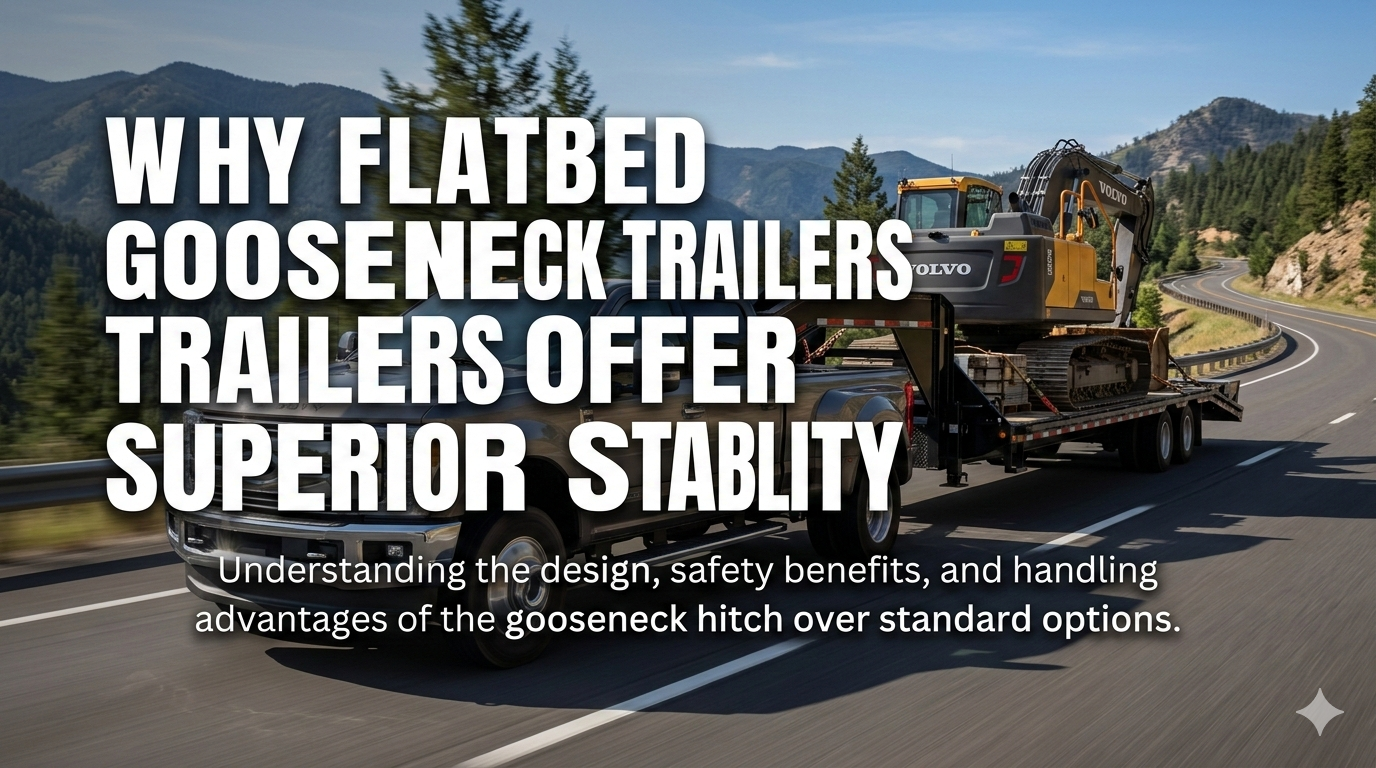
The first time I towed a heavy load with a bumper pull trailer, I remember gripping the steering wheel way too tight. Every little sway felt dramatic. A gust of wind? I felt it in my spine. Ever since then, I’ve paid attention to how trailers behave on the road — especially flatbed gooseneck trailers — and why some just feel… planted.
If you’ve ever hauled heavy equipment, tractors, construction materials, or even a couple of vehicles at once, you already know stability isn’t just a “nice feature.” It’s sanity. It’s safety. It’s the difference between a calm highway run and white-knuckle driving.
So why do flatbed gooseneck trailers have that steady, grounded feel compared to bumper pull setups? There are a few reasons. And they’re not just technical. You can actually feel them.
The biggest difference between a gooseneck trailer and a bumper pull trailer is where the hitch connects.
A bumper pull trailer hooks onto the back of your truck. A gooseneck hitch sits in the bed, right over the rear axle. That placement shifts the pivot point forward. Closer to the truck’s center.
That might sound small. It isn’t.
With flatbed gooseneck trailers, the weight pushes down over the truck’s rear axle instead of hanging behind it. That means better weight distribution. Less rear-end sag. Less sway. And less of that “tail wagging the dog” feeling people complain about with conventional trailer towing.
It feels more balanced. Less dramatic.
Weight distribution is one of those phrases people toss around, but it’s very real when you’re hauling 10,000+ pounds.
Heavy duty gooseneck trailers are designed to handle larger payload capacity. You’ll often see GVWR ratings of 14,000 lbs, 20,000 lbs, even higher. When that weight sits directly above the axle area of your truck, the entire rig works together more naturally.
With bumper pull setups, too much tongue weight can lighten your front steering tires. That’s not fun. Steering starts feeling loose. Braking distances stretch.
Gooseneck trailer towing stability improves because the load isn’t trying to pivot the back of your truck downward. It’s pressing into it. In a good way.
I once hauled a compact tractor on a 20 ft flatbed gooseneck trailer through uneven rural roads. Potholes, crosswinds, patches of rough pavement. It didn’t bounce around like I expected. It tracked straight. Calm. Almost boring. And boring is good when you’re towing.
Trailer sway control is a big concern, especially for long distance hauling.
Flatbed gooseneck trailers naturally resist sway because of their forward-mounted hitch point. The closer the pivot point is to the truck’s centerline, the less leverage the trailer has to move side-to-side.
You’ll still feel strong crosswinds. No trailer is immune. But compared to bumper pull trailer stability, a gooseneck setup feels more controlled at 65 mph and above.
There’s a reason you see commercial flatbed trailers, car haulers, and livestock trailers using gooseneck configurations. It’s not random.
Highway stability matters when you’re hauling construction equipment or farm machinery across counties. Or states.
This surprised me the first time I backed one up.
Gooseneck trailers allow for sharper turning angles because the trailer pivots inside the truck bed instead of behind it. That gives better maneuverability in tight spaces — job sites, equipment yards, crowded barns.
It also reduces the wide swing you get with bumper pull trailers during turns.
And when you’re backing into a narrow driveway with traffic building behind you… yeah, you appreciate that.
Better control equals better stability. Not just at speed, but during slow, careful maneuvers too.
Most flatbed gooseneck trailers are built for serious hauling. That means thicker steel frames, reinforced cross members, dual axle or even triple axle configurations.
More axles spread weight across more tires. That reduces stress on individual components and improves balance.
Tandem axle gooseneck trailers, especially, feel steady under load. The weight isn’t concentrated on one weak point. It’s shared.
Is that overkill for small landscaping loads? Maybe. But for heavy equipment hauling, it makes sense.
I’ve noticed the suspension setup on heavy duty gooseneck trailers also feels less twitchy. They’re designed with heavier loads in mind from the start.
Braking performance often gets overlooked in these conversations.
With improved weight distribution, the truck’s front tires stay planted. That keeps steering responsive during sudden braking. If your front end lifts slightly because of poor tongue weight balance, braking becomes unpredictable.
Electric trailer brakes on flatbed gooseneck trailers tend to work more consistently because the trailer isn’t bouncing or swaying excessively.
It’s not magic. It’s physics. Weight centered over the axle behaves differently than weight hanging off the back.
Most gooseneck trailer owners drive ¾-ton or 1-ton trucks. Ford F-250, Ram 2500, Silverado 3500… trucks built to handle serious towing capacity.
That pairing matters.
Flatbed gooseneck trailers connect directly to in-bed hitches designed for higher weight ratings. You’re not pushing the limits of a lightweight rear bumper setup.
The whole combination feels intentional. Built for the task.
This one matters for contractors and farmers especially.
Construction sites aren’t flat. Fields definitely aren’t flat. Gravel roads shift. Mud happens.
The gooseneck connection allows more articulation between truck and trailer, which helps when moving over uneven ground. It reduces jerky motion and keeps the trailer aligned more naturally.
I’ve watched bumper pull trailers twist awkwardly in rutted terrain. Goosenecks just… follow.
Not necessarily.
Flatbed gooseneck trailers require a pickup with a gooseneck hitch installed. That’s an added cost. They’re often longer. Heavier. And not ideal for casual, occasional light-duty use.
If you’re hauling a riding mower once a month, a smaller utility trailer might be perfectly fine.
But if stability is your priority — especially for high payload capacity, heavy equipment transport, or long highway runs — the difference becomes obvious pretty quickly.
There’s something about towing a gooseneck that feels calmer.
Less sway. Less steering correction. Less of that tiny panic when a semi blows past you at 70 mph.
Maybe it’s confidence. Maybe it’s just better engineering. Probably both.
I’m not saying they’re perfect. Maintenance still matters. Tires matter. Proper loading matters a lot. Load your weight unevenly and even the strongest trailer will misbehave.
Still, for serious hauling jobs, flatbed gooseneck trailers have earned their reputation for superior stability for a reason.
Once you’ve towed one fully loaded and felt how steady it tracks down the highway, it’s kind of hard to go back.
And honestly? I prefer boring, steady towing over exciting any day.