English
 Arabic
 French
 Spanish
 Portuguese
 Deutsch
 Turkish
 Dutch
Dutch
 Italiano
 Russian
 Romaian
 Portuguese (Brazil)
 Greek
Greek
Lottery Superstitions Around the World
Other |
2026-04-22 17:24:07
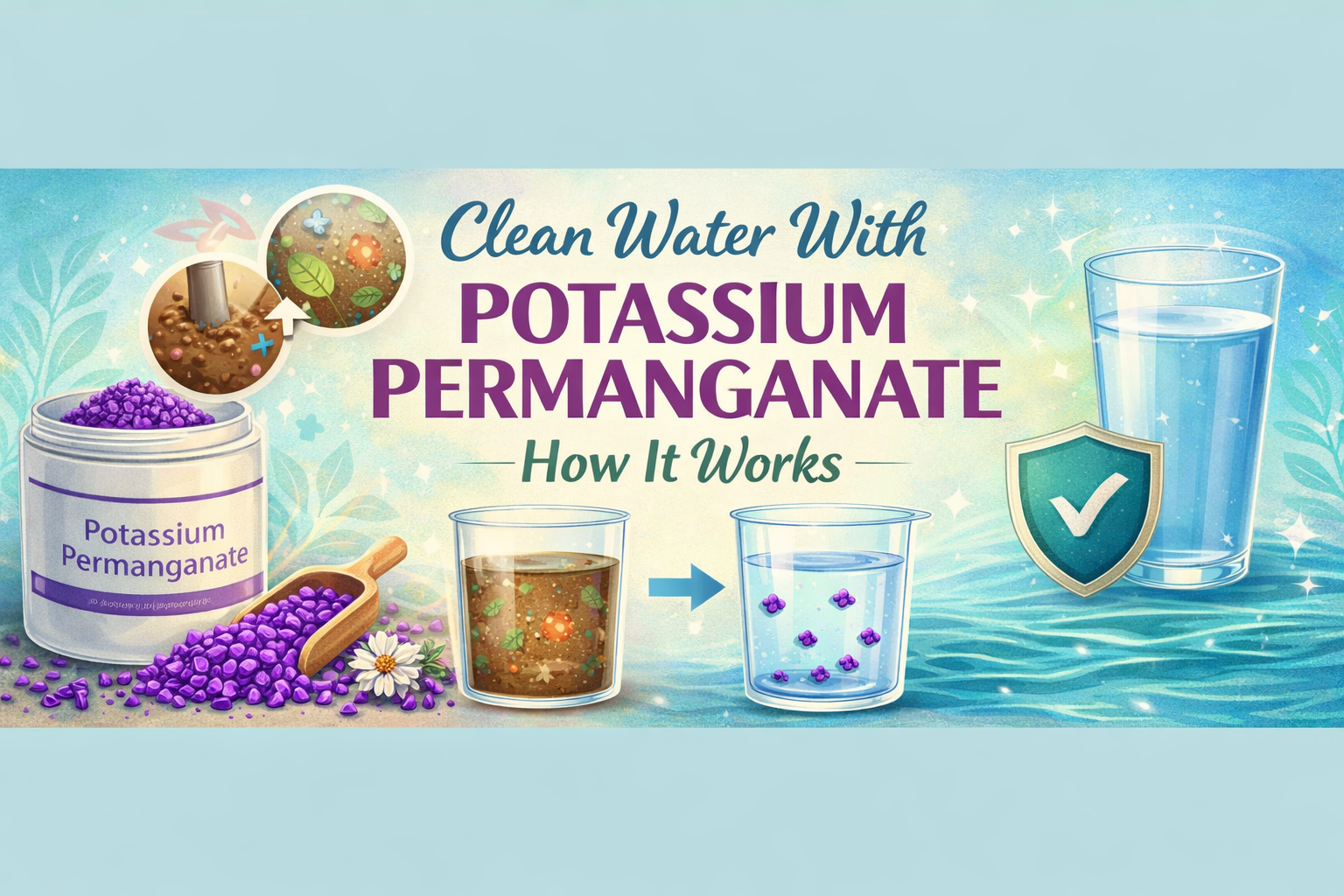
I still remember this one trip—somewhere a bit off-grid, taps weren’t exactly reliable, and someone casually pulled out a tiny packet of purple crystals. No drama. Just said, “This helps clean water.”
At first, I didn’t buy it. Purple crystals? In drinking water? But then you start looking into it, and suddenly you’re deep into searches about how to use potassium permanganate to clean water… and realizing this isn’t some random trick people made up last week. It’s been around for a while. Quietly doing its job.
Still feels a little strange though, doesn’t it?
It sounds complicated, I know.
Potassium permanganate is a dark purple chemical compound. When it dissolves in water, it turns everything a pinkish or light purple shade. Kind of pretty, actually. But don’t let that fool you—it’s pretty strong stuff.
People have used it for water treatment, disinfecting, even in some medical situations. The reason? It’s a powerful oxidizing agent. That’s the technical term.
In normal language… it breaks down unwanted things in water.
Not all things. But a lot.
Okay, this part gets interesting.
When potassium permanganate is added to water, it reacts with organic matter, bacteria, iron, manganese, and even some unpleasant smells. It sort of “burns” them away—chemically speaking, not literally with flames.
You might notice the water changing color at first. That faint pink shade? That’s actually a sign that a small amount is still active. If it turns brownish, that usually means it’s reacting with impurities.
A bit like watching something work in real time.
I’ve seen people get nervous at this stage. Understandable. Colored water doesn’t exactly scream “safe to drink.” But in controlled amounts, that color shift is part of the process.
You’ll find potassium permanganate popping up in different situations. Not always for direct drinking water, though.
Treating well water with iron and sulfur smell
Removing manganese stains
Reducing bad odor in stored water
Pre-treating water before filtration
In rural areas or places where water systems aren’t perfect, it’s sometimes used as a quick fix. Not fancy. Just practical.
Though yeah… it’s not something you casually throw into your daily water bottle without thinking.
Alright, this is where people tend to get a bit unsure. And honestly, that hesitation is fair.
The amount matters. A lot.
Usually, only a very tiny quantity is used—like a few crystals dissolved into a large volume of water. The goal is to get a faint pink color, not dark purple. If it looks too intense, that’s a red flag.
A rough idea people follow:
Dissolve a few crystals in a separate container first
Add that solution slowly into the water you want to treat
Stir and wait for about 30 minutes or so
Let particles settle or filter the water afterward
But here’s the thing… exact dosage can vary depending on contamination level. That’s where it gets tricky.
I’ve seen people overdo it thinking “more means cleaner.” It doesn’t work like that. If anything, it creates a different problem.
Short answer… yes, but only in very controlled amounts.
Potassium permanganate can kill bacteria and remove certain impurities, which is helpful. But it’s not a complete purification method on its own. It doesn’t remove everything—like heavy metals or some chemicals.
Also, too much of it can be harmful. That’s not something to guess your way through.
If you’ve ever smelled water treated with it, there’s sometimes a slight metallic or sharp scent. Not always pleasant. Some people don’t mind it. Others… yeah, they’d rather not drink it unless necessary.
There’s a reason it hasn’t disappeared.
Effective against bacteria and some pathogens
Helps remove iron and manganese
Reduces odor in water
Works fairly quickly
Easy to store and transport
For emergency situations or basic treatment, it can be useful. Especially where other systems aren’t available.
Still, it feels more like a backup option than an everyday habit.
This part matters more than people think.
Too much potassium permanganate in water can irritate the stomach and even cause health issues. The margin between helpful and harmful isn’t huge.
That’s why guessing the amount… not a great idea.
It doesn’t remove everything. Viruses, certain chemicals, heavy metals—those may still be present.
So relying only on this method for drinking water long-term? Feels a bit risky.
And I mean everything.
Hands, clothes, containers… even sinks. That deep purple color sticks around. I once saw someone spill a few crystals and the stain didn’t fully go away for days.
So yeah, handle it carefully.
Keep it away from kids. Store it properly. Don’t mix it randomly with other chemicals.
It’s one of those things that looks harmless until it isn’t.
There’s something oddly fascinating about simple chemicals doing complex jobs. Potassium permanganate feels like one of those quiet helpers—effective, a bit misunderstood, slightly intimidating.
Would I use it daily for drinking water? Probably not.
But in certain situations… maybe during travel, or where water quality is questionable, it could make sense. With care. Always with care.
And maybe that’s the whole point. Not every solution needs to be perfect or permanent. Some are just there when you need them.