English
 Arabic
 French
 Spanish
 Portuguese
 Deutsch
 Turkish
 Dutch
Dutch
 Italiano
 Russian
 Romaian
 Portuguese (Brazil)
 Greek
Greek
Best Agentic AI Training Institute in Bangalore for Future AI Careers
Art |
2026-05-07 15:53:32
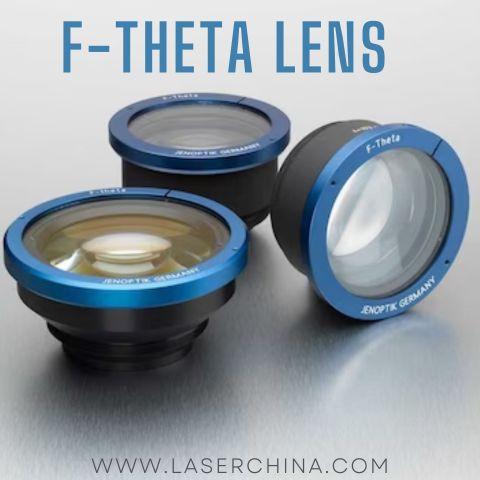
In the world of laser processing, the F-theta lens holds a pivotal position. It’s a vital component that determines how accurately and efficiently a laser system can perform marking, engraving, cutting, or welding tasks. Whether you’re dealing with fiber lasers, CO₂ lasers, or UV systems, the F-theta lens plays a key role in defining the system’s performance. This optical lens ensures that the laser beam remains focused across a flat field, maintaining consistent spot size and precision from the center to the edge of the marking area.
The name “F-theta” comes from the mathematical relationship between the focal length and the scan angle of the laser beam. In simpler terms, the lens is designed to make the focused spot move linearly across the work surface, even when the mirrors inside the scanner head rotate at different angles. This precision behavior is the foundation of uniform marking and engraving quality in industrial laser systems.
Every laser marking or engraving system relies on optics to control the direction, focus, and intensity of the beam. The F-theta lens is positioned at the end of the laser scanning system, right after the galvanometer mirrors. Its function is to focus the laser beam onto a flat working surface while maintaining consistent focus and spot size across the entire field.
Without this specialized lens, the laser beam would curve as it moves away from the center, creating distorted markings or inconsistent depths. The F-theta lens corrects this issue by ensuring that the focal plane remains flat, allowing for precise and repeatable laser processing over large areas.
In laser marking machines, these lenses are usually paired with galvanometer scanners to project the laser beam accurately. As the scanner mirrors move, the F-theta lens ensures that the position of the focused spot on the workpiece corresponds linearly to the scan angle, providing smooth, distortion-free operation.
The design of an F-theta lens is a fine example of engineering precision. Traditional lenses focus light to a single point, but an F-theta lens distributes focus across a flat plane. It achieves this by controlling how the laser beam passes through a series of specially shaped optical elements.
The term “F-theta” refers to the mathematical equation:
Y = f × θ
Where:
Y is the distance from the optical axis to the focused spot on the work surface,
f is the focal length of the lens, and
θ is the scan angle of the galvanometer mirror.
This formula ensures that the beam’s movement on the workpiece is linearly proportional to the mirror’s angle, which is crucial for uniform processing.
Most F-theta lenses are made from high-quality fused silica or other low-absorption materials. They are coated with anti-reflective layers optimized for specific laser wavelengths, such as 355 nm (UV), 532 nm (green), 1064 nm (fiber or YAG), and 10.6 µm (CO₂). These coatings minimize energy loss and prevent overheating during continuous operation.
The F-theta lens is found in nearly every laser-based application that requires precision over a flat field. Some of the most common areas where it’s used include:
Laser Marking and Engraving: Ensures consistent depth and accuracy for barcodes, serial numbers, or designs on metals, plastics, and ceramics.
Laser Cutting: Provides accurate edge definition for thin materials and micro-processing tasks.
Laser Welding: Maintains precise focus alignment, crucial in micro-welding and high-speed joining applications.
PCB Manufacturing: Helps in creating fine, detailed circuit patterns on electronic components.
Additive Manufacturing: Used in laser sintering and 3D printing for consistent energy delivery across build surfaces.
Each application depends on the lens to maintain the same beam focus from edge to edge, ensuring production uniformity and reduced waste.
Not all F-theta lenses are created equal. Each lens is designed to work with a specific laser wavelength, ensuring maximum transmission and minimal reflection.
1064 nm: Standard for fiber and Nd:YAG laser systems used in metal engraving and cutting.
532 nm: Common for green lasers processing sensitive or transparent materials.
355 nm: Used in UV laser systems for micro-machining and marking plastics or glass.
10.6 µm: Dedicated to CO₂ laser systems for marking wood, leather, or acrylic.
Selecting the correct wavelength-specific F-theta lens ensures better performance, improved beam quality, and longer optical lifespan.
Two essential parameters define the working range of an F-theta lens — field size and focal length.
The field size determines how large an area the laser can mark or process without moving the workpiece. The focal length affects both the field size and the focused spot diameter. Longer focal lengths allow larger working areas but slightly reduce spot precision. Conversely, shorter focal lengths produce smaller spots, ideal for fine marking and high-resolution engraving.
Manufacturers often choose the lens specifications based on the material, application, and resolution requirements. For instance, a 160 mm F-theta lens may offer a 110×110 mm marking field, while a 254 mm lens can expand it to 175×175 mm.
The performance of an F-theta lens depends heavily on its manufacturing precision and coating technology. Even the smallest deviation in curvature or material uniformity can lead to beam distortion and energy loss.
High-grade lenses are polished to nanometer-level smoothness, ensuring minimal scattering and high transmission. Modern coating technologies, such as ion-assisted deposition, enhance durability by improving resistance to laser-induced damage. These coatings are also designed to match specific laser wavelengths, reducing reflection to less than 0.2% per surface.
Such attention to detail ensures that the lens can operate for thousands of hours without degradation, even under high-power laser exposure.
Proper handling and maintenance are essential for extending the lifespan of an F-theta lens. Since the optical surface is exposed to high-energy beams and airborne particles, contamination can easily affect performance.
Here are some general care recommendations:
Always handle lenses with clean gloves to avoid fingerprints.
Store in a dust-free, low-humidity environment when not in use.
Clean the surface only when necessary, using approved optical cleaning solutions and soft wipes.
Ensure proper alignment during installation to prevent focus distortion.
Regular inspection helps detect early signs of contamination, scratches, or coating wear that could compromise performance.
Selecting an F-theta lens involves evaluating key factors like laser wavelength, desired field size, marking resolution, and power density. The choice must also align with the scanner system and working distance.
For high-speed marking systems, lenses with shorter focal lengths and smaller spot sizes are preferred for better accuracy. For applications requiring larger coverage, longer focal lengths are ideal. Manufacturers often provide lens charts that relate focal length to marking area and working distance, making selection easier.
Collaborating with a reliable optical supplier ensures that the chosen lens matches your laser configuration perfectly and maintains consistent results across production cycles.
The F-theta lens remains one of the most critical components in any laser system. Its design allows for precise, distortion-free energy delivery across flat surfaces, enabling industries to achieve consistent marking, engraving, and processing quality. From manufacturing to electronics and automotive production, its contribution ensures that every beam of light is controlled, focused, and effective.
By understanding its working principle, wavelength compatibility, and maintenance needs, businesses can enhance the longevity and accuracy of their laser systems. The F-theta lens continues to be the heart of precision optics—driving modern laser applications toward higher performance and reliability.