English
 Arabic
 French
 Spanish
 Portuguese
 Deutsch
 Turkish
 Dutch
Dutch
 Italiano
 Russian
 Romaian
 Portuguese (Brazil)
 Greek
Greek
The Social Economy and High-Stakes Gameplay of Steal A Brainrot
Games |
2026-01-03 09:01:21
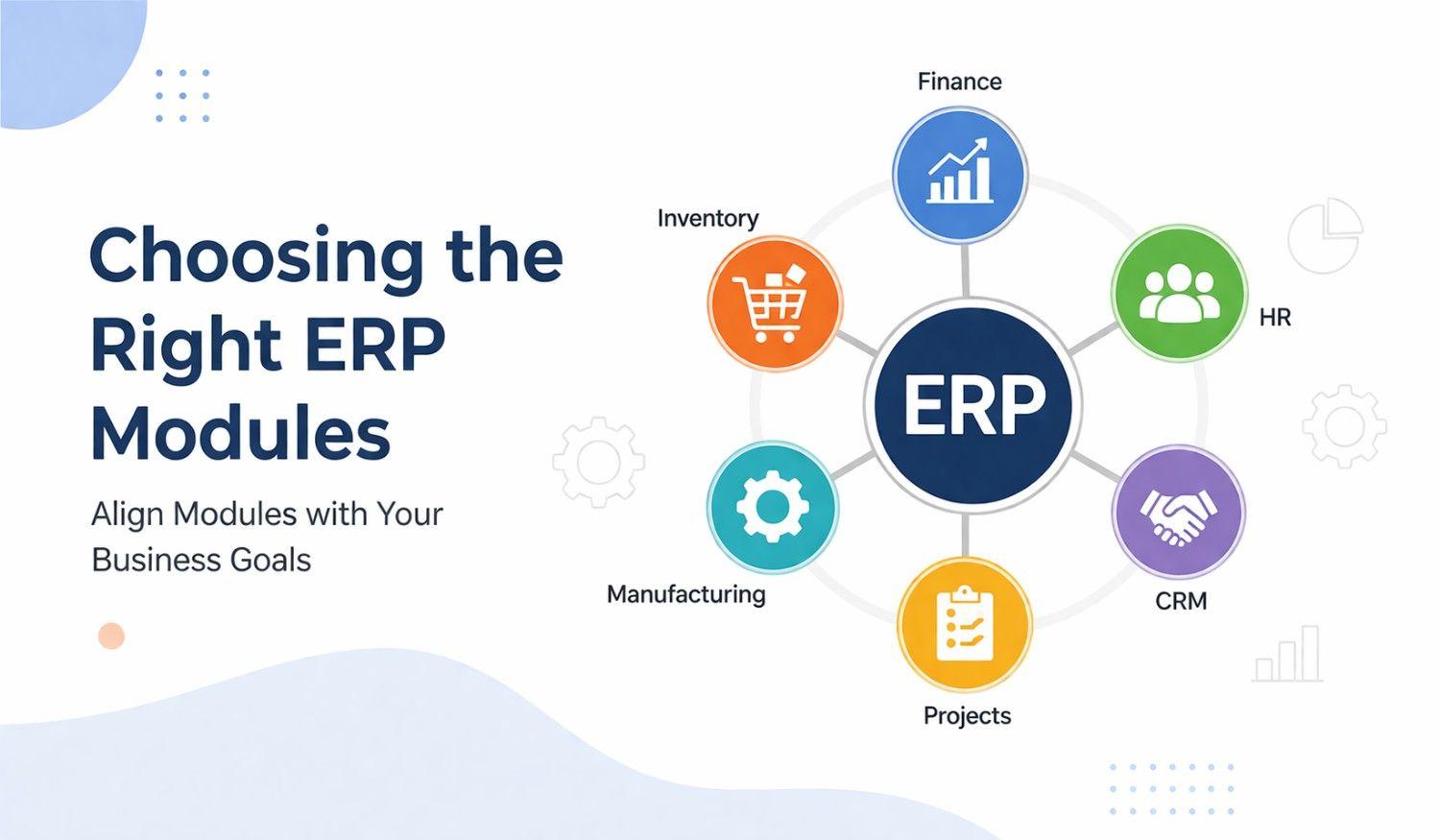
We often meet businesses at a crossroads spreadsheets bursting at the seams, teams juggling disconnected tools, and leadership wondering where the visibility went. That’s usually when ERP enters the conversation (sometimes dramatically, sometimes reluctantly). But here’s the catch choosing an ERP system isn’t the real challenge; identifying the right modules is where things get interesting.
We’ve seen companies overbuild (because more features must be better, right?) and others underinvest (only to circle back six months later). The truth sits somewhere in between. Selecting ERP modules is less about ticking boxes and more about understanding how your business actually breathes day in, day out.
Before diving into modules, we step back (yes, even when everyone wants to jump ahead). What are the business goals? Growth? Efficiency? Better reporting?
ERP modules should align directly with these objectives. For example, a manufacturing firm prioritizing production efficiency will naturally lean toward inventory and supply chain modules. Meanwhile, a service-based company may care more about CRM and project management.
We’ve noticed that when goals are unclear, module selection becomes guesswork—and guesswork in ERP is expensive. So, we always recommend starting with clarity. Think of it as building a house—you don’t start with windows; you start with a blueprint.
This is where things get honest—sometimes painfully so. Companies often believe their processes are streamlined… until we map them.
We sit with teams, document workflows, and identify redundancies (and there are always a few surprises). This process reveals what actually needs improvement and which ERP modules can solve real problems.
A quick observation from our experience: one client insisted they needed a full HR suite, but process mapping showed their biggest bottleneck was inventory mismanagement. The result? A smarter investment—and a relieved HR team.
Not all modules are created equal—at least not for your business.
We typically break things down into core areas:
The key is prioritization (and a bit of discipline). Companies don’t need everything at once. Instead, we recommend focusing on mission-critical modules first—those that directly impact revenue, efficiency, or compliance.
This approach keeps implementation manageable and avoids the classic “ERP overload” scenario.
ERP decisions shouldn’t live in a boardroom alone.
We encourage companies to involve department heads and end-users early in the process. Why? Because they’re the ones who will actually use the system—and they know the day-to-day challenges better than anyone.
We’ve seen projects succeed simply because teams felt heard. Conversely, ignoring stakeholders often leads to resistance (and a lot of “this system doesn’t work for us” conversations later).
Collaboration isn’t just helpful—it’s essential.
Every industry has its quirks (some more complicated than others).
A retail business needs POS integration and inventory tracking, while a healthcare organization may require compliance-focused modules. Similarly, manufacturing companies often need production planning and quality control features.
Working with an experienced ERP software development company helps identify these nuances early. Industry-specific insights can prevent costly mistakes and ensure the ERP system actually supports business operations—not complicates them.
Here’s a question we like to ask: where will your business be in 3–5 years?
ERP is not a short-term investment. The modules you choose today should support future growth. That means considering scalability—can the system handle more users, more data, more complexity?
We’ve seen businesses outgrow their ERP systems faster than expected (a good problem to have, but still a problem). Planning ahead ensures your system evolves with you, rather than holding you back.
Ah, the customization debate—one of our favorites.
Standard modules are reliable, tested, and quicker to implement. Custom modules, on the other hand, offer flexibility tailored to your unique processes.
The trick is balance. Over-customization can lead to higher costs and maintenance challenges, while under-customization may limit efficiency. Skilled ERP software developers help strike that balance—ensuring the system fits your business without becoming unnecessarily complex.
(We like to say: customize where it matters, standardize where it doesn’t.)
Budget always enters the conversation (and rightly so).
However, choosing modules based purely on cost can backfire. Skipping essential modules to save money often leads to inefficiencies—and eventually, additional expenses.
We recommend a phased approach instead. Start with critical modules and expand gradually. This keeps costs manageable while still delivering value.
And yes, we’ve seen companies try to “save now, fix later”—it rarely works as planned.
No ERP system operates in isolation.
Companies often rely on existing tools—CRM platforms, accounting software, or third-party applications. The chosen ERP modules should integrate seamlessly with these systems.
Poor integration leads to data silos (the very problem ERP aims to solve). On the other hand, smooth integration creates a unified ecosystem where information flows effortlessly across departments.
Before finalizing modules, we recommend testing—thoroughly.
This includes demos, pilot programs, and user feedback sessions. Testing ensures the selected modules meet expectations and align with real-world usage.
We’ve learned that what looks perfect on paper doesn’t always translate in practice. Testing bridges that gap and provides confidence in the final decision.
Choosing modules is only half the journey—implementation is where everything comes together.
A phased rollout often works best. It allows teams to adapt gradually and reduces disruption. Starting with high-priority modules ensures immediate impact while setting the stage for future expansion.
At Kanhasoft, we often emphasize structured implementation—because even the best module selection can fail without the right execution plan.
ERP is not a “set it and forget it” system.
Once implemented, companies should continuously monitor performance, gather feedback, and optimize modules. Business needs evolve—and your ERP should evolve with them.
We’ve seen organizations unlock additional value simply by revisiting their ERP usage after a year. Sometimes, the best improvements come after the system is already in place.
Identifying the right ERP modules isn’t about choosing the most features—it’s about choosing the right features. It requires clarity, collaboration, and a willingness to look honestly at how your business operates (yes, even the messy parts).
We believe ERP success comes from thoughtful planning and practical decision-making. When modules align with real business needs, the system becomes more than software—it becomes a growth engine.
And if there’s one final takeaway (our unofficial catchphrase, if you will)—build for what matters now, but never lose sight of what’s next.
Companies typically prioritize modules based on business-critical functions such as finance, inventory, or operations. The focus is on areas that deliver immediate impact.
Yes, most ERP systems are scalable. Businesses can start with essential modules and add more as they grow.
Not always. Standard modules work for many businesses, but customization may be needed for unique processes.
It depends on business complexity, but typically involves weeks of analysis, stakeholder discussions, and testing.
Experts help analyze business needs, recommend suitable modules, and ensure alignment with long-term goals.