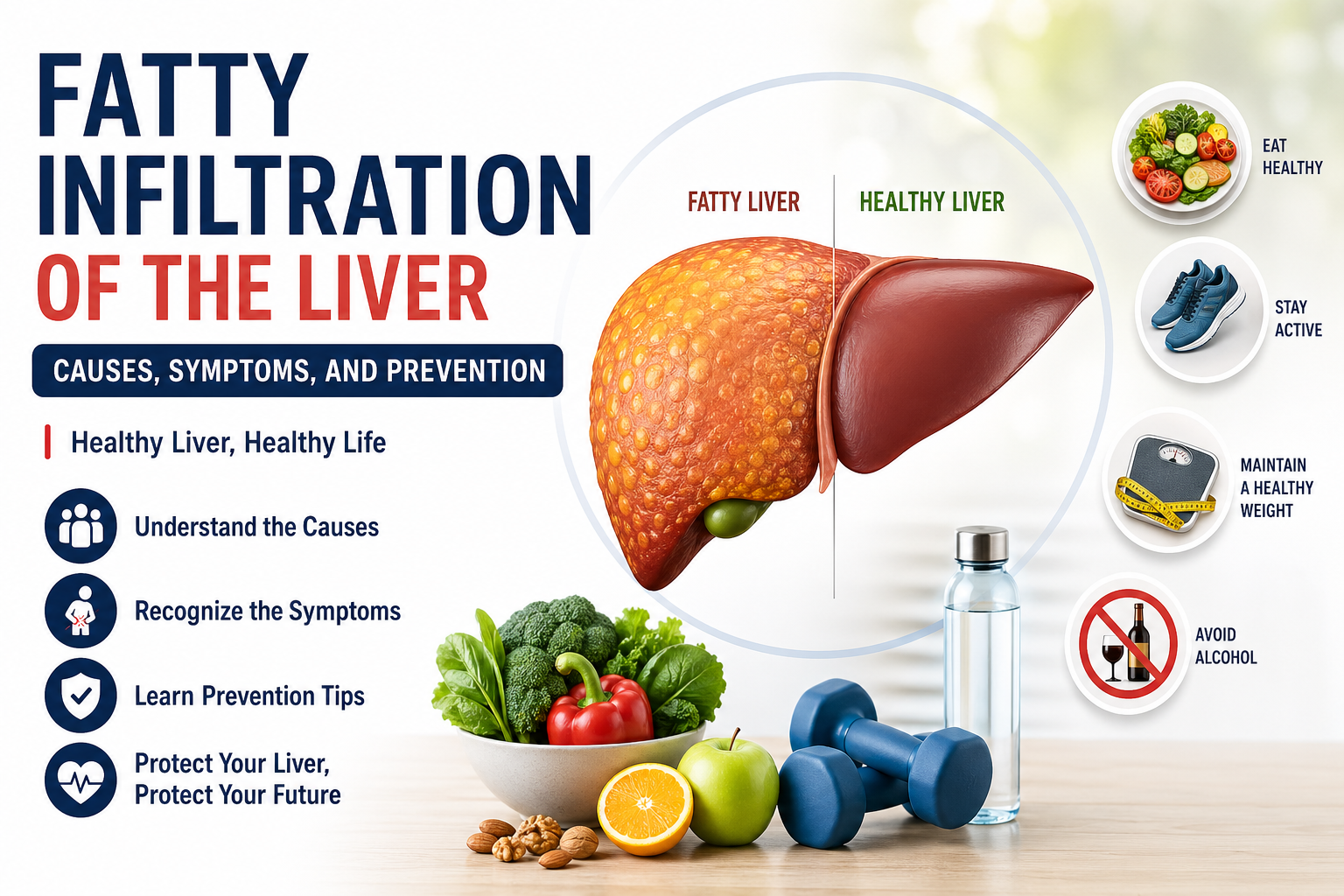
1. What Is Fatty Infiltration of the Liver?
Fatty infiltration of the liver means there is too much fat stored in liver cells. A small amount of fat is normal, but when fat makes up more than 5% to 10% of the liver’s weight, it becomes a concern.
This condition is also known as fatty liver disease or hepatic steatosis. It can happen slowly over time and often causes no symptoms in the early stages.
Think of your liver like a sponge. It can handle some extra load, but if it keeps soaking up fat, it becomes heavy, damaged, and less effective.
2. How the Liver Normally Works
Your liver performs hundreds of tasks every day, including:
- Breaking down food into energy
- Removing toxins from blood
- Producing bile for digestion
- Storing vitamins and minerals
- Managing cholesterol and sugar levels
- Helping blood clot properly
When fat builds up, these functions can be disturbed. Over time, inflammation and scarring may develop.
3. Types of Fatty Liver Disease
Alcoholic Fatty Liver Disease (AFLD)
This happens due to heavy alcohol use. Alcohol damages liver cells and causes fat accumulation.
Non-Alcoholic Fatty Liver Disease (NAFLD)
This type is not caused by alcohol. It is linked with obesity, diabetes, and poor lifestyle habits.
Non-Alcoholic Steatohepatitis (NASH)
This is a more severe form of NAFLD. It includes fat buildup along with inflammation and liver cell damage. NASH can lead to cirrhosis or liver failure.
4. Common Causes of Fatty Liver
There is no single cause. Usually, multiple factors work together.
Obesity
Excess body fat increases fat storage in the liver.
Type 2 Diabetes
High blood sugar and insulin resistance are strongly linked to fatty liver.
High Cholesterol
Too much bad cholesterol and triglycerides can increase liver fat.
Poor Diet
Frequent intake of sugary drinks, fried food, processed snacks, and fast food adds stress to the liver.
Alcohol Use
Regular heavy drinking is a major cause of fatty liver.
Certain Medicines
Some medications may affect liver metabolism.
5. Risk Factors You Should Know
You may be at higher risk if you have:
- Belly fat or obesity
- Diabetes
- High blood pressure
- High cholesterol
- Sedentary lifestyle
- PCOS
- Sleep apnea
- Family history of liver disease
- Age above 40 years
Even slim people can develop fatty liver, especially if they have unhealthy habits or metabolic problems.
6. Symptoms of Fatty Infiltration
Many people have no symptoms at first. That’s why it is often found during routine tests.
When symptoms do appear, they may include:
- Tiredness
- Weakness
- Mild pain or discomfort in the upper right abdomen
- Feeling heavy after meals
- Unexplained weight changes
- Poor appetite
In advanced disease, symptoms can include:
- Swelling in legs or abdomen
- Yellowing of skin or eyes
- Confusion
- Easy bruising
If these symptoms appear, medical attention is important.
7. How Doctors Diagnose It
Blood Tests
Liver function tests can show raised enzymes like ALT and AST.
Ultrasound
A common scan that can detect fat in the liver.
FibroScan
Measures liver stiffness and fat content.
CT Scan or MRI
Used in some cases for more detail.
Liver Biopsy
A small tissue sample may be taken if advanced disease is suspected.
Early diagnosis matters because fatty liver can often be reversed before permanent damage occurs.
8. Can Fatty Liver Become Dangerous?
Yes, it can. Many people think fatty liver is always mild, but it may progress through stages:
- Simple fatty liver – Fat present, little damage
- Inflammation – Liver becomes irritated
- Fibrosis – Scar tissue starts forming
- Cirrhosis – Severe scarring
- Liver failure – Liver stops working properly
Some people may also develop liver cancer.
That is why regular monitoring is important.
9. Prevention Through Diet
Food choices play a huge role in liver health.
Eat More Of:
- Fresh fruits
- Green vegetables
- Whole grains
- Nuts and seeds
- Lean proteins
- Fish
- Beans
- Healthy fats like olive oil
Reduce:
- Sugary drinks
- White bread and refined carbs
- Fried foods
- Processed meat
- Excess salt
- Bakery snacks
Helpful Tip
Try filling half your plate with vegetables. Small changes repeated daily create big results over time.
10. Exercise and Weight Control
You don’t need to become a marathon runner. Regular movement helps the liver burn stored fat.
Best Activities
- Brisk walking
- Cycling
- Swimming
- Yoga
- Strength training
- Dancing
Aim for at least 150 minutes a week of moderate exercise.
Even losing 5% to 10% of body weight can significantly improve fatty liver.
11. Medical Treatments and Monitoring
There is no magic pill for all fatty liver cases, but treatment focuses on the root cause.
Doctors may recommend:
- Weight loss plan
- Diabetes control
- Cholesterol medicines
- Blood pressure management
- Avoiding alcohol
- Vitamin support in selected cases
- Regular scans and blood tests
Never self-medicate. Some supplements advertised online may actually harm the liver.
12. When Liver Transplant Is Needed
Most people with fatty liver never need a transplant. But if the disease reaches advanced cirrhosis or liver failure, transplant may become lifesaving.
Signs of advanced liver failure include:
- Fluid buildup in the abdomen
- Repeated jaundice
- Internal bleeding
- Confusion due to toxins
- Severe weakness
In such cases, choosing an experienced specialist matters. Many patients search for the best liver transplant surgeon in india because India has advanced hospitals, skilled doctors, and quality treatment options.
A transplant decision is always made after detailed evaluation by a liver expert team.
13. Tips for Long-Term Liver Health
Protecting your liver is not about one dramatic change. It is about daily habits.
Simple Habits That Help
- Maintain a healthy weight
- Exercise regularly
- Limit alcohol
- Stay hydrated
- Sleep well
- Manage stress
- Get regular health checkups
- Control diabetes and cholesterol
- Avoid smoking
- Use medicines only when prescribed
Your liver works for you every day—return the favor by caring for it.
14. Conclusion
Fatty infiltration of the liver is common, but it should never be ignored. It may start silently, yet it can lead to serious damage if left untreated. The encouraging part is that lifestyle changes, early diagnosis, and regular medical care can make a huge difference.
If you’ve been told you have fatty liver, don’t panic. Start with small steps: eat better, move more, lose extra weight, and get proper follow-up. Your liver has a strong ability to heal when given the chance.
FAQs
1. Can fatty liver be cured completely?
Yes, in many early cases fatty liver can be reversed with weight loss, healthy eating, exercise, and treating related conditions.
2. Is fatty liver dangerous?
It can be. Some people remain stable, while others develop inflammation, cirrhosis, or liver failure.
3. Can a thin person get fatty liver?
Yes. Even people with normal weight can develop fatty liver due to genetics, poor diet, diabetes, or metabolic issues.
4. Which foods are best for fatty liver?
Vegetables, fruits, whole grains, lean proteins, nuts, and healthy fats are good choices.
5. When should I see a liver specialist?
You should consult a doctor if tests show fatty liver, liver enzymes are high, or you have symptoms like jaundice, swelling, or ongoing fatigue.
 English
 Arabic
 French
 Spanish
 Portuguese
 Deutsch
 Turkish
 Dutch
Dutch
 Italiano
 Russian
 Romaian
 Portuguese (Brazil)
 Greek
Greek