English
 Arabic
 French
 Spanish
 Portuguese
 Deutsch
 Turkish
 Dutch
Dutch
 Italiano
 Russian
 Romaian
 Portuguese (Brazil)
 Greek
Greek
Liquid Pouch Packaging Market Forecast: Growth Across Food, Homecare, and Pharma
Other |
2026-02-13 12:30:18
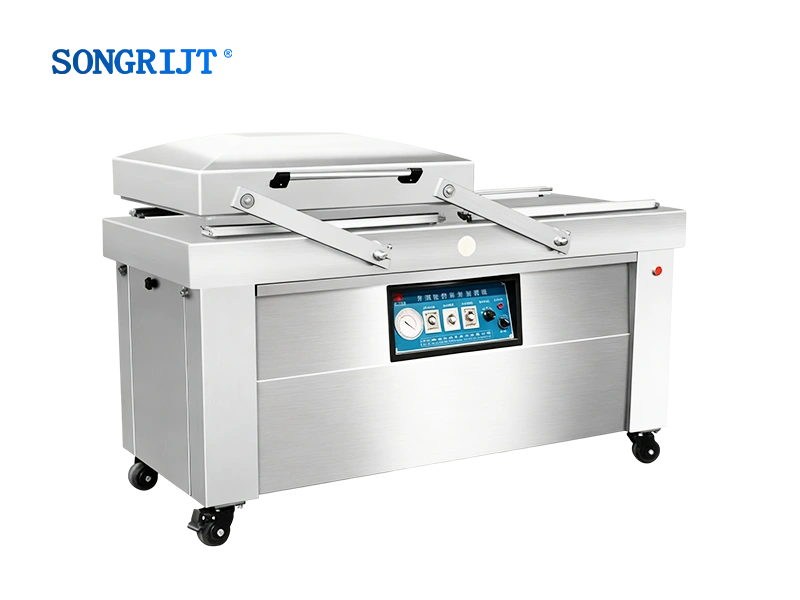
In food manufacturing, production speed means nothing if packaging slows everything down. Many factories process products quickly, but sealing and packing still create delays that affect workflow, labor efficiency, and shipping schedules.
That’s why double-chamber vacuum packaging machines have become a standard solution in modern industrial packaging.
Unlike traditional vacuum sealers, these machines work continuously. One chamber seals products while the second chamber gets prepared for the next cycle. That small design difference creates a major increase in production speed and operational efficiency.
For meat processors, seafood exporters, frozen food manufacturers, and commercial packaging companies, this machine is no longer just an upgrade. It’s an essential part of a scalable production line.
A double-chamber vacuum packaging machine is an industrial vacuum sealing system designed to remove air from packaging bags before sealing them tightly.
The machine usually includes:
Its dual-chamber structure allows packaging operations to continue with minimal downtime.
The process is simple but highly efficient:
Because loading and sealing happen simultaneously, production efficiency improves dramatically.
Single-chamber machines stop after every packaging cycle.
Operators must wait before loading the next batch. Double-chamber systems eliminate most of this downtime.
For factories packaging thousands of products daily, this improvement can save several hours of production time every week.
Industrial vacuum packaging equipment is built for durability, hygiene, and continuous production environments.
Most machines use SUS304 stainless steel because it:
This is especially important in seafood and meat processing plants where hygiene requirements are strict.
The vacuum pump removes oxygen from the packaging bag.
A powerful vacuum pump helps:
20m³/h vacuum pumps are suitable for medium-volume packaging operations.
63m³/h pumps or larger are commonly used in continuous factory production.
Larger pumps generally improve efficiency and productivity.
Modern double-chamber vacuum sealers often include:
These features help operators maintain consistent packaging quality during long production runs.
The sealing bar creates airtight seals that protect products from contamination and moisture.
Weak sealing can cause:
Reliable sealing systems are extremely important in industrial food packaging.
Vacuum packaging is widely used because it improves shelf life and protects products during storage and transportation.
Fresh meat quickly loses quality when exposed to oxygen.
Vacuum packaging helps:
Products commonly vacuum packed include:
A medium-sized meat processing company upgrading from manual sealing to a double-chamber vacuum packaging machine can often improve packaging efficiency by more than 30%.
Most of that improvement comes from continuous operation and reduced downtime.
Seafood products spoil rapidly without proper packaging.
Vacuum sealing protects:
Many seafood exporters rely on vacuum packaging during international transportation.
Frozen food packaging requires strong airtight sealing.
Vacuum packaging helps reduce:
Common frozen products include:
Cheese manufacturers use vacuum packaging to:
Hard and semi-hard cheeses especially benefit from airtight vacuum packaging.
Double-chamber vacuum packaging machines are also used for:
Any product sensitive to oxygen or moisture exposure can benefit from vacuum sealing.
Most companies initially purchase these machines to improve shelf life. Later, they realize the operational benefits are equally valuable.
This is the machine’s biggest advantage.
Because one chamber seals while the second chamber gets loaded, production continues almost nonstop.
For high-volume factories, this dramatically improves productivity.
Vacuum packaging removes oxygen that causes spoilage and oxidation.
According to food preservation research, vacuum-sealed products can last several times longer than conventionally packaged products when stored correctly.
This helps reduce food waste and improve profitability.
Vacuum-sealed products look:
Consumers often associate premium packaging with higher product quality.
That visual presentation strongly influences purchasing decisions.
One operator can efficiently manage large packaging volumes.
Over time, many businesses reduce labor expenses while increasing production output.
Vacuum packaging supports HACCP food safety systems by reducing contamination risks and limiting exposure to external air.
This is especially important for export-focused food manufacturing companies.
Choosing the correct machine is critical for long-term production efficiency.
Many businesses buy smaller machines initially to reduce costs, then later realize the machine cannot support future production growth.
Start by asking:
Your packaging machine should support future growth, not only current production requirements.
Large products require larger chambers.
Seafood exporters often require extra chamber space.
Industrial meat processors frequently package oversized products.
Retail frozen food packaging may require longer sealing bars.
Selecting the correct chamber size helps prevent future production limitations.
Stronger vacuum pumps provide:
For industrial production lines, larger pumps are usually worth the investment.
A reliable industrial vacuum packaging machine should include:
Cheap machines often create expensive downtime later.
Reliable after-sales support is extremely important.
Fast access to spare parts and technical service helps businesses avoid costly production delays.
Many businesses compare these two systems before purchasing.
Best for:
Best for:
For medium and large production facilities, double-chamber systems usually provide much better long-term value.
Regular maintenance helps industrial vacuum packaging machines operate efficiently for many years.
Food residue can damage sealing quality and create hygiene issues.
Operators should clean:
Daily cleaning is essential in food production environments.
Dirty oil reduces vacuum efficiency and increases pump wear.
Most manufacturers recommend routine oil inspections during continuous production.
Damaged sealing wires can cause:
Replacing worn sealing parts early helps prevent larger repair costs.
Low vacuum pressure may indicate:
Early maintenance reduces unexpected downtime.
Many products can be vacuum packed, including:
Yes. Vacuum packaging removes oxygen and slows spoilage and oxidation.
However, refrigeration is still necessary for perishable foods.
For high-volume food businesses, absolutely.
The machine improves:
Most businesses recover the investment through improved operational efficiency.
Vacuum packaging removes air completely.
Modified Atmosphere Packaging (MAP) replaces air with gases like nitrogen or carbon dioxide.
Both methods help preserve product freshness.
A high-quality industrial machine can last more than 10 years with proper maintenance and regular servicing.
Modern vacuum packaging systems continue evolving rapidly.
Manufacturers are now focusing on:
Many factories are upgrading to automated packaging systems to improve productivity while reducing operating costs.
A double-chamber vacuum packaging machine is one of the most effective solutions for industrial food packaging. It improves packaging speed, extends shelf life, reduces labor costs, and creates professional product presentation.
For meat processors, seafood exporters, frozen food manufacturers, and commercial packaging companies, this machine provides strong long-term operational value.
The right packaging system does more than seal products. It improves workflow efficiency, supports food safety standards, and helps businesses scale production with consistency and reliability.
As packaging demand continues growing across the food industry, double-chamber vacuum packaging machines remain one of the most trusted solutions for high-speed industrial packaging.