English
 Arabic
 French
 Spanish
 Portuguese
 Deutsch
 Turkish
 Dutch
Dutch
 Italiano
 Russian
 Romaian
 Portuguese (Brazil)
 Greek
Greek
manpower services in noida
Networking |
2026-07-12 08:49:06
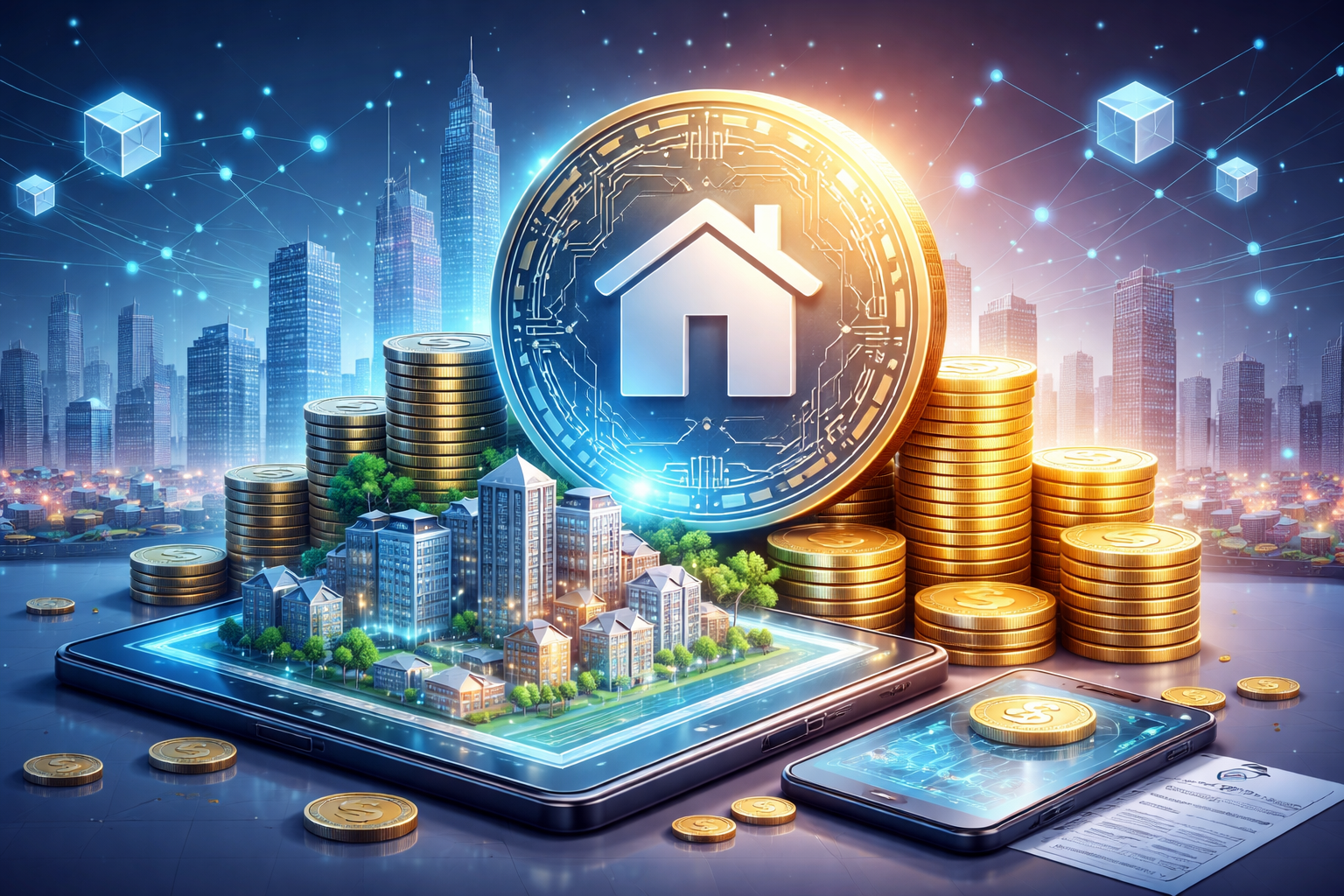
Property transactions have traditionally relied on paper-heavy processes, intermediaries, and lengthy settlement cycles. Buying or selling real estate often involves multiple stakeholders brokers, banks, lawyers, registrars each adding time, cost, and complexity.
Blockchain property trading is reshaping this entire structure by introducing digital ownership records, automated execution through smart contracts, and fractionalized investment models. Instead of treating real estate as a slow, illiquid asset class, blockchain systems are transforming it into a more transparent, efficient, and globally accessible market. This shift is not just technological it is changing how value, trust, and ownership are defined in real estate markets.
Blockchain property trading refers to the use of distributed ledger technology to record, transfer, and manage real estate ownership digitally. Each property or fraction of a property is represented as a token on a blockchain network.
These tokens can represent:
Because blockchain records are immutable and transparent, ownership history and transaction details are permanently stored and verifiable without relying solely on centralized registries.
Traditional property transactions involve extensive documentation title deeds, contracts, verification reports, and compliance forms. These documents must be manually processed and verified by multiple parties. Blockchain replaces much of this with digital records stored on a shared ledger. Once ownership is recorded, it cannot be altered without consensus from the network.
This reduces:
As a result, property transfers become more streamlined and less vulnerable to manipulation or loss of records.
One of the most transformative aspects of blockchain property trading is the use of smart contracts. A smart contract is a self-executing digital agreement that automatically enforces the terms of a transaction once predefined conditions are met.
In real estate trading, smart contracts can:
This reduces reliance on intermediaries and significantly lowers transaction friction. Instead of waiting weeks for legal and financial clearance, transactions can be completed in near real time once conditions are satisfied.
One of the most important changes blockchain introduces is fractional ownership. Instead of requiring large capital to purchase entire properties, investors can buy small fractions of real estate assets represented as tokens.
This shift enables:
For example, a commercial building worth millions can be divided into thousands of tokens, each representing a small share of ownership and rental income rights. This changes real estate from a high-capital investment into a more inclusive financial instrument.
In traditional property markets, transactions can take weeks or even months due to legal checks, banking delays, and administrative approvals.
Blockchain improves this by enabling:
Every action recorded on the blockchain is visible and traceable, reducing uncertainty for both buyers and sellers. This transparency helps minimize disputes and builds trust between parties who may never meet in person.
Blockchain property trading enables cross-border participation in real estate markets without traditional barriers such as currency restrictions, banking delays, or local intermediaries. Investors can purchase tokenized properties in different countries using digital wallets, subject to compliance rules embedded in smart contracts.
This global accessibility:
As a result, real estate markets are becoming more interconnected globally.
Real estate has historically been considered an illiquid asset class due to long selling cycles and high transaction costs. Blockchain trading introduces secondary markets where property tokens can be traded more easily between investors.
This creates:
While regulatory frameworks still influence how freely these tokens can be traded, the direction is clearly toward more liquid property markets.
Property fraud such as forged documents, double-selling, and title disputes—has been a persistent issue in traditional real estate systems.
Blockchain reduces these risks through:
Since every transaction is recorded on a distributed ledger, altering historical ownership data becomes nearly impossible without network consensus. This increases trust in property transactions and reduces the need for extensive third-party verification.
Blockchain property trading often integrates with digital payment systems, including stablecoins and tokenized fiat currencies.
This enables:
By combining real estate transactions with blockchain-based financial rails, property trading becomes more efficient and globally interoperable.
Another emerging change is the use of blockchain data combined with analytics tools to support real-time property valuation.
Instead of relying solely on periodic appraisals, blockchain systems can incorporate:
This creates more dynamic pricing models that reflect current market conditions rather than outdated valuations.
As blockchain property trading grows, regulatory frameworks are evolving to support it.
Governments and financial authorities are increasingly focusing on:
These frameworks are essential for integrating blockchain real estate systems into mainstream financial markets. Regulatory clarity is also encouraging institutional participation, which is critical for large-scale adoption.
Despite significant progress, blockchain property trading still faces several challenges:
These challenges are gradually being addressed, but they remain important considerations for widespread adoption.
Perhaps the most fundamental change is conceptual: property ownership is shifting from purely physical documentation to digital infrastructure.
Instead of relying solely on paper deeds stored in government registries, ownership is increasingly represented as programmable digital assets.
This enables:
Real estate is no longer just a physical asset it is becoming a hybrid digital-financial instrument.
Blockchain property trading is transforming how properties are bought and sold by introducing transparency, automation, and global accessibility into a historically complex and fragmented market.
By removing intermediaries, enabling fractional ownership, and digitizing ownership records, blockchain is making real estate transactions faster, more efficient, and more inclusive. While regulatory and technical challenges still exist, the direction of change is clear: property markets are evolving toward a digitally native infrastructure where ownership, investment, and trading are seamlessly integrated into blockchain systems. In the long term, this shift is likely to redefine real estate not only as a physical asset class but as a programmable financial ecosystem accessible to a global investor base.