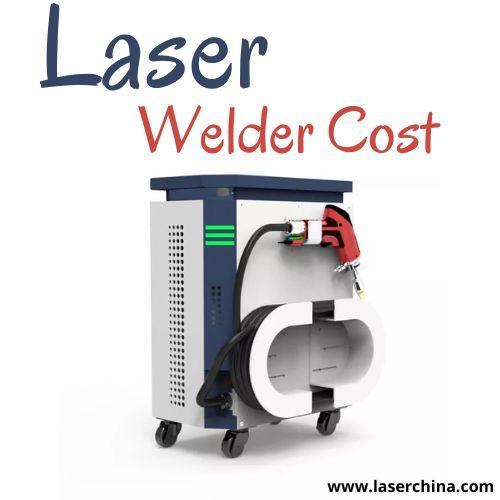
When exploring modern welding technology, one question often arises for manufacturers, metal fabricators, and industrial operators: What is the real laser welder cost and what factors determine it? The price of a laser welding machine is more than just a number—it’s a reflection of engineering precision, performance stability, and the technology integrated into its core.
Laser welding has gained dominance in industrial production due to its speed, accuracy, and clean results. However, before making an investment, understanding the complete breakdown of laser welder cost helps businesses plan their budgets wisely and choose the right machine for their operational needs.
The Growing Role of Laser Welders in Modern Industry
In industries such as automotive, aerospace, electronics, and metal fabrication, precision and reliability are top priorities. Traditional welding systems, while effective, often lack the consistency and control offered by laser welding. This has led to a surge in demand for laser welder machines, driving both innovation and accessibility in the market.
Today, the laser welder cost varies widely, influenced by multiple parameters like laser power, automation level, cooling systems, and material compatibility. Manufacturers are now realizing that the cost isn’t simply about the machine price—it also represents productivity gains, operational stability, and long-term efficiency.
Key Factors Influencing Laser Welder Cost
1. Laser Power and Output Range
The power output of a laser welder plays a central role in determining its cost. Lower-powered systems, such as those under 1000W, are generally used for delicate applications like jewelry, electronics, or thin metal sheets. On the other hand, high-power laser welders ranging from 1500W to 6000W are designed for heavy-duty industrial use.
As the wattage increases, so does the laser welder cost, since higher power requires advanced optical systems, cooling modules, and safety mechanisms to maintain performance stability.
2. Type of Laser Technology
Different laser types come with varying cost implications:
-
Fiber Laser Welders: Known for their efficiency, minimal maintenance, and high beam quality. These are the most popular choice across industries, and they typically sit at a moderate-to-high cost bracket.
-
CO₂ Laser Welders: Though effective for certain materials, they are more costly to maintain and less energy-efficient than fiber systems.
-
Nd:YAG Laser Welders: Often used for precision work, but with higher maintenance needs and energy consumption, which affects their total operational cost.
Fiber laser welders have become the industry standard, balancing price and performance effectively.
3. Automation and Control Systems
Laser welding machines equipped with automation features such as CNC control, robotic arms, or integrated motion platforms command a higher price due to the added engineering complexity. Automation enhances accuracy, repeatability, and speed—all of which justify the higher laser welder cost in industrial settings.
4. Cooling System Integration
Efficient cooling is essential to prevent overheating and ensure consistent beam quality during long production runs. Machines with advanced water-cooling systems or closed-loop chillers naturally cost more than air-cooled models. However, this directly contributes to the longevity and reliability of the welder.
5. Material and Application Compatibility
Laser welders are designed to work with various metals such as stainless steel, aluminum, copper, brass, and titanium. Systems tailored for specific applications (like battery welding, automotive components, or aerospace structures) require customized optical configurations and software, which influences the total laser welder cost.
Breaking Down the Typical Cost Range
In general, laser welder cost can range between $3,000 and $80,000, depending on capacity and configuration. Here’s a closer look at what to expect:
-
Entry-Level Laser Welders ($3,000–$8,000):
Suitable for small workshops or businesses working on light-duty welding projects. These machines often feature moderate power and manual operation.
-
Mid-Range Laser Welders ($8,000–$25,000):
Designed for medium-sized production environments, offering higher power, better precision, and optional automation support.
-
High-End Industrial Laser Welders ($25,000–$80,000+):
These systems are built for high-volume production lines, incorporating advanced control systems, multi-axis platforms, and superior cooling technology.
While these figures give a general overview, actual prices may vary based on manufacturer, configuration, and customization level.
Evaluating the Investment Beyond Purchase Price
When calculating the laser welder cost, it’s important to think long-term. The purchase price is only part of the equation—factors like operating costs, maintenance, energy efficiency, and consumables play an equally vital role.
For instance, fiber laser welders are known for their low maintenance and high energy efficiency compared to other technologies. They use minimal consumables, making them more cost-effective in continuous production environments. The upfront investment might seem high, but the return over time through reduced downtime and higher productivity is significant.
Additionally, laser welding produces minimal waste and requires no filler materials, reducing overall material expenses. This operational efficiency is a key reason why more manufacturers are transitioning from traditional welding methods to laser-based systems.
The Role of Manufacturer and After-Sales Support
The reputation and reliability of the manufacturer significantly affect the total laser welder cost. Established brands typically provide better build quality, more consistent laser output, and robust support services. While lesser-known brands might offer lower prices, after-sales support and spare parts availability could become issues later.
Buyers should always evaluate warranty coverage, training availability, and technical assistance before finalizing the purchase. Strong support ensures longer equipment life and minimizes downtime, making the investment more worthwhile.
Technological Advancements Affecting Laser Welder Cost
The past few years have seen rapid evolution in laser welding technology. Features such as AI-based welding control, smart monitoring, and IoT connectivity are becoming more common. Although these features can increase the initial laser welder cost, they also bring improvements in efficiency, real-time diagnostics, and error reduction.
Furthermore, compact designs, portable units, and energy-optimized systems are reshaping how industries approach metal joining. These developments are helping to make laser welding more accessible to small and medium-sized businesses.
Applications That Justify the Cost
The adoption of laser welding continues to expand across diverse sectors. Automotive manufacturers use it for precision joints in body panels and battery modules. Electronics industries rely on laser welding for miniature components requiring tight tolerances. Even jewelry and medical device manufacturers benefit from its precision and cleanliness.
Each of these applications demonstrates how the laser welder cost translates into measurable productivity gains and superior product quality.
Final Thoughts
The laser welder cost reflects a combination of engineering precision, material compatibility, and operational stability. While the initial investment may appear high compared to conventional welding systems, the long-term benefits in accuracy, efficiency, and production speed make it a practical choice for modern manufacturing environments.
Whether it’s for small workshops or large industrial setups, understanding what contributes to the total cost helps in making an informed decision. By evaluating power requirements, automation needs, and after-sales support, businesses can choose a laser welder that aligns perfectly with their production goals and ensures consistent quality output for years to come.
 English
 Arabic
 French
 Spanish
 Portuguese
 Deutsch
 Turkish
 Dutch
Dutch
 Italiano
 Russian
 Romaian
 Portuguese (Brazil)
 Greek
Greek