English
 Arabic
 French
 Spanish
 Portuguese
 Deutsch
 Turkish
 Dutch
Dutch
 Italiano
 Russian
 Romaian
 Portuguese (Brazil)
 Greek
Greek
Heat Transfer Ink Market Research Report: Share, Revenue and Forecast to 2035
Other |
2026-07-31 09:58:07
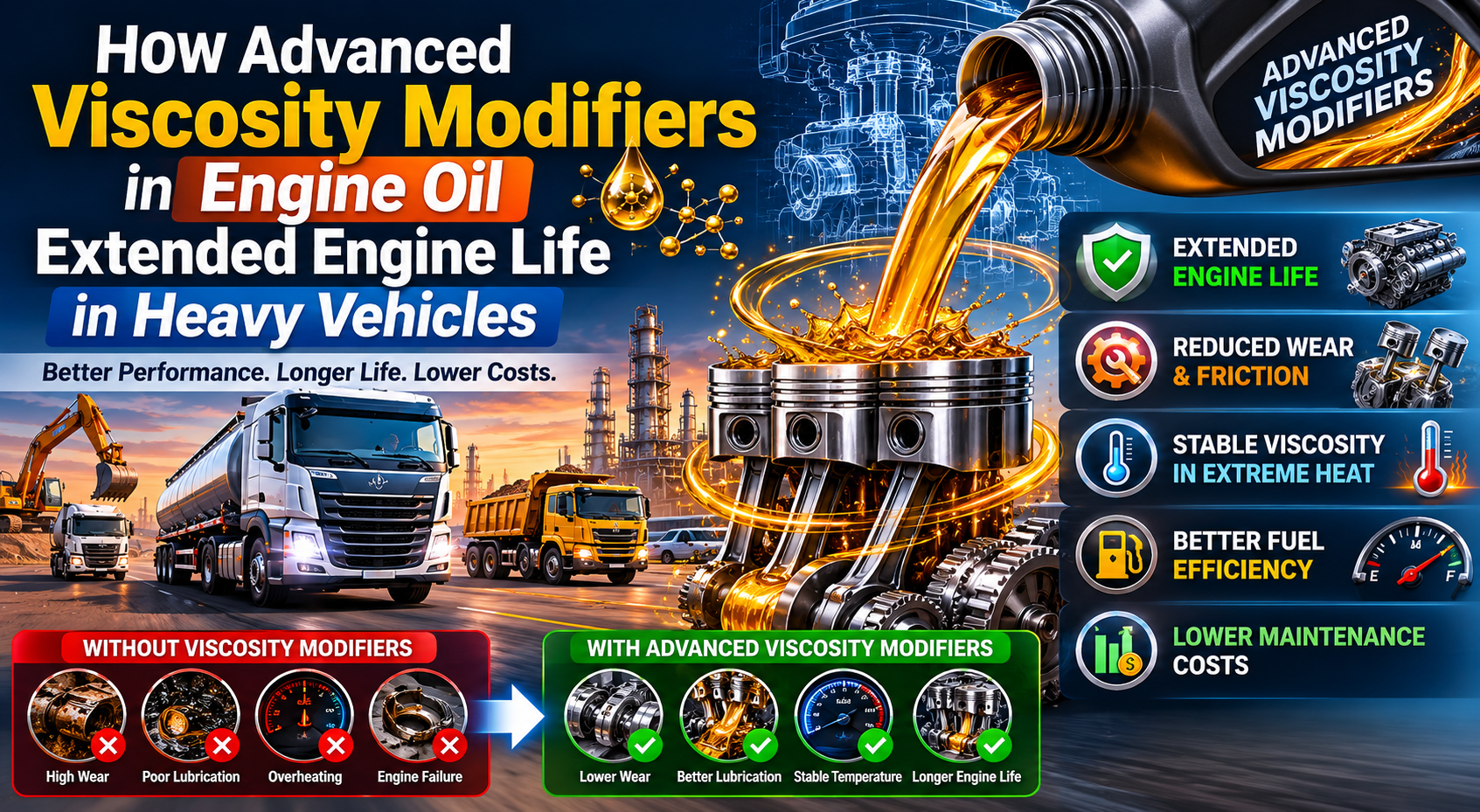
The advanced viscosity modifier (A/V) technology in engine oils has transformed the way heavy vehicles operate by extending the life of their engines, reducing maintenance costs and improving the overall reliability of their fleets. Heavy vehicles in the UAE are subjected to some of the harshest driving conditions on the planet, from high temperatures in the desert to long-distance freight transport, and the demands on these engines can be extreme. For this reason, ensuring that their engines perform at their best is essential for maximising productivity and minimising operational costs.
A logistics company in the UAE was able to achieve measurable improvements in vehicle performance, maintenance costs, and reliability by upgrading to an A/V class of lubricants. The result was a significant reduction in maintenance costs and improved long-term operational savings. Here’s how the use of A/V technology changed their fleet maintenance strategies, and why many other heavy vehicle operators are following suit and investing in advanced lubricants.
Why performance of engine oil in heavy vehicles is important
Engine oil does not just lubricate moving parts, it:
Reduces engine wear
Controls operating temperatures
Prevents sludge build up
Increases fuel economy
Protects the parts from the high pressure
However, in UAE where the temperature is high Engine Oil can very rapidly lose its ability to work effectively if the oil's viscosity isn't stable at elevated temperature.
That's why viscosity modifiers are very important to the engine oil.
Viscosity modifiers are synthetic polymer additives that have been specifically engineered to maintain a consistent viscosity of engine oil at all temperatures. They help to enable the oil to flow freely during cold start conditions while providing outstanding protection to the engine when temperatures of operation are at extreme levels.
For fleets that operate heavy truck, busses, construction equipment and industrial transport equipment, the viscosity stability of the engine oil is critical in order to maximize engine life and provide a level of protection to engine parts.
The Problem: Increased Repair Costs and Engine Wear
An Abu Dhabi transportation firm that owns a number of large trucks had a lot more trouble with maintenance on their trucks in the last two years compared to the previous two.
The trucks operated each day on long distances across the desert, with numerous load heavy under 45 degrees Celsius.
They had a variety of problems occur quite frequently:
premature engine wear
higher than usual oil consumption
Fairly constant overheating
Increased maintenance costs
Shortened the engine service interval
While performing their standard maintenance program, their engines were exhibiting quite a number of symptoms indicating excessive stress at a much earlier date than expected.
Fleet managers observed that the conventional lubricants had difficulty in maintaining a stable viscosity at such extreme temperatures.
The Role of Viscosity Improvers in Engine Oils
As temperature increases, engine oil will have a tendency to become thinner, and the viscosity will increase with lower temperatures. If the viscosity of the oil changes too much, the effectiveness of the lubrication is reduced.
The advanced viscosity modifiers in engine oil are designed to help solve this problem by allowing the engine oil to maintain an optimal flow rate for optimal lubrication and protection for a wider range of temperature.
The primary functions of these additives are the following:
To stabilize the oil viscosity at elevated temperatures
To reduce the friction between the moving parts in the engine
To improve the resistance of the chemical breakdown of the oil
To reduce or eliminate metal-to-metal contact
To improve the lubrication performance of the engine oil when subjected to a heavy load
In the UAE, with their demanding conditions of operation, this technology is especially beneficial for large fleets of heavy-duty vehicles running on diesel fuel.
The Solution: Upgrade to newer engnine oil formulation
After communicating with lubricant experts, the transportation company made the decision to switch to a higher-end engine oil (high-duty) that contained the latest technology in viscosity modifiers.
The transitional process involved the following:
1. FS - Fleet oil study
Fleet Oil analysis technicians conducted multiple in-depth oil analysis tests to evaluate contaminant levels, the degree of viscous breakdown, and the pattern of wear on the engines.
2. Optimized lubrication programme.
The firm implemented oils specifically designed for vehicles operating at extremely high temperatures.
3. Fleet performance monitoring.
For the first few months, the Fleet monitored its performance relative to four different categories:
Engine temp
Oil consumption
Maintenance frequency
Fuel use
Engine wear
In a very short period of time, the results were better than anyone expected.
The Results : Longer Engine Life and improved fleet performance
The firm experienced considerable improvements over the six month period after implementing the new oil.
Lower engine wear.
There were many less parts that were and had been in contact with each other and were generating extreme heat; there was much less metal to metal contact. Internal inspections revealed significantly less deterioration of metal surfaces over previous service intervals.
Lower consumption of oil.
Improved viscosity stability will lead to a decrease in evaporation and breakdown of the oil, which should result in lower total oil consumption for the entire fleet.
Longer service intervals.
The performance of the new engine oils has remained constant for much longer than previous oil; therefore, the company was able to extend their service intervals without causing potential damage.
Improved Fuel Efficiency.
The reduction in internal friction has aided in the increase of engine efficiencies, which has also improved fuel economy.
Less Down Time
According to the company, they saw less mechanical failures and greater availability of vehicles for daily needs.
One of the fleet managers said:
“It was an instant change. The engine temperature was more controed; the oil life was better and, we had fewer breakdowns on long hauls.”
The Importance of Viscosity Modifiers in the UAE
When it comes to operating heavy vehicles in the UAE, there are some challenges:
Above normal extreme outside temperatures.
Exposure to dust and sand.
Long-distance transporting.
Heavy amounts of weight.
High Operational Engine Stress.
If the lubrication performance is not consistent, the engines will experience more rapid wear and tear, higher engine temperature and more (expensive) break-downs.
This is one of the reasons why advanced viscosity-modifiers are becoming increasingly important for many industries including:
Logistics & Transportation
Construction
Oil & Gas
Mining
Public Transport
Industrial Fleet Management
As the business community looks to reduce their overall operational costs and extend the life of the equipment they operate, lubricant technology is becoming even more important to incorporate into fleet management strategies.
The Correct Choice of Engine Oil for Heavy Duty Commercial Vehicles
Not all oils are accepted for use in high-wear heavy duty vehicles: Only general-purpose oils which meet the manufacturers’ approvals and specifications will be appropriate for heavy duty vehicles. There are several criteria that should be looked at when selecting the best oil:
High-temperature viscosity stability
OEM approvals and specifications
Oxidation resistance
Wear protection performance
Compatibility with heavy-duty diesel engines
Working with reputable lubricant manufacturers to find a formulation compatible with the climate and weather in the UAE will identify optimal product formulation for your applications.
Conclusion
For heavy vehicle fleets using diesel engines in the United Arab Emirates, vehicle engine protection is critical to achieving the highest profit and operational efficiency. The research shows that using advanced engine oils which contain high-quality Viscosity Modified additives can significantly extend vehicle engine life, reduce vehicle maintenance costs, and provide increased overall reliability to the fleet.
To remain competitive in today's transportation and industrial markets, investments in advanced engine oil (lubricant) technology is not only a preventative maintenance activity, but also a significant financial strategy for the fleet operator.
If you are experiencing increased maintenance costs, high engine operating temperatures, or premature engine failures, consider upgrading to advanced engine oil formulations. Discuss options with your lubricants expert today to ascertain how the latest Viscosity Modifier technology can enhance your vehicles and allow for long-term satisfaction with the products the fleet operator uses.