English
 Arabic
 French
 Spanish
 Portuguese
 Deutsch
 Turkish
 Dutch
Dutch
 Italiano
 Russian
 Romaian
 Portuguese (Brazil)
 Greek
Greek
Ready-to-Cook Frozen Meat South Africa: Market Growth and Forecast to 2035
Food |
2025-12-25 14:34:07
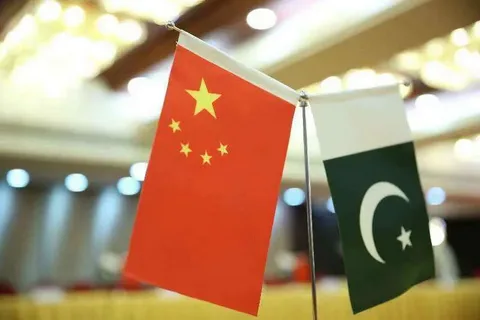
The China–Pakistan Economic Corridor (CPEC) has become one of the most transformative trade and logistics initiatives in South Asia. As new routes open, infrastructure upgrades accelerate, and policies streamline cross-border movement, CPEC is driving a logistics revolution that is reshaping how cargo flows between Pakistan and China.
In 2025 and beyond, this corridor is not just a set of roads and ports—it is a full-scale logistics ecosystem increasing speed, lowering costs, and bringing global connectivity to businesses. Here’s how CPEC is enabling faster, smarter, and more efficient cargo movement than ever before.
The backbone of CPEC’s logistics transformation is the upgraded road network, especially:
Karakoram Highway (KKH) reconstruction and widening
Motorways connecting Gwadar, Karachi, Lahore, Islamabad, and Kashgar
Link roads to industrial zones and dry ports
These improvements allow trucks to move faster with fewer breakdowns and reduced travel delays.
Shorter travel times from Karachi to Kashgar
Fewer bottlenecks and traffic interruptions
Improved safety for high-altitude logistics
Year-round road reliability due to better maintenance
Businesses now experience smoother freight journeys, especially for time-sensitive goods such as electronics, perishables, and raw materials.
One of the most significant CPEC milestones is the year-round opening of the Khunjerab Pass, previously closed for several winter months.
No seasonal disruptions
Continuous export and import flows
Better planning for production and inventory
Predictable delivery schedules for clients
This single improvement has boosted Pakistan–China cargo volume and stabilized the logistics calendar for exporters and importers.
Gwadar Port is emerging as a central hub in CPEC’s logistics revolution. Its deep-sea capability and strategic location near global shipping lanes are allowing faster maritime movement.
Direct access for large cargo vessels
Shorter shipping times to the Middle East and Africa
Expanding container capacity
New Free Zone logistics and warehousing facilities
For Chinese companies, Gwadar offers a shorter link to the Arabian Sea, reducing dependency on longer Southeast Asian sea routes.
The introduction of TIR (Transports Internationaux Routiers) has revolutionized cross-border movement by enabling sealed cargo to move across multiple countries with minimal checks.
Reduced border processing time
Faster transit to the Middle East and Central Asia
Lower documentation and inspection delays
Seamless multimodal (road + sea) integration
A route that once took 30 days by sea from China to the UAE can now take 10 days via Pakistan under the TIR system.

The Main Line-1 (ML-1) upgrade is transforming Pakistan’s rail logistics. When complete, ML-1 will support:
High-speed freight trains
Double-track operations
Higher cargo capacity
Direct integration with dry ports and SEZs
Rail is faster for bulk shipments and offers stable pricing compared to fuel-sensitive road transport.
CPEC is driving digitalization in Pakistan’s trade processes. Customs and ports now use:
E-clearance systems
Real-time cargo tracking
Online manifest and documentation
Digital risk profiling for quick clearance
These improvements reduce bureaucratic delays and help goods cross borders swiftly and transparently.
Cold-chain logistics has improved dramatically, helping exporters move temperature-sensitive goods quickly to China.
Seafood
Fruits (especially cherries, kinnow, mangoes)
Meat and poultry
Dairy items
With fast road connections and reliable cold storage, Pakistani exporters can deliver fresher products directly to Chinese buyers.
New logistics hubs are emerging along the CPEC route, including:
Sost Dry Port
Havelian Dry Port
Special Economic Zones (SEZs) with freight facilities
Integrated logistics centers in Lahore, Faisalabad, and Karachi
These hubs reduce congestion at major ports and shorten first-mile and last-mile delivery times.
CPEC has strengthened business-to-business (B2B), government-to-business (G2B), and government-to-government (G2G) cooperation.
Faster approval for logistics projects
Joint ventures in transport fleets and warehousing
Technology transfer in shipping and supply chain management
Shared investment in port and road infrastructure
This collaboration creates a more efficient trade ecosystem.
Improved route security along CPEC has ensured safer cargo movement.
Dedicated security forces
Surveillance systems
Patrolling on highways
Monitoring through CPEC Security Division
Safe routes mean uninterrupted cargo flow and minimal risk for logistics companies.
The CPEC logistics revolution is fundamentally changing how cargo moves between Pakistan and China. With upgraded infrastructure, digital systems, multimodal transport solutions, and faster border processing, the corridor is evolving into one of the most efficient trade routes in Asia.
Businesses across manufacturing, e-commerce, agriculture, mining, technology, and retail are benefiting from:
Shorter transit times
Lower operational costs
Year-round reliability
Access to massive regional markets
As CPEC enters its next phase, Pakistan is positioned to become a major logistics hub connecting China with the Middle East, Central Asia, Africa, and beyond. The future of cargo movement in the region is faster, smarter, and more globally connected—thanks to the growing momentum of CPEC.