English
 Arabic
 French
 Spanish
 Portuguese
 Deutsch
 Turkish
 Dutch
Dutch
 Italiano
 Russian
 Romaian
 Portuguese (Brazil)
 Greek
Greek
Home Care Costs for Elderly (2025–2026 Complete Guide)
Health |
2026-05-05 18:40:48
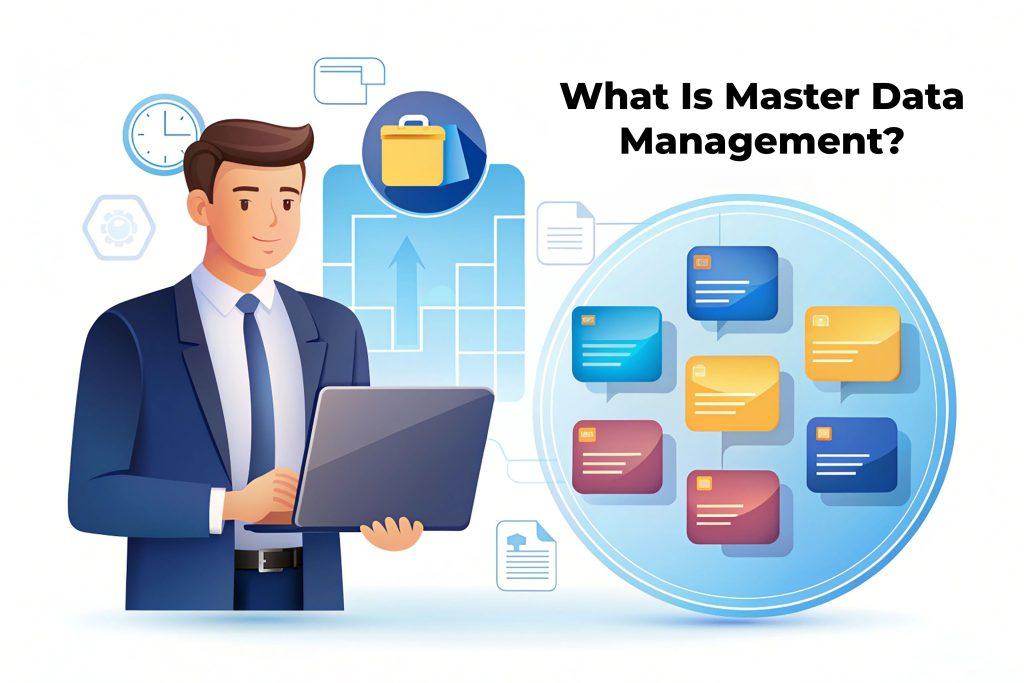
In today's data-driven business environment, organizations generate and manage vast amounts of information every day. However, maintaining accurate, consistent, and reliable data across multiple systems can be challenging. This is where Master Data Management (MDM) plays a crucial role.
Master Data Management is a strategic approach that helps businesses create a single, trusted source of truth for critical business data. By ensuring data consistency, quality, and governance, MDM enables organizations to make informed decisions, improve operational efficiency, and enhance customer experiences.
This comprehensive guide explores what Master Data Management is, its benefits, key components, implementation strategies, and why it is essential for modern businesses.
Master Data Management (MDM) is a process, technology, and governance framework used to create and maintain a unified, accurate, and consistent view of an organization's critical data assets.
Master data typically includes information about:
Customers
Products
Suppliers
Employees
Locations
Assets
The primary goal of Master Data Management is to eliminate data silos and ensure that all departments and systems use the same accurate information.
For example, if a customer's information exists in multiple databases with different details, MDM helps consolidate and synchronize that data into a single, reliable record.
Organizations rely on data for decision-making, customer engagement, compliance, and business operations. Poor data quality can lead to costly errors, inefficiencies, and missed opportunities.
Master Data Management helps businesses:
MDM ensures that critical business data remains accurate, up-to-date, and consistent across all systems.
Executives and managers can make better decisions when they have access to reliable data.
Employees spend less time correcting errors and searching for accurate information.
Many industries must comply with strict data regulations. MDM helps maintain data integrity and audit readiness.
Accurate customer data allows organizations to provide personalized services and improve customer satisfaction.
Successful Master Data Management consists of several essential components.
Data governance defines policies, standards, and responsibilities for managing data throughout the organization.
Key governance activities include:
Data ownership
Data quality standards
Security policies
Compliance requirements
Organizations often use multiple software systems. MDM integrates data from different sources to create a unified view.
Common data sources include:
CRM systems
ERP platforms
Marketing tools
E-commerce systems
Financial applications
Data quality management ensures information is:
Accurate
Complete
Consistent
Timely
Valid
Regular data cleansing helps eliminate duplicates and errors.
MDM systems identify duplicate records and merge them into a single trusted version.
For example, multiple customer records with slight variations can be consolidated into one accurate profile.
Data stewards oversee data quality and governance efforts within the organization.
Their responsibilities include:
Monitoring data quality
Resolving data issues
Enforcing policies
Supporting compliance initiatives
Implementing a robust Master Data Management strategy provides numerous advantages.
Reliable data improves analytics and reporting accuracy, leading to better strategic planning.
Organizations save time and resources by minimizing manual data correction efforts.
A unified customer view enables more effective marketing, sales, and customer service initiatives.
Employees can access trusted data quickly, reducing inefficiencies and duplication of work.
MDM establishes controls that protect sensitive information and reduce security risks.
Accurate and standardized data supports cloud migration, automation, and advanced technologies such as artificial intelligence.
While MDM offers significant benefits, organizations often encounter challenges during implementation.
Departments frequently maintain separate databases that contain conflicting information.
Without clear governance policies, maintaining consistent data becomes difficult.
Employees may resist new processes and technologies introduced by MDM initiatives.
Large organizations often manage data across hundreds of systems and applications.
Existing data issues can complicate implementation efforts and require extensive cleanup.
Organizations can improve their chances of success by following proven MDM best practices.
Establish measurable goals such as:
Improving customer data accuracy
Reducing duplicate records
Enhancing reporting capabilities
Create governance frameworks that define roles, responsibilities, and standards.
Focus on the most important data categories, including customers, products, and suppliers.
Select technology that aligns with business requirements, scalability needs, and integration capabilities.
Conduct data profiling and cleansing before migrating information into the MDM platform.
Engage business leaders, IT teams, and end users throughout the implementation process.
MDM is an ongoing initiative that requires regular monitoring, maintenance, and optimization.
Organizations can choose from several MDM architecture models.
The registry model links data from various systems without physically consolidating records.
Data from multiple sources is gathered into a centralized repository for reporting and analysis.
Data is synchronized between source systems and a central MDM hub.
A single master system becomes the authoritative source for all business data.
The best architecture depends on organizational goals, infrastructure, and complexity.
Digital transformation initiatives rely heavily on high-quality data.
Master Data Management serves as a foundation for:
Artificial Intelligence (AI)
Machine Learning
Cloud Computing
Business Analytics
Customer Relationship Management
Automation
Organizations with strong MDM programs can implement digital technologies more effectively and achieve greater business value.
The future of Master Data Management continues to evolve with technological advancements.
Emerging trends include:
Artificial intelligence is improving data matching, cleansing, and governance processes.
Cloud platforms offer scalability, flexibility, and lower infrastructure costs.
Businesses increasingly require real-time access to accurate information across systems.
Growing regulatory requirements are driving stronger governance practices.
MDM solutions are becoming closely integrated with analytics and business intelligence platforms.
Master Data Management is a critical business strategy that enables organizations to maintain accurate, consistent, and trustworthy data across their operations. By implementing effective MDM practices, companies can improve decision-making, enhance customer experiences, increase efficiency, and support digital transformation initiatives.
As businesses continue to rely on data as a strategic asset, investing in Master Data Management will remain essential for achieving long-term success and maintaining a competitive advantage in today's rapidly evolving marketplace.