English
 Arabic
 French
 Spanish
 Portuguese
 Deutsch
 Turkish
 Dutch
Dutch
 Italiano
 Russian
 Romaian
 Portuguese (Brazil)
 Greek
Greek
How long does trenchless pipe lining last?
Home |
2025-11-05 09:52:03
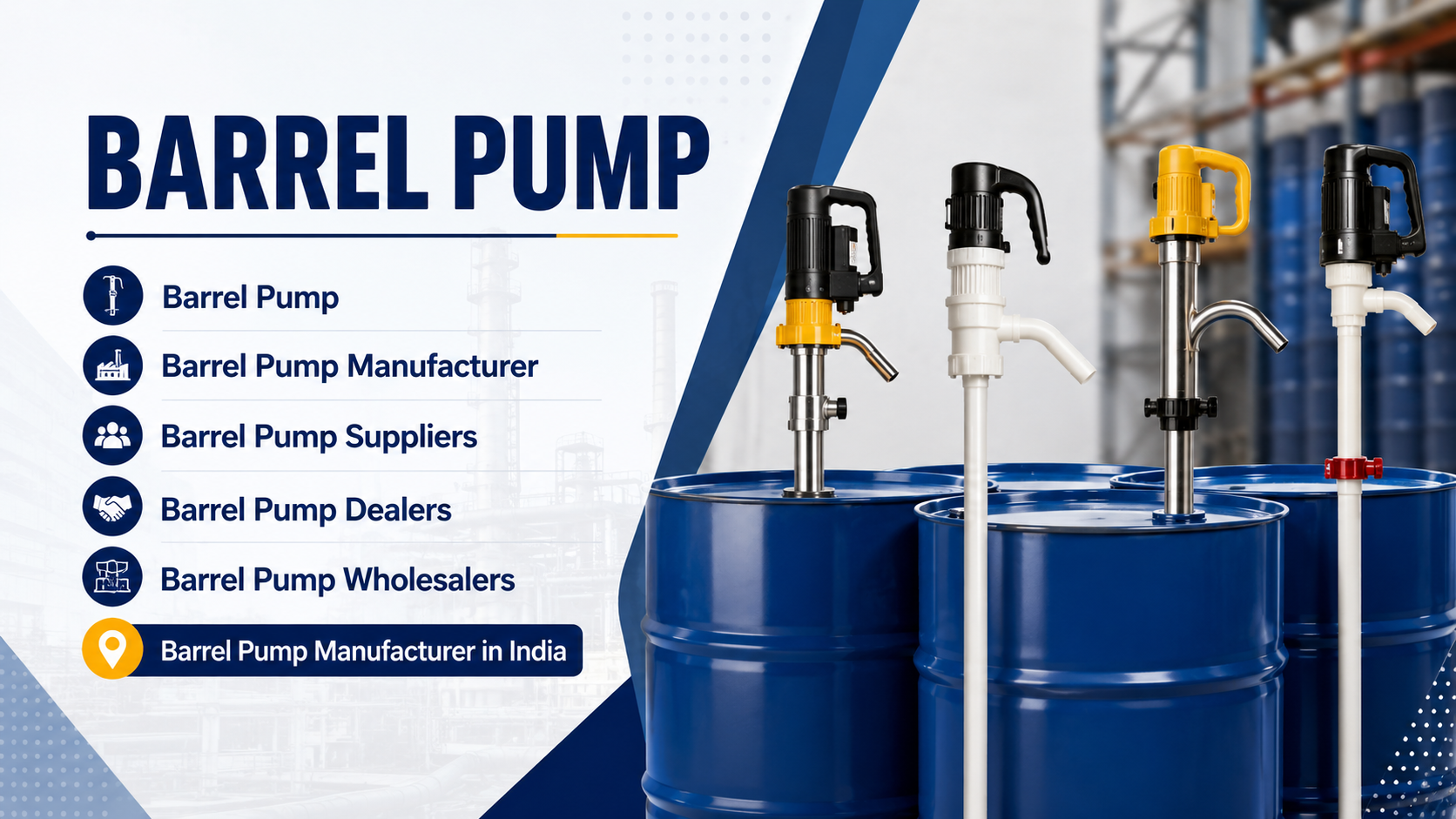
A 208-litre drum looks simple until someone has to tilt it, pour from it, and explain the stain near the packing line. A Barrel Pump removes that rough handling from daily liquid transfer. That matters in plants handling oil, fuel, solvents, lubricants, chemicals, and process liquids where one careless pour can waste material or create a safety issue.
Most buyers still treat the pump like a small accessory.
That shortcut gets expensive.
Manual rotary pumps suit low-volume transfer where power access is limited. Electric models work better for repeated transfer, and some industrial drum pump listings go up to 30–150 LPM depending on design. Pneumatic pumps make sense where compressed air is available or spark risk affects the decision.
Here’s the point buyers miss: the liquid decides the pump, not the other way around.
Giza Pumps lists SS 304, SS 316, PP, PVDF, and cast iron options. SS 316 is generally preferred for more demanding chemical use, PP suits many mild chemicals, and cast iron is common for heavier oils. A supplier who says “metal body” or “plastic body” without naming the grade is selling confusion, not clarity.
Standard drums are commonly 15 gallon, 30 gallon, and 55 gallon sizes, roughly 57, 114, and 208 litres. Check suction tube length, bung fitment, outlet size, seal material, and whether the tube reaches close to the drum bottom. Even 2 litres left behind in 70 drums becomes 140 litres of paid material stuck in waste handling.
Fluid compatibility: Good answer: liquid name, concentration, viscosity, temperature, and usage frequency are checked. Bad answer: “sab liquid mein chal jayega.”
Material proof: Good answer: SS 304, SS 316, PP, PVDF, cast iron, or another grade is clearly named. Bad answer: “standard material.”
Flow expectation: Good answer: LPM is discussed with viscosity and suction height. Bad answer: only the highest catalogue output is quoted.
Spare support: Good answer: seals, vanes, tubes, handles, and service guidance are discussed. Bad answer: “break ho to new pump le lena.”
Dispatch clarity: Good answer: packing, dispatch city, invoice details, and timeline are shared. Bad answer: price only.
Not every low quote is a saving.
OSHA guidance says containers over 30 gallons in inside storage rooms should use approved dispensing methods instead of casual handling. A Barrel Pump supports controlled top-side transfer, which helps protect floors, stock, operators, and nearby packing areas.
If a plant loses 2 litres per drum across 60 drums a month, that is 120 litres of paid material wasted. Which means the pump is not only a safety item. It is a margin-protection item.
Pouring from a full drum often needs two people and a trolley. With the right pump, one trained operator can handle routine dispensing with less bending, lifting, and waiting. That is useful in maintenance bays, chemical stores, service stations, and batch preparation areas.
Contamination is not always dramatic. Sometimes it is a dirty funnel, a reused pipe, or a half-open drum near dust. A dedicated pump reduces open handling and keeps transfer cleaner.
OSHA also notes that certain flammable-liquid dispensing from drums should use approved pumps drawing through the top or self-closing faucets. A pump does not replace site safety controls, but it reduces the bad habit of tilting heavy drums by hand. That habit is common. It is also lazy supervision.
The cheapest pump becomes expensive when seals swell, handles jam, or the tube corrodes. Good Barrel Pump Suppliers protect your margin by matching the pump to the liquid, not to the lowest line item.
Giza Pumps operates from Shapar, Rajkot, Gujarat - 360024. That location matters because Rajkot sits inside a strong manufacturing belt with casting, machining, and pump-supply support close by. For buyers in Gujarat, Maharashtra, Rajasthan, Delhi NCR, Karnataka, Tamil Nadu, and other industrial regions, dispatch reliability can matter as much as pump material.
A Barrel Pump Manufacturer in India should support plant buyers, repeat distributor orders, and urgent replacement needs. Barrel Pump Dealers help with local coordination. Barrel Pump Wholesalers help distributors who need multiple units with consistent packing, model marking, and invoice clarity. Most buyers ask, “stock hai kya?” Procurement teams should ask, “where is it checked, packed, and supported after dispatch?”
At Giza Pumps, we work with industrial buyers who need practical liquid-transfer equipment, not catalogue drama. We have 26+ years of market experience, and our range includes rotary barrel pumps, drum pumps, manual pumps, electric options, and pneumatic models. We ask for liquid name, drum size, approximate LPM need, and usage frequency before suggesting a model because a pump that works for diesel may fail with a corrosive chemical.
We have rejected enquiries where the buyer wanted one pump for three incompatible liquids without cleaning, seal checks, or material confirmation; selling that would be easy, but dealing with the failure later would be dishonest.
At Giza Pumps, we reply to serious industrial enquiries within 24 working hours. Our MOQ starts from 1 unit for standard industrial requirements, while wholesale pricing is shared for bulk and repeat orders after model confirmation. Send us the liquid name, viscosity if available, drum capacity, daily transfer volume, preferred operation type, delivery city, and required quantity.
For price, model selection, and dispatch details, message Giza Pumps with your requirement today.
A Barrel Pump protects operator time, floor safety, batch consistency, and the buyer’s margin on every 208-litre container handled. The next smart purchase will not be the cheapest pump. It will be the one matched correctly before the first dispatch.
It gives controlled transfer from drums without tilting, dragging, or open pouring. For oil, fuel, solvents, and chemicals, that means less wastage and fewer handling mistakes. The caveat is simple: the benefit only shows when pump material matches the liquid.
Ask for material grade, flow range, seal details, spare availability, and dispatch timeline. A serious Barrel Pump Manufacturer will ask about your liquid before quoting. If the supplier only pushes the lowest price, expect trouble later.
Ask whether the pump suits your exact liquid, not just your industry. Good Barrel Pump Suppliers will discuss viscosity, temperature, drum size, and usage frequency. Bad suppliers avoid these details because it lets them sell whatever is in stock.
Yes, Barrel Pump Dealers can help when you need local coordination, faster communication, or replacement planning. The honest caveat: a dealer is only useful if they understand material compatibility. Otherwise, they are just a billing counter.
Barrel Pump Wholesalers are useful for bulk buying, distributor stocking, and repeat supply. Better value does not mean only lower price; it also means consistent models, packing, invoice details, and fewer resale complaints.
A Barrel Pump Manufacturer in India gives procurement teams easier communication, India-based dispatch, local invoicing, and better replacement support. For wholesalers, plant buyers, and maintenance heads, that reduces waiting time and avoids long import-style coordination.