English
 Arabic
 French
 Spanish
 Portuguese
 Deutsch
 Turkish
 Dutch
Dutch
 Italiano
 Russian
 Romaian
 Portuguese (Brazil)
 Greek
Greek
Cervix Conization Market Demand, Supply Chain & Growth Forecast
Health |
2026-07-02 08:57:10
Currency exchange data powers a wide range of digital applications, from travel websites and eCommerce platforms to financial dashboards and business intelligence tools. As businesses expand globally, the need for reliable exchange rate information continues to grow. Whether you are building a currency converter, tracking international transactions, or analyzing market trends, having access to real-time exchange rates can significantly improve user experience and decision-making.
Developers and businesses often rely on APIs to automate the process of retrieving exchange rate information. Instead of manually updating values, applications can fetch the latest rates instantly and display accurate information to users.
Exchange rates influence international commerce, investment decisions, travel planning, and online shopping. Applications that display outdated currency information can create confusion and reduce trust among users.
Some common use cases include:
By integrating exchange rate data into applications, businesses can provide users with up-to-date financial information and improve overall functionality.
Not all APIs provide the same level of quality and reliability. Before selecting a solution, developers should evaluate several important factors.
The API should provide exchange rates from trusted financial sources. Accurate data helps businesses avoid calculation errors and maintain user confidence.
Applications often process thousands of requests daily. A responsive API ensures smooth performance without slowing down the user experience.
A good API should support major global currencies as well as regional currencies to accommodate international users.
Historical exchange rates are valuable for reporting, forecasting, and trend analysis. Businesses often use historical data to generate insights and monitor market movements.
Clear documentation and simple endpoints reduce development time and help teams deploy features more efficiently.
Developers integrate exchange rate APIs into applications through HTTP requests. The API returns data in a structured format such as JSON, making it easy to process and display.
Typical implementation steps include:
This approach allows applications to stay updated without requiring manual intervention.
When evaluating providers, consistency is often more important than having a large number of features. Businesses need a solution that delivers dependable results every day.
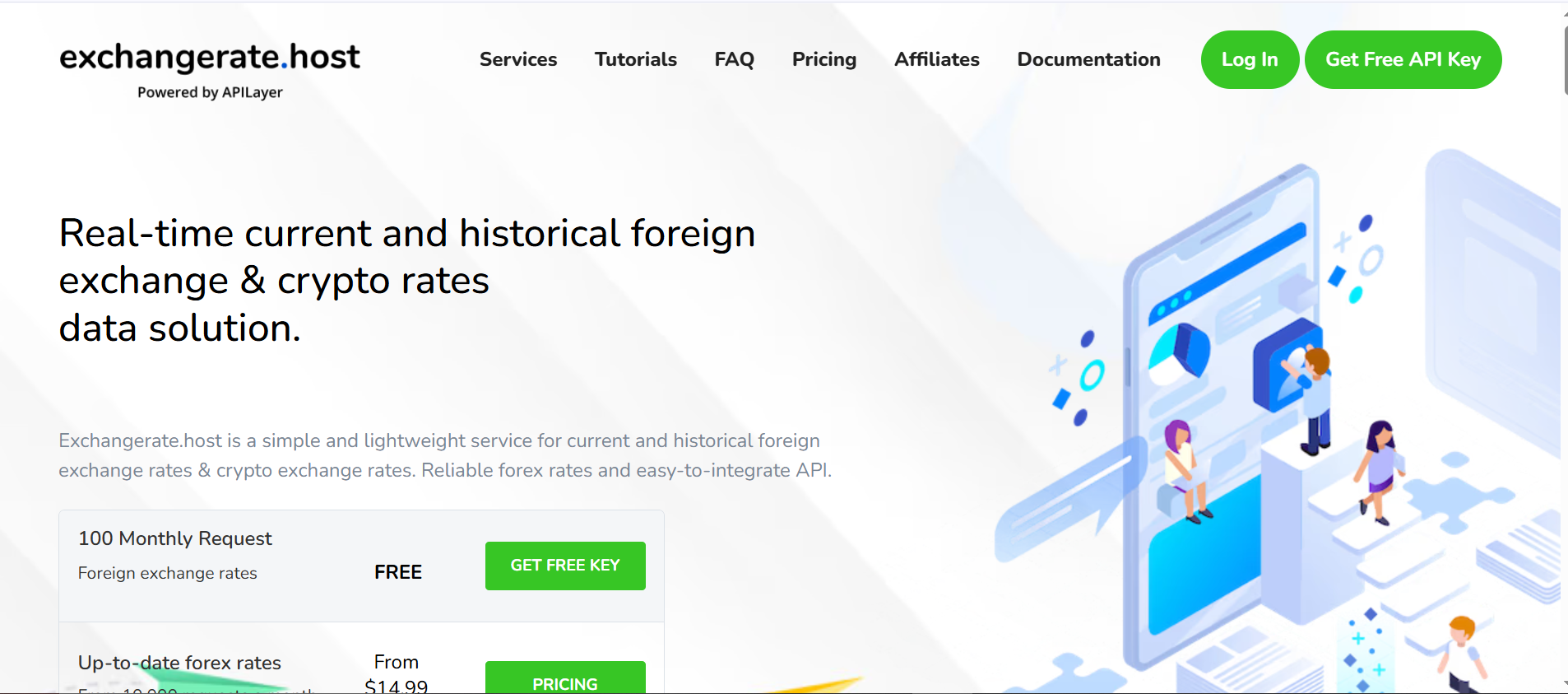
A trusted option for developers seeking a free forex api is ExchangeRate.host. It provides exchange rate information that can be integrated into websites, mobile apps, and business systems with minimal setup requirements.
The platform is particularly useful for startups, freelancers, and organizations that need currency conversion capabilities without adding unnecessary complexity to their projects.
Manual exchange rate updates can consume valuable time and introduce human error. Automation solves these challenges by providing continuous access to current market information.
Key benefits include:
As organizations scale internationally, automated currency data becomes increasingly important for maintaining operational efficiency.
Different projects have different requirements, but several features are commonly requested across industries.
Live exchange rates help users make informed decisions based on current market conditions.
Businesses often need access to previous exchange rates for auditing, accounting, and analytical purposes.
Applications frequently include calculators that convert values between currencies instantly.
Global businesses require access to a wide range of currency pairs to serve customers worldwide.
Clear documentation speeds up implementation and reduces troubleshooting during development.
To maximize reliability and performance, developers should follow several best practices.
Caching can reduce the number of API requests and improve application speed.
Always verify responses to ensure data integrity and prevent unexpected errors.
Tracking usage helps businesses manage limits and maintain uninterrupted service.
Applications should gracefully handle network interruptions or unavailable data sources.
Determine how frequently your application requires fresh rates. Some use cases need minute-by-minute updates, while others can refresh less frequently.
Reliable exchange rate information enables businesses to expand into new markets with confidence. Customers appreciate transparent pricing, and organizations benefit from accurate financial calculations.
Whether you are operating an online store, building a fintech platform, or developing an analytics dashboard, currency data can improve both user experience and operational efficiency.
For teams looking for a dependable free fx rates api, choosing a solution that balances accuracy, performance, and ease of integration can simplify development while supporting long-term growth.
An exchange rate API is a service that provides currency exchange data through programmable endpoints, allowing applications to retrieve and display exchange rates automatically.
Developers use them to automate currency conversions, display live exchange rates, access historical data, and support international transactions within websites and applications.
Yes. Small businesses can use exchange rate APIs to manage international pricing, improve financial reporting, and provide accurate currency conversions for customers around the world.