English
 Arabic
 French
 Spanish
 Portuguese
 Deutsch
 Turkish
 Dutch
Dutch
 Italiano
 Russian
 Romaian
 Portuguese (Brazil)
 Greek
Greek
Capital Restructuring Service Market Forecast: Future Growth Driven by Corporate Resilience and Investment Strategies
Home |
2026-07-15 06:28:40
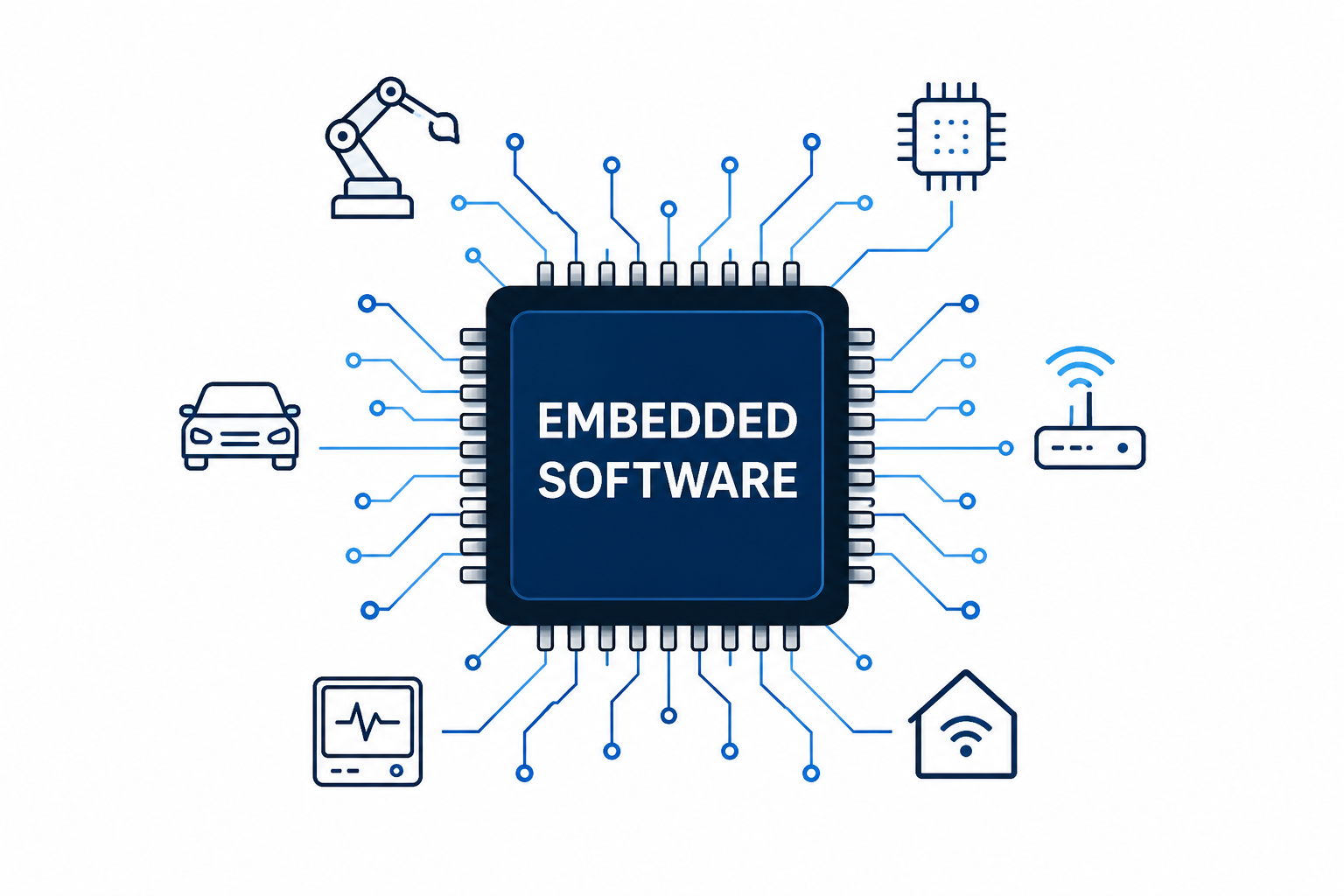
Embedded Software is a specialized type of software designed to control and manage the functions of embedded systems. Unlike traditional software that runs on personal computers or mobile devices, embedded software is built to perform dedicated tasks within hardware devices. It acts as the intelligence behind electronic systems, enabling machines and equipment to operate efficiently, accurately, and reliably. From household appliances and medical equipment to industrial machinery and automotive systems, embedded software powers countless technologies that people use every day.
As industries embrace automation, connectivity, and smart technologies, the demand for robust embedded software solutions continues to grow. Businesses rely on embedded software to improve product functionality, enhance system performance, reduce operational costs, and deliver seamless user experiences. Whether controlling sensors, processing real-time data, or managing communication between devices, embedded software plays a critical role in modern engineering.
Embedded software is a computer program specifically developed for embedded systems. It is stored in the memory of microcontrollers, microprocessors, or system-on-chip (SoC) devices and is designed to perform predefined functions. Unlike general-purpose operating systems, embedded software is optimized for efficiency, low memory usage, and fast response times.
The software communicates directly with hardware components such as sensors, motors, displays, communication modules, and controllers. It continuously monitors system inputs, processes data, and controls outputs to ensure smooth and reliable operation.
Embedded software has become an essential component of modern technology because it enables intelligent automation and precise control. It allows devices to perform complex operations without human intervention while maintaining high levels of accuracy and reliability.
Organizations across industries use embedded software to improve operational efficiency, increase productivity, enhance product quality, reduce energy consumption, and support digital transformation initiatives. As connected devices continue to expand through the Internet of Things (IoT), embedded software serves as the foundation for secure communication and smart decision-making.
Embedded software is developed with several unique characteristics that distinguish it from conventional software applications. These include:
Dedicated functionality for specific applications
Real-time processing capabilities
Low memory and processor usage
High reliability and stability
Fast system response
Efficient power management
Hardware-specific optimization
Secure data processing
Scalable architecture
Long operational life
These features make embedded software suitable for mission-critical applications where performance and reliability are essential.
Embedded software is widely used across numerous industries and applications.
Modern vehicles contain multiple embedded systems that control engine management, transmission, braking systems, airbags, battery management, climate control, navigation, infotainment, and advanced driver assistance systems (ADAS). Embedded software ensures vehicle safety, fuel efficiency, and driving comfort.
Manufacturing facilities depend on embedded software to operate programmable logic controllers (PLCs), robotic systems, industrial sensors, conveyor systems, machine vision equipment, and automated production lines. It enables efficient process control and supports Industry 4.0 initiatives.
Embedded software powers smartphones, smart televisions, wearable devices, washing machines, refrigerators, microwave ovens, cameras, printers, gaming consoles, and home automation products. It provides intelligent functionality while optimizing power consumption and system performance.
Medical equipment such as patient monitoring systems, infusion pumps, diagnostic devices, imaging systems, ventilators, and wearable health trackers rely on embedded software for accurate monitoring, real-time data processing, and dependable operation.
Aircraft navigation systems, radar equipment, satellite communication systems, drones, and military electronics require highly reliable embedded software to meet strict safety and performance standards.
Communication devices, routers, gateways, IoT modules, and networking equipment use embedded software to manage data transmission, wireless connectivity, and network security.
Embedded software is increasingly used in precision farming solutions for automated irrigation, crop monitoring, environmental sensing, GPS-guided equipment, and smart agricultural machinery. These technologies improve productivity while conserving resources.
Developing embedded software requires a structured engineering approach to ensure quality and reliability. The development lifecycle generally includes:
Requirement gathering and analysis
System architecture design
Hardware platform selection
Firmware and driver development
Software coding
Hardware integration
Unit testing
Functional testing
Integration testing
Performance optimization
System validation
Deployment
Maintenance and updates
Every stage focuses on delivering software that meets technical specifications and customer requirements.
Embedded software developers use a variety of programming languages and development tools depending on the application and hardware platform.
Common programming languages include:
C
C++
Embedded C
Assembly Language
Python (for testing and scripting)
Popular real-time operating systems (RTOS) include:
FreeRTOS
Zephyr
ThreadX
VxWorks
QNX
Frequently used communication protocols include:
CAN
CAN FD
LIN
UART
SPI
I2C
Ethernet
USB
Bluetooth
Wi-Fi
MQTT
Modbus
These technologies help create reliable and efficient embedded systems for a wide range of applications.
High-quality embedded software provides numerous advantages for manufacturers and businesses.
It improves operational efficiency by automating repetitive tasks and enabling real-time control of equipment. Embedded software increases system reliability through optimized programming and extensive testing. It also reduces maintenance costs by identifying faults early and supporting predictive maintenance strategies.
Additional benefits include:
Improved product performance
Faster processing speeds
Enhanced system security
Lower power consumption
Reduced hardware costs
Better user experience
Increased scalability
Greater flexibility for future upgrades
Long-term operational stability
These benefits contribute to higher productivity and improved return on investment.
Despite its many advantages, embedded software development presents several technical challenges.
Developers must work within strict hardware limitations while maintaining real-time performance and ensuring system reliability. Limited memory, processor constraints, hardware compatibility issues, cybersecurity threats, and regulatory compliance all require careful planning and rigorous testing.
As connected devices become more common, developers must also focus on secure communication, remote software updates, and protection against cyber threats. Balancing performance, power efficiency, and security remains a key challenge for embedded software engineers.
The future of embedded software is closely linked with emerging technologies such as artificial intelligence (AI), machine learning, edge computing, 5G connectivity, cloud integration, autonomous vehicles, robotics, and the Industrial Internet of Things (IIoT).
Modern embedded systems are becoming more intelligent, enabling devices to analyze data locally, make autonomous decisions, and communicate seamlessly with cloud platforms. Predictive maintenance, remote diagnostics, digital twins, and advanced analytics are transforming the way industries manage equipment and operations.
Cybersecurity is also becoming increasingly important as connected devices continue to grow. Future embedded software solutions will incorporate stronger encryption, secure boot mechanisms, authenticated firmware updates, and advanced threat detection to protect critical systems from evolving cyber risks.
Embedded software is the foundation of today's intelligent electronic systems, enabling devices to perform dedicated functions with speed, precision, and reliability. It plays a vital role in industries such as automotive, industrial automation, healthcare, telecommunications, aerospace, consumer electronics, and smart agriculture.
By combining optimized programming, efficient hardware integration, real-time processing, and secure communication, embedded software helps organizations build innovative products that meet modern performance and reliability standards. As technology continues to evolve, embedded software will remain at the heart of automation, connectivity, and digital transformation, driving smarter products, improved operational efficiency, and sustainable business growth.