English
 Arabic
 French
 Spanish
 Portuguese
 Deutsch
 Turkish
 Dutch
Dutch
 Italiano
 Russian
 Romaian
 Portuguese (Brazil)
 Greek
Greek
UK Cold Storage Market Trends and Forecast to 2035: Growth Opportunities, Innovations, and Industry Outlook
Other |
2026-07-08 07:11:42
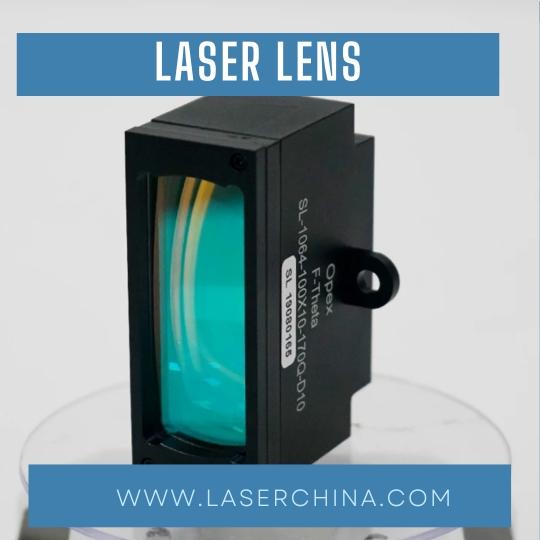
The laser lens plays a pivotal role in the operation of laser systems, serving as a critical component in directing, focusing, and controlling laser beams across diverse applications. At its core, a laser lens is designed to manipulate the light emitted by a laser source, ensuring that the beam is accurately concentrated, expanded, or redirected depending on the requirements of the task at hand. Laser lenses come in multiple configurations, materials, and designs, each tailored to specific wavelengths, power levels, and operational environments.
In industrial settings, laser lenses are indispensable for tasks that require precision and exactness. Cutting, engraving, welding, and marking all depend heavily on the performance of the laser lens. The ability of a laser lens to maintain the integrity of the beam ensures high-quality results and consistent output across repetitive tasks. Manufacturers often calibrate laser lenses for compatibility with specific laser machines, optimizing them for materials ranging from metals and plastics to glass and ceramics.
Laser lenses are crafted from specialized optical materials that can endure high-intensity light while minimizing distortions. Materials like fused silica, borosilicate glass, and certain crystal compounds are common choices, as they provide excellent transmission for specific laser wavelengths and resist thermal stress. The optical surfaces of these lenses are carefully polished and coated to maximize light transmission and reduce reflections. These coatings are essential for maintaining beam efficiency and for protecting the lens surface from potential damage caused by high-powered laser exposure.
One of the critical functions of a laser lens is to focus the laser beam to a precise point. This process involves manipulating the beam's divergence and convergence to achieve the desired spot size and intensity. The focal length of the lens determines how tightly the beam can be focused, which directly impacts the energy density at the point of contact. A smaller focal spot increases the intensity, making the laser suitable for detailed engraving or cutting thin materials. Conversely, a larger focal spot may be used for broader material removal or shaping processes.
Laser lenses also play a role in controlling the depth of focus, which is the distance over which the laser maintains an effective beam diameter. Depth of focus is crucial in applications where uniform energy distribution is necessary across uneven surfaces or thicker materials. By adjusting the focal length and using appropriate lens configurations, operators can ensure consistent performance even in complex or demanding applications.
The design of laser lenses also incorporates considerations for thermal effects. High-power lasers generate significant heat during operation, which can induce thermal lensing—a phenomenon where temperature gradients within the lens material alter the beam’s path. To counteract these effects, laser lenses are sometimes equipped with cooling mechanisms or fabricated from materials with low thermal expansion coefficients. Such designs maintain beam stability and prevent distortion, ensuring precision in applications that demand high repeatability.
Another critical aspect of laser lenses is their compatibility with different types of lasers, including CO2, fiber, and solid-state lasers. Each laser type emits light at specific wavelengths, and the lens material and coatings must match these wavelengths to optimize performance. Incorrect pairing can lead to reduced transmission, increased reflection, or even damage to the lens. Therefore, selecting the right lens for a particular laser system is a crucial step in maximizing efficiency and ensuring safety.
Laser lenses also come in various shapes, including plano-convex, bi-convex, and aspheric designs. Plano-convex lenses are widely used for simple focusing tasks, while bi-convex lenses provide better control over spherical aberrations. Aspheric lenses are designed to correct complex distortions and can deliver superior beam quality for precision applications. Each lens type is engineered to address specific challenges and operational needs, making them versatile components across industries.
Maintenance and care of laser lenses are critical to sustaining performance. Lenses must be kept free from dust, debris, and fingerprints, which can scatter light and reduce efficiency. Cleaning is typically done with specialized optical wipes and solvents that do not damage coatings. Periodic inspections ensure that any micro-scratches, contamination, or coating degradation is identified early, preventing suboptimal performance or potential failure during critical operations.
In scientific research, laser lenses enable breakthroughs by providing controlled and precise laser beams for experiments. In spectroscopy, microscopy, and optical trapping, the accuracy of a laser lens determines the quality of data and the reliability of results. Researchers often select lenses with custom specifications to achieve particular beam shapes, divergences, and focus lengths, illustrating the lens's centrality to advanced optical studies.
The laser lens is also integral in medical applications, such as laser surgery, dermatology, and eye treatments. The precision it offers allows surgeons and medical professionals to target tissues accurately, minimizing collateral damage and improving patient outcomes. In such contexts, laser lenses are designed with exacting standards to ensure both performance and safety under rigorous operating conditions.
In addition, laser lenses contribute to emerging technologies such as laser 3D printing, additive manufacturing, and laser-based communication systems. Their ability to control high-intensity beams over varying distances and through different mediums makes them invaluable in fields pushing the boundaries of innovation. Each application demands a specific lens type, focal length, and optical configuration, highlighting the versatility and indispensability of laser lenses in modern technology.
Laser lenses are available in standardized and custom configurations. Standard lenses cater to common industrial and scientific requirements, providing reliable performance for widely used wavelengths and power levels. Custom lenses are tailored for unique applications, ensuring compatibility with specialized lasers, environmental conditions, or complex beam manipulation needs. This flexibility allows engineers, technicians, and researchers to optimize their systems for maximum efficiency and output.
The evolution of laser lens technology continues to expand its potential applications. Advances in optical coatings, material science, and precision manufacturing enhance lens durability, beam quality, and thermal performance. These improvements open new possibilities in areas such as ultra-precision manufacturing, high-speed communication, and advanced medical procedures. As laser systems continue to advance, the laser lens remains a cornerstone component, essential for directing, shaping, and controlling light with unparalleled precision.
From industrial production floors to cutting-edge laboratories, the laser lens serves as a crucial element in translating laser energy into practical results. Its design, material composition, and optical properties collectively determine the efficiency, precision, and consistency of laser systems across applications. Whether for cutting, marking, engraving, medical treatment, or research, the laser lens exemplifies the intricate balance between science, engineering, and application-specific requirements, making it a fundamental element in the ever-expanding world of laser technology.