English
 Arabic
 French
 Spanish
 Portuguese
 Deutsch
 Turkish
 Dutch
Dutch
 Italiano
 Russian
 Romaian
 Portuguese (Brazil)
 Greek
Greek
Vegf Human Elisa Kit Market: Contract Research Organizations and Service Providers
Health |
2026-07-03 08:08:22
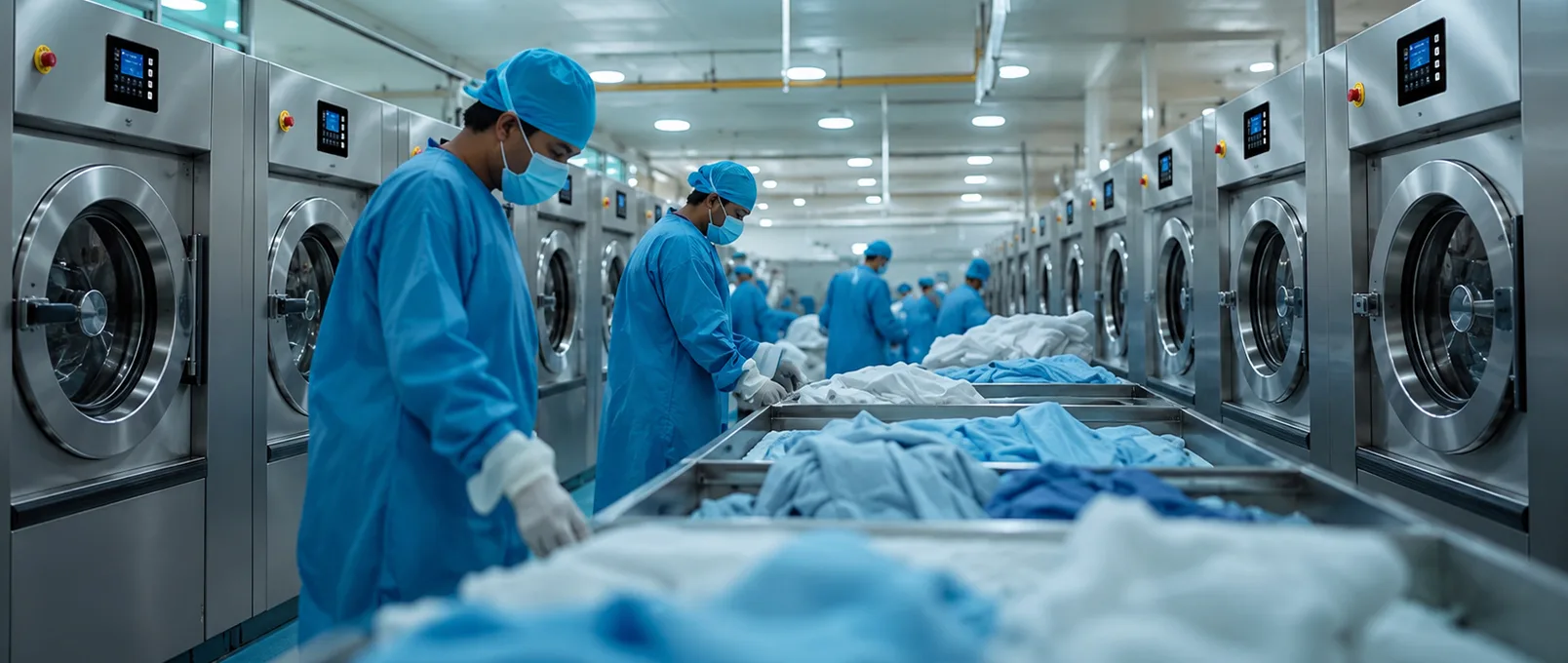
In hospitals and healthcare facilities, laundry operations play a vital role in preventing healthcare-associated infections (HAIs). Every day, patient gowns, bed linens, surgical drapes, towels, ICU textiles, and staff uniforms must be processed according to strict hygiene standards. The right infection-control laundry equipment helps eliminate pathogens, prevent cross-contamination, and support compliance with healthcare quality standards such as NABH.
Modern hospital laundries in India increasingly use barrier washing technology, automated chemical dosing, thermal disinfection programs, and RFID-enabled linen management to improve hygiene and operational efficiency. Government guidance on mechanized hospital laundries also recommends equipment sizing based on hospital bed strength and daily linen volume.
Barrier washer extractors are considered the cornerstone of infection-control laundry systems.
These machines are installed between two separate rooms:
Dirty side: Contaminated linen is loaded.
Clean side: Sanitized linen is unloaded.
This physical separation minimizes cross-contamination and supports a one-way workflow, making barrier washers the preferred choice for hospitals, isolation wards, and healthcare laundries. Healthcare laundry specialists and major hospital projects highlight barrier systems as a key infection-control measure.
Commercial dryers are designed to process hospital linens quickly while maintaining controlled drying temperatures.
Key features include:
Programmable drying cycles
Moisture sensing
High airflow
Temperature control
Large-capacity drums
Proper drying reduces microbial survival and prepares linens for finishing.
Hospital bed sheets, pillowcases, and table linens require professional finishing.
Flatwork ironers provide:
Simultaneous drying and ironing
Smooth, wrinkle-free linen
High productivity
Consistent finishing quality
High ironing temperatures also contribute to the overall hygienic processing of linens.
Manual detergent dosing can lead to inconsistent wash quality.
Automated dosing systems deliver precise quantities of:
Detergents
Alkalis
Bleaches
Neutralizers
Fabric conditioners
Disinfectants
This improves wash consistency while reducing chemical waste and operating costs.
Steam is used throughout hospital laundries for:
Hot water generation
Flatwork ironers
Steam presses
Garment finishing
Reliable steam systems improve both laundry productivity and finishing quality.
Water quality directly affects cleaning performance.
Hospitals often install:
Water softeners
Reverse osmosis (RO) systems
Water recycling systems
Effluent treatment plants (ETP)
These systems improve washing efficiency and help reduce utility costs.
Automatic folding machines help:
Reduce manual handling
Improve hygiene
Standardize folded linen
Increase productivity
Reduce labor costs
Less manual contact also supports infection-control practices.
Many modern hospitals use RFID technology to monitor linen movement.
Benefits include:
Real-time inventory tracking
Reduced linen loss
Usage cycle monitoring
Improved stock management
Better replacement planning
RFID systems also help improve accountability and operational efficiency.
Hospitals in India commonly evaluate established international brands for infection-control laundry solutions, including:
Girbau
Electrolux Professional
Primus
Danube
Kannegiesser
Milnor
Fagor Professional
These manufacturers offer barrier washer extractors and high-capacity commercial laundry equipment suitable for healthcare environments. Approved brand lists in major institutional projects have included several of these manufacturers.
When selecting hospital laundry equipment, prioritize:
Barrier washer technology
Thermal disinfection wash programs
Stainless steel construction
Automatic chemical dosing compatibility
High-speed extraction
Programmable controls
Energy-efficient operation
Low water consumption
Easy maintenance
Reliable spare parts support
These features contribute to better infection control and lower operating costs.
The Ministry of Health and Family Welfare's guidance for mechanized hospital laundries suggests planning equipment based on daily linen generation. As an example, a 300-bed hospital may process around 900 kg of linen per day, with equipment capacity selected accordingly.
In addition to equipment selection, hospitals should design:
Separate clean and dirty linen zones
One-way linen movement
Adequate ventilation
Proper drainage
Dedicated storage for clean linen
Staff PPE stations
A well-planned layout is just as important as the equipment itself.
Installing healthcare laundry equipment requires expertise beyond simply supplying machines. Supershine Laundry provides complete hospital laundry solutions across India, including:
Laundry room planning and design
Barrier washer extractor installation
Utility integration (water, steam, electrical, and drainage)
Equipment commissioning
Operator training
Preventive maintenance
Annual Maintenance Contracts (AMC)
After-sales technical support
Whether you're setting up a new hospital laundry or upgrading an existing facility, Supershine Laundry helps design systems that support efficient workflows, infection control, and long-term operational reliability.
Infection-control laundry equipment is essential for maintaining hygiene and patient safety in hospitals. Barrier washer extractors, industrial dryers, flatwork ironers, automated chemical dosing systems, steam boilers, water treatment units, and RFID linen tracking together create a modern healthcare laundry that reduces contamination risks while improving productivity.
By combining high-quality equipment with professional planning, installation, and ongoing maintenance from experienced providers like Supershine Laundry, hospitals can build reliable laundry operations that meet healthcare hygiene standards and support uninterrupted patient care.
Barrier washer extractors are considered the most important because they physically separate contaminated and clean laundry areas, helping reduce the risk of cross-contamination.
Automated dosing ensures accurate detergent and disinfectant usage, resulting in consistent cleaning performance, improved hygiene, reduced chemical waste, and lower operating costs.
Hospitals often consider brands such as Girbau, Electrolux Professional, Primus, Danube, Kannegiesser, Milnor, and Fagor Professional for healthcare laundry projects.
Yes. Supershine Laundry offers end-to-end solutions including hospital laundry planning, equipment installation, commissioning, operator training, preventive maintenance, AMC services, and after-sales support for healthcare facilities across India.