English
 Arabic
 French
 Spanish
 Portuguese
 Deutsch
 Turkish
 Dutch
Dutch
 Italiano
 Russian
 Romaian
 Portuguese (Brazil)
 Greek
Greek
How Strong Project Writing Skills Can Transform Your Career?
Other |
2025-12-04 16:12:46
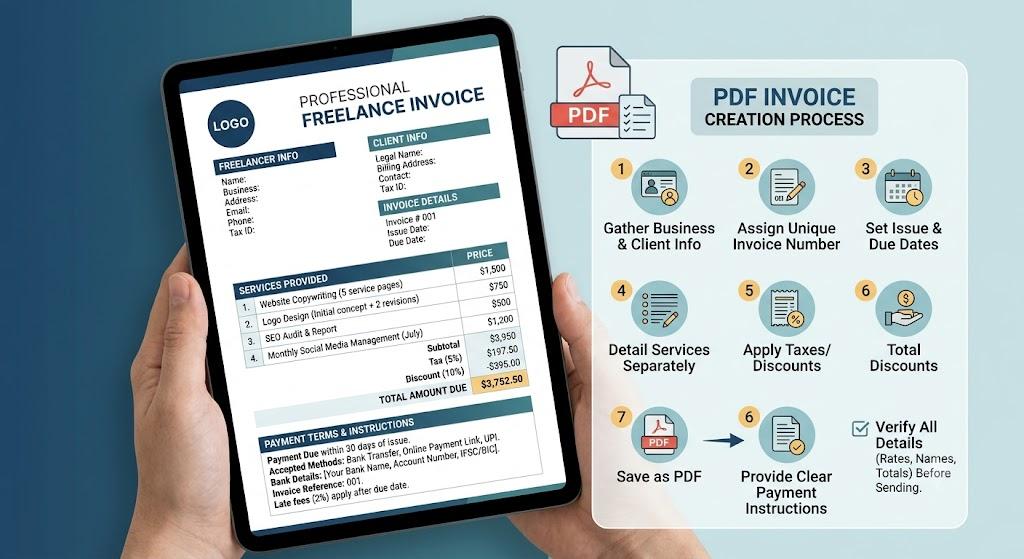
A freelance invoice should clearly explain who provided the work, what services were completed, how much the client owes, and when payment is due. Using a freelance invoice template helps independent professionals organise these details consistently, reduce billing mistakes, and present clients with a document that is easy to review and process.
Freelancers often manage several responsibilities at once, including client communication, project delivery, revisions, marketing, and payment follow-ups. A clear invoice makes the billing stage more organised and reduces the time spent answering avoidable questions.
Every invoice should identify both parties accurately. Add your full name or business name, contact information, and relevant tax details. The client’s legal or billing name and address should also be included.
The service section should explain exactly what was delivered. Avoid vague descriptions such as “freelance work,” “project completed,” or “professional services,” because they do not help the client understand the charge.
Use descriptions such as:
Each invoice should also include:
Specific details help clients match the invoice with the original proposal, contract, timesheet, or project milestone.
Freelancers can create a professional PDF invoice by entering accurate business, client, service, pricing, and payment information into a structured format. A free pdf invoice template can make this process faster while preserving a clean layout that clients can easily download, open, print, and store.
Start by creating a fresh invoice for every transaction. Repeatedly editing an old completed document may leave the previous client’s name, outdated pricing, incorrect dates, or old payment instructions in the new file.
Follow these steps:
PDF is usually the best format for sending an invoice because it keeps the design consistent across different devices. It also reduces the chance of the client accidentally changing the content.
Keep the editable version separate from the final PDF. This allows you to correct errors before sending while maintaining a secure customer copy.
Use a clear filename that includes the client name, invoice number, or issue date.
Examples include:
Organised file names make previous invoices easier to locate when a client asks a question or when you need to track an overdue payment.
Freelancers can charge by the hour, project, milestone, day, or recurring monthly fee. The right structure depends on the service, project scope, client expectations, and how easily the work can be measured.
Hourly billing works well when the workload may change. The invoice should show the number of hours completed and the agreed hourly rate.
Fixed project pricing is useful when the deliverables and scope are clearly defined. The invoice should mention the project or milestone being billed.
Common billing methods include:
The invoice should match the payment terms agreed before work began. Unexpected charges can create disputes, delay payment, and damage the client relationship.
If extra work was approved, describe it separately rather than adding it to the original service without explanation.
A freelance invoice is easier to pay when the final total, due date, payment methods, and account details are clearly visible. Clients should not need to ask where to send payment or which reference to use.
Use specific payment terms such as:
Avoid unclear wording such as “please pay soon.” A fixed deadline gives the client a clear expectation and makes follow-up communication easier.
Payment instructions may include:
If late fees apply, include them only when they were communicated and agreed in advance.
Review every client, service, price, tax, and payment detail before sending the final document. A small mistake may delay approval or require a revised invoice.
Use this checklist:
A consistent invoicing process helps freelancers look professional, maintain reliable records, and reduce unnecessary payment delays.
Yes. Unique invoice numbers help freelancers track transactions, organise records, match payments, and answer client billing questions.
Yes. Freelancers can request a deposit when it is clearly explained and agreed before the project begins.
PDF is usually the best option because it preserves the layout and is easy for clients to open, download, print, and store.