English
 Arabic
 French
 Spanish
 Portuguese
 Deutsch
 Turkish
 Dutch
Dutch
 Italiano
 Russian
 Romaian
 Portuguese (Brazil)
 Greek
Greek
次世代AI取引プラットフォームが切り開く暗号資産の未来
Other |
2026-04-30 05:34:59
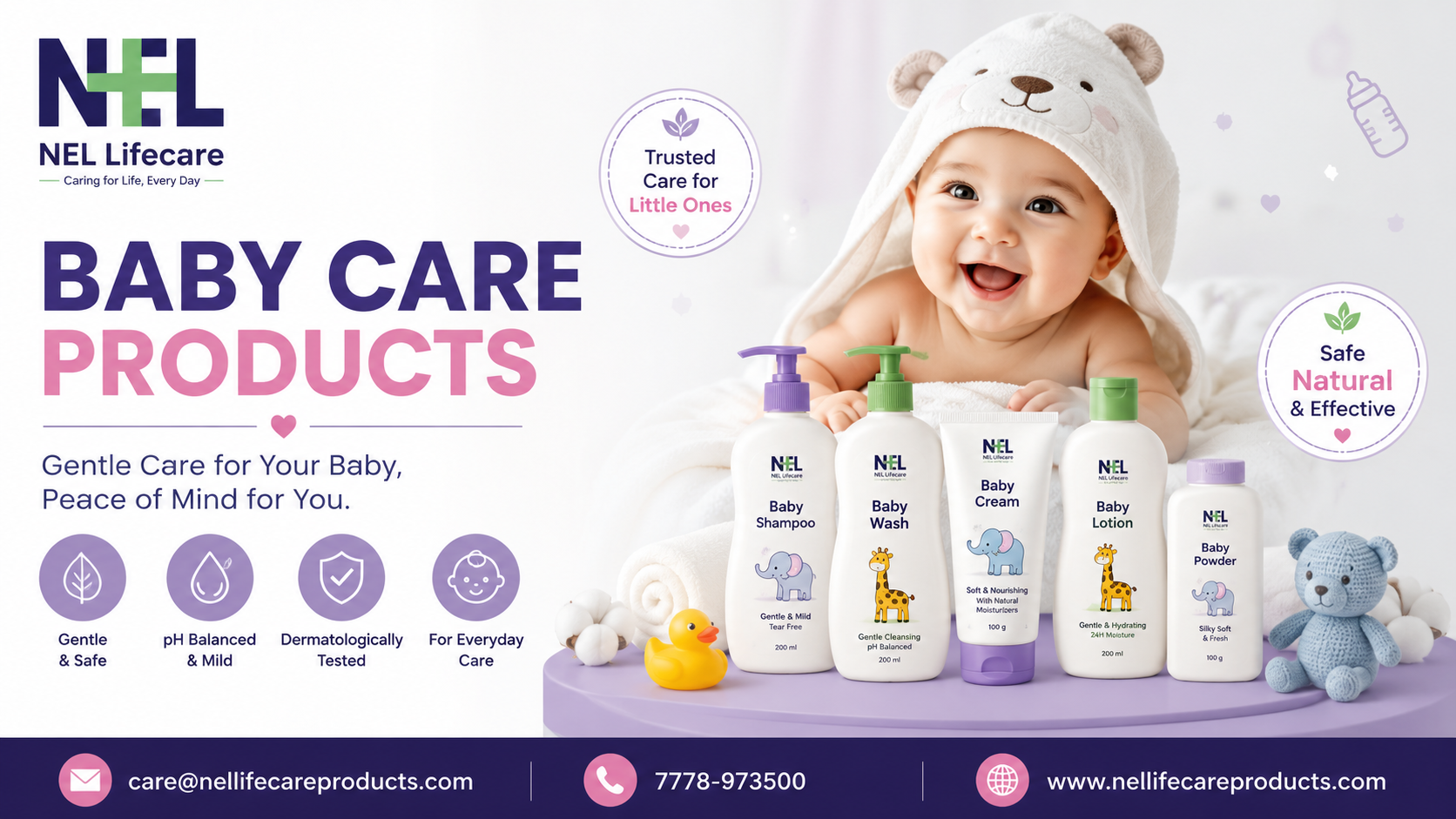
—because a diaper that looks fine in a sample room can fail after the third wetting cycle, and parents will blame the name printed on the pack.
Choosing Baby Care Products is not mainly a price exercise. It is a risk decision involving skin contact, absorption, fit, packaging, batch consistency, and complaint handling. India records approximately 23.07 million births annually, so even a small defect rate can become a large commercial problem for distributors and private-label brands.
NEL Lifecare’s baby-care range covers four core formats: pant diapers, tape-style diapers, disposable changing mats, and baby wipes.
Each format solves a different parenting requirement. Yet buyers regularly compare them as though they are interchangeable. They are not. Materials, fit, absorption, packaging, and intended age group must be evaluated separately.
Pant diapers use a soft non-woven inner layer, absorbent core, 360-degree waistband, breathable outer cover, leak guards, and tear-away sides. Tape-style diapers add refastenable tabs and elastic leg cuffs, making fit adjustment easier for newborns and younger babies.
Most buyers ask for “high absorption” and leave it there. That is lazy procurement. Ask how the core behaves after repeated wetting, whether the side guards remain upright, and whether the waistband leaves pressure marks after extended wear.
Baby wipes should be reviewed for fabric softness, cleansing formula, alcohol and fragrance status, moisture level, and resealing performance. NEL Lifecare states that its wipe packs use resealable packaging designed for frequent daily opening.
Disposable mats combine a soft top layer with waterproof backing and individual packaging. That last detail is often overlooked, although damaged or poorly sealed packs can create hygiene complaints before the product is even used.
A credible supplier names the applicable standard and supplies current documentation. BIS lists IS 17509:2021 as the mandatory Indian Standard for disposable baby diapers.
A bad answer sounds like, “Our quality is equivalent.” Equivalent to what? Without a licence number, test report, or clearly defined scope, the statement means very little.
Ask for checks covering softness, absorption, leakage, hygiene, fit, packaging integrity, and visual defects. NEL Lifecare describes an eight-stage OEM process, with quality testing at stage six and packaging at stage seven.
A bad answer is, “We test regularly.” Regularly can mean every batch. It can also mean once every three months.
The supplier should connect a finished pack to its production batch, material records, inspection results, and dispatch details.
A bad answer is, “Send a photograph and we will see.”
A supplier who handles defects case by case has no real complaint system. That becomes a negotiation the buyer usually loses after the shipment reaches the warehouse.
Request samples made with production-grade materials, not hand-built presentation pieces. NEL Lifecare states that batches undergo checks before dispatch and that its OEM capacity can support growing order volumes.
“Bulk quality may vary slightly” is not an acceptable supplier response. That word slightly is where marketplace refunds, retailer deductions, and damaged brand ratings begin.
MOQ should be linked to the size mix, pack count, artwork, printing method, packaging material, and raw-material commitment. NEL Lifecare describes flexible or low MOQ support across its diaper, wipe, and disposable-mat pages. A bad supplier gives one attractive number. Then it adds packaging restrictions after the advance has been paid.
Stable absorbent cores, elastic leg cuffs, and upright side guards reduce returns, replacement expenses, customer-support calls, and negative online reviews.
A consistent waistband and reliable fit reduce dead stock caused by parents abandoning a size—or the entire brand—after one uncomfortable pack.
Resealable wipe packs and individually packed mats protect moisture, hygiene, and shelf presentation. One damaged master carton can affect several retail units, not merely one sale.
An eight-stage OEM process gives brand owners clearer control over requirements, sourcing, production, testing, packaging, and delivery.
Which means fewer surprises between sample approval and commercial dispatch.
NEL Lifecare lists four baby-care formats and five brands across its wider personal-care and hygiene portfolio. Buyers can add nearby product categories without rebuilding the manufacturing relationship from zero.
India’s annual birth volume exceeds 23 million, but demand is spread across metropolitan areas, smaller cities, pharmacies, hospitals, institutional channels, supermarkets, and e-commerce fulfilment networks. That makes supplier location a stock-planning decision, not merely an address on a visiting card.
NEL Lifecare lists an office and manufacturing location in Rajkot district, Gujarat, and supports domestic as well as international supply requirements. For buyers comparing Baby Care Products Manufacturers in India, western-India access can support regional distribution and export movement.
And yet, geography alone will not prevent delays. Dependable Baby Care Products Suppliers in India should provide carton dimensions, dispatch schedules, destination-wise lead times, transport responsibility, and shortage-handling terms before the purchase order is issued.
We are a WHO-certified manufacturer working in personal care and hygiene products since 2021. Our baby-care portfolio includes pant diapers, tape-style diapers, wipes, and disposable mats.
We support OEM projects through eight defined stages, beginning with requirement analysis and ending with delivery management. We also support private-label development, material planning, production, testing, packaging, and bulk supply coordination.
Here is the operational detail buyers often miss: a wipe pack may be opened as many as 20 times in a day, so resealing performance matters after repeated use, not only during the first opening.
We route enquiries through our 24×7 customer-care desk. Send us four details: product type, target size or variant, estimated order volume, and packaging or branding requirements.
We quote MOQ according to the SKU and packaging scope because publishing one invented “low MOQ” figure would be misleading. Also share your delivery city, expected launch date, sample requirement, and whether you need OEM branding or standard packs.
Our team will then confirm the available configuration, applicable MOQ, sample process, pricing inputs, and expected response or production schedule in writing.
The right Baby Care Products protect babies, parent confidence, retailer reputation, and buyer margin at the same time. With approximately 23.07 million births recorded annually in India, consistent quality has commercial consequences at scale. Buyers who strengthen documentation, testing, packaging, and supplier accountability now will be better prepared for future baby-care demand.
Pants diaper, tape diaper, wipe, and disposable mats are the four essential categories. Fewer sizes and packs can be launched initially until real demand comes.
Applicable standards, batch testing, material quality, complaints tracking, packaging control, MOQ restrictions, delivery capability, and sample shipment compliance should be considered, and not the number of products.
Not all manufacturers are BIS certified. The BIS has specified the mandatory certification for disposable baby diapers as per IS 17509:2021.
Ask for specs, test reports, sizing, packing configurations, MOQ, lead times, carton information, sampling policy, payment terms, and a formal policy regarding the resolution of defects.
Yes, though the extent varies. NEL Lifecare's OEM service includes requirement analysis, planning, procurement, manufacturing, testing, packaging, and shipping, spanning eight distinct phases.