English
 Arabic
 French
 Spanish
 Portuguese
 Deutsch
 Turkish
 Dutch
Dutch
 Italiano
 Russian
 Romaian
 Portuguese (Brazil)
 Greek
Greek
Driving the Future: A Comprehensive Look at the Renewable Diesel Market Analysis
Other |
2025-12-09 17:50:53
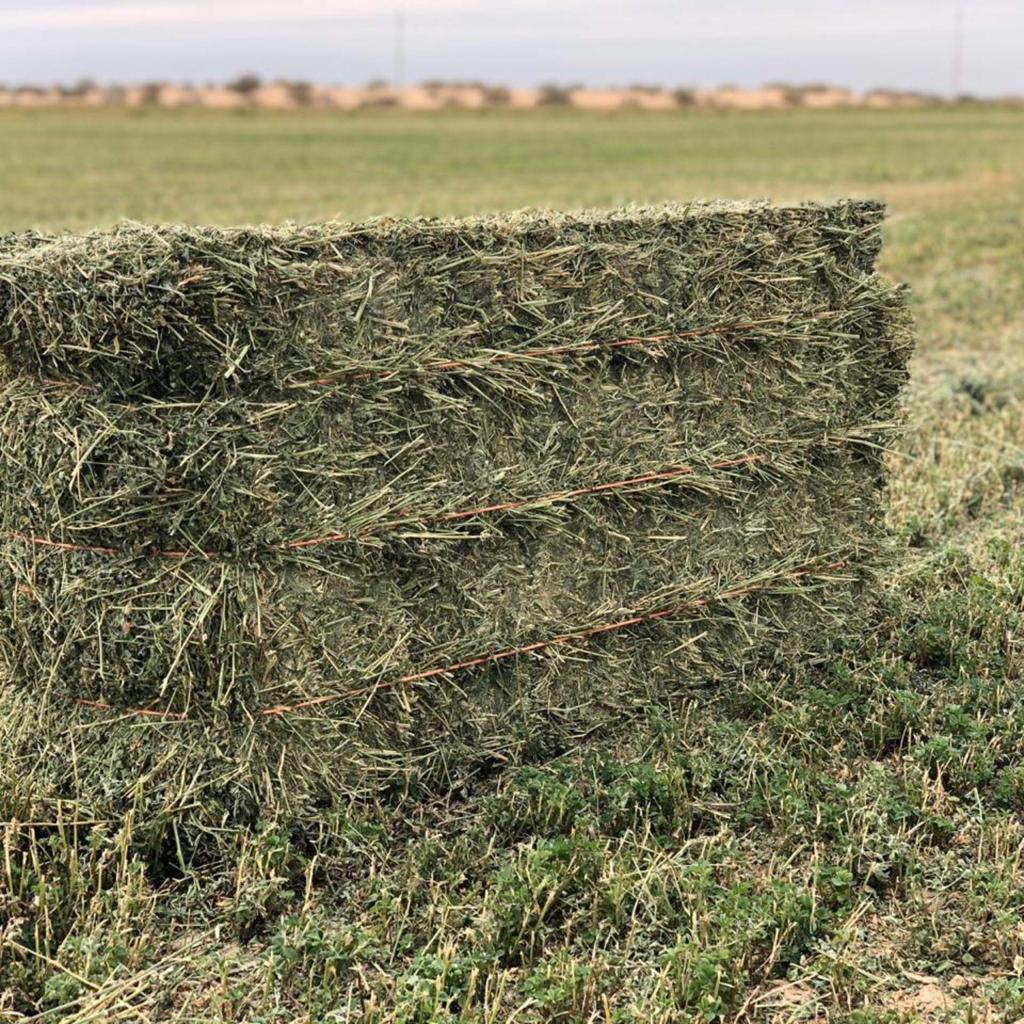
The global alfalfa hay market is a complex geographic landscape, with distinct regional roles in production, consumption, and trade. From the dominance of North American production and the rapid demand growth in Asia-Pacific to the critical import markets of the Middle East, the Alfalfa Hay Market is shaped by water availability, livestock density, and food-security policies. North America holds the largest revenue share, while the Asia-Pacific region leads in growth . Understanding these regional nuances is essential for producers, traders, and investors navigating this vital agricultural sector.
The global alfalfa hay market is shaped by different production capacities, consumption patterns, and trade policies in each region.
North America dominated the market with 38.6% revenue share in 2025 . The United States is the world's largest producer, with California, Idaho, and Montana leading in acreage . U.S. alfalfa production is also a key export commodity, with demand from China, Japan, and the Middle East . However, the region faces significant challenges from water scarcity, particularly in the Western states. This is driving a geographic shift toward rain-fed production zones in the northern Great Plains and a pivot toward higher-RFV grades that command premium pricing.
The Asia-Pacific region is the fastest-growing market, with a forecast CAGR of 7.34% . China is the world's largest importer, driven by its "Dairy Revitalization Plan" and imported over 1.8 million metric tons in 2024, predominantly from the U.S. and Australia . India represents a massive untapped opportunity with an 7.89% CAGR as organized dairy cooperatives adopt Total Mixed Ration (TMR) feeding systems. The region's growth is fundamentally reshaping global trade flows.
The Middle East, led by Saudi Arabia and the UAE, is a critical import market driven by food-security mandates and water scarcity. Saudi Arabia's ban on domestic alfalfa cultivation to preserve water has made it the world's single largest national importer by volume . The kingdom's SALIC has secured long-term offtake agreements with U.S. and Argentine suppliers totaling over USD 3 billion through 2030. This strategic shift has fundamentally altered global trade dynamics.
Europe is the second-largest region with a 22% share . Spain and France are the largest producers, with French dehydration cooperatives processing more than 3 million metric tons annually into pellets and cubes for export . Italy's protected-designation dairy chains require specific RFV thresholds, sustaining steady demand for premium imports. The region is also a leader in adopting CAP-linked sustainable forage practices.
North America will maintain its production dominance, though water scarcity will drive consolidation and geographic shifts. The Asia-Pacific region is poised for the highest growth, particularly in China and India. The Middle East will continue to be a strategic import hub, while Europe remains a stable processing and consumption market.
The competitive landscape is global, with major players like Al Dahra, ACX Global, and Anderson Hay & Grain operating across multiple regions. Success requires a multi-origin sourcing strategy to manage drought risk, coupled with strong relationships in key export markets.
The alfalfa hay market is a global story of production specialization and demand-driven growth. North America is the production powerhouse, Asia-Pacific is the engine of demand, and the Middle East is the critical strategic importer. Understanding these regional dynamics is essential for any stakeholder looking to navigate this complex and vital global market.
1. Which region dominates alfalfa hay production?
North America is the largest producer, with the U.S. accounting for the majority of global output .
2. Which region is the fastest-growing alfalfa hay market?
The Asia-Pacific region, led by China and India, is the fastest-growing market, driven by dairy intensification and modernization programs .
3. Why is the Middle East a key market for alfalfa hay?
The Middle East is a critical import market driven by food-security mandates and water scarcity, with Saudi Arabia being the world's single largest national importer due to its ban on domestic cultivation . For more information, visit the Alfalfa Hay Market.