English
 Arabic
 French
 Spanish
 Portuguese
 Deutsch
 Turkish
 Dutch
Dutch
 Italiano
 Russian
 Romaian
 Portuguese (Brazil)
 Greek
Greek
The New Era of Smart Comfort Footwear
Shopping |
2026-07-09 20:47:22
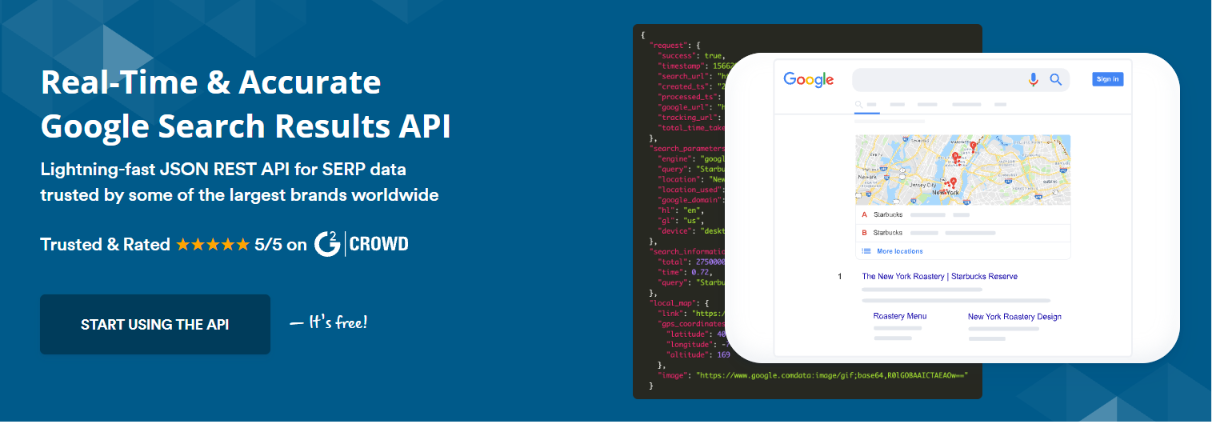
An SEO team managing hundreds of keywords can quickly discover that manual search monitoring does not scale. Checking rankings one keyword at a time takes time, results can vary by location and device, and recording everything in spreadsheets creates another layer of repetitive work.
The same problem affects developers building rank trackers, competitor monitoring platforms, keyword research tools, and search analytics dashboards. They need structured search data that applications can process consistently without creating a separate manual workflow for every query.
A serp scraping api can provide a programmatic way to collect search result information and integrate it into software. Instead of manually reviewing search pages, developers can send requests and work with structured responses inside their applications.
Yes, structured SERP data allows SEO applications to monitor search visibility at scale.
Consider an agency managing SEO campaigns for 50 clients. Each client may have hundreds of tracked keywords. Manually checking rankings every week would require significant effort and would make consistent historical tracking difficult.
An automated workflow can look like this:
Keyword list
     ↓
Search request
     ↓
SERP response
     ↓
Extract rankings
     ↓
Store historical data
     ↓
SEO dashboard
The application can compare current results with previous observations and identify ranking changes.
For example, if a website appears in position 15 today and position 9 next week, the system can record that movement automatically.
Search data can also reveal competitor activity. If another website repeatedly appears for important commercial keywords, an SEO team can investigate its content, pages, and search visibility.
Yes, businesses can collect search data manually, through browser automation, custom scraping, or dedicated APIs.
Manual collection works well for small projects. A consultant checking ten keywords might not need an automated system. However, manual research becomes inefficient when keyword lists become larger.
Browser automation can simulate searches through a browser environment. It offers flexibility but can require significant infrastructure, especially when many searches need to be processed.
Custom scraping gives developers control over the collection process. The downside is ongoing maintenance. Search result layouts can change, which can break extraction logic. Developers also need to account for applicable terms, technical restrictions, and responsible request rates.
Dedicated APIs offer another option. The application sends search parameters to an API and receives structured results that can be processed without maintaining a complete browser automation system.
Each method has different costs and technical requirements. The right approach depends on scale, data requirements, development resources, and operational complexity.
Yes, developers can use search result information for ranking analysis, competitor research, keyword monitoring, and reporting.
A basic Python workflow might look like:
results = get_serp_results("digital marketing agency")

for position, result in enumerate(results, start=1):
    print(position, result["title"], result["url"])
The application could then compare URLs against a target domain.
target_domain = "example.com"

for position, result in enumerate(results, start=1):
    if target_domain in result["url"]:
        print("Target ranking:", position)
A production system would need additional validation, pagination, location settings, duplicate handling, and error management.
The collected data can then be stored in a database.
For example:
Keyword
Search location
Device
Date
Position
URL
Title
This structure allows SEO teams to compare rankings over time.
The same data can also feed reporting systems that automatically generate client summaries.
Yes, developers should compare geographic targeting, search engine coverage, request limits, response quality, speed, and documentation.
Geographic targeting is important because search results can differ between countries and cities. A local SEO platform may need precise location settings, while an international platform may need country level targeting.
Device targeting can also matter. Mobile and desktop results are not always identical.
Request capacity should be matched to expected usage. A small internal tool may require only a few hundred searches, while a commercial SEO platform could need substantially more.
Response structure is another important factor. Developers should check whether the API provides the fields their application actually needs.
Latency can affect the user experience. If a dashboard waits for dozens of search requests to finish, slow responses can make the application feel unresponsive.
Documentation should clearly explain authentication, request parameters, response formats, pagination, and error behavior.
Developers should also test realistic keywords and locations before making a final decision.
Yes, organic search results provide useful information for understanding visibility without relying only on paid listings.
SEO platforms can examine where websites appear for informational, commercial, and navigational queries.
For example, a content team may want to know whether a newly published article has started appearing for its target topic.
A google organic results api can be considered for applications that need structured access to organic search result information. This type of data can support rank tracking, competitor analysis, keyword monitoring, and SEO reporting.
However, organic rankings should not be treated as the only measure of SEO performance.
A page ranking in position 5 may receive fewer clicks than expected if the search query has low demand or if search features occupy significant space on the results page.
For this reason, SEO applications should ideally combine SERP information with other metrics such as impressions, clicks, organic traffic, conversions, and engagement.
Yes, caching, scheduling, filtering, and queue systems can help control API consumption.
Suppose a platform tracks 5,000 keywords. Running all searches every hour may generate unnecessary requests.
Instead, developers can assign different monitoring frequencies.
Important keywords
       ↓
Frequent checks

Regular keywords
       ↓
Daily checks

Low priority keywords
       ↓
Weekly checks
Caching is another useful technique. If the same keyword and location were searched recently, the application may be able to use the stored result instead of making another request.
A queue system can also help distribute large numbers of searches over time.
Developers should monitor request volume and identify unusual increases. Unexpected usage can come from application bugs, duplicate requests, or inefficient refresh logic.
This is particularly important for commercial SEO platforms where API consumption can increase rapidly as the number of customers grows.
Yes, developers should treat search result information as data that requires careful collection, storage, and interpretation.
Search results can change frequently. A ranking change does not necessarily mean a website has permanently gained or lost visibility.
Location, language, device, search intent, and other factors can influence what appears.
Applications should therefore store enough context to make comparisons meaningful.
For example:
Keyword: marketing agency
Location: New York
Device: Mobile
Date: August 4
Position: 6
Without this context, comparing two ranking observations may produce misleading conclusions.
Organizations considering a SERP data provider should also review its current documentation, usage conditions, supported search parameters, and technical capabilities before integrating it into a production system.
The goal should be to create a reliable data workflow rather than simply collect as many search results as possible.
A SERP scraping API provides programmatic access to structured search result information. Developers can use the data for rank tracking, SEO analysis, competitor monitoring, and search related applications.
Yes. An application can retrieve search results, identify where a target domain appears, and store the position over time to monitor organic ranking changes.
SEO tools can reduce requests by using caching, scheduling keyword checks according to priority, avoiding duplicate searches, filtering queries efficiently, and processing requests through a queue.