English
 Arabic
 French
 Spanish
 Portuguese
 Deutsch
 Turkish
 Dutch
Dutch
 Italiano
 Russian
 Romaian
 Portuguese (Brazil)
 Greek
Greek
Slot Dana: Solusi Praktis Bermain Slot Online dengan Transaksi Cepat
Games |
2026-05-04 12:03:42
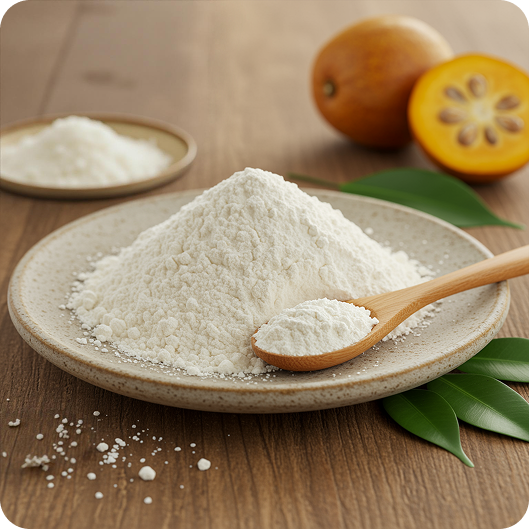
Sugar has been part of food production for generations, providing sweetness while also contributing to texture, colour, structure and other characteristics in many products. However, changing product-development priorities have encouraged manufacturers to explore a broader range of sweetening ingredients.
Today, food and beverage companies have access to high-intensity sweeteners, sugar alcohols, plant-derived sweeteners and other alternatives that can be incorporated into different formulations. One ingredient receiving attention within this changing landscape is Allulose.
Allulose is a rare sugar that can be used in selected food and beverage formulations. For manufacturers, understanding how it behaves compared with conventional sugar is important before incorporating it into a commercial product. Individual buyers, including home bakers and cooks, may also be interested in understanding how Allulose can be used in everyday food preparation.
This guide looks at the evolution of sugar alternatives, the role of Allulose, its potential applications and the factors businesses should consider when sourcing a food-grade Allulose product.
Sugar has traditionally performed several functions in food manufacturing. It provides sweetness, but depending on the product, it can also contribute to bulk, browning, moisture, texture and mouthfeel.
As food formulation has become more specialised, manufacturers have increasingly looked beyond conventional sugar to find ingredients that meet particular product-development objectives.
The modern sweetener landscape includes several categories, including:
High-intensity sweeteners
Sugar alcohols
Plant-derived sweeteners
Rare sugars
Other reduced-sugar formulation ingredients
Each category has different characteristics. A sweetener that works well in a beverage may not provide the same formulation performance in a cake, biscuit or confectionery product.
This is why replacing sugar is rarely as simple as removing one ingredient and adding another. Product developers need to understand how a sweetener interacts with the complete formulation.
Allulose is a rare sugar that can be used as a sweetening ingredient in food and beverage products. Unlike conventional sucrose, it has different sweetness and functional characteristics, meaning manufacturers need to assess how it performs within the specific product being developed.
The AlluPure Allulose supplied through Food Ingredients Australia is listed as a food-grade powdered bulk sweetener and rare sugar. The product page lists applications including bakery, beverages, dairy products, confectionery, desserts, nutraceuticals and tabletop sweeteners.
The listed product is supplied as a powder in a 25 kg corrugated box, with a stated minimum order quantity of 25 kg. The page also identifies the product code as E 961 and lists immediate supply.
For commercial buyers, these details are useful when considering whether a particular Allulose product fits their purchasing and production requirements.
One of the most important considerations for product developers is understanding that Allulose and conventional sugar are not identical ingredients.
Allulose has a different sweetness intensity from sucrose. The AlluPure product information states that it provides approximately 70% of the sweetness of sugar.
This means formulation teams may need to adjust the quantity or combine Allulose with other ingredients depending on the desired sweetness of the finished product.
Sugar can contribute physical bulk and texture in many food products. This is particularly important in bakery and confectionery, where sugar can influence the finished structure.
The supplied AlluPure information identifies sugar-like taste and texture, as well as bulking and browning properties, among its listed characteristics.
However, manufacturers should still conduct formulation trials because the behaviour of any sweetener depends on the complete recipe and processing method.
Browning can be an important consideration in baked foods. Sugar contributes to the appearance and flavour characteristics of many baked products.
The AlluPure product information identifies browning as one of its listed functional properties, making it an ingredient that manufacturers may evaluate in selected bakery formulations.
Taste is another important consideration when introducing a new sweetening ingredient. Even when an ingredient provides the required level of sweetness, product developers need to assess flavour, mouthfeel and overall sensory performance.
For this reason, pilot testing and sensory evaluation are valuable steps when developing commercial products with Allulose.
Bakery is one of the key areas where Allulose can be considered.
Potential applications include:
Bread
Cakes
Cookies
Biscuits
Bakery mixes
Other baked products
The AlluPure product page specifically lists bakery applications such as bread, cakes and cookies, with bulk, browning and softness identified among the listed roles in reduced-sugar recipes.
For manufacturers, the important point is that sugar performs several functions in bakery products. Changing the sweetener can therefore influence more than just taste.
Product developers may need to evaluate:
Dough or batter behaviour
Moisture
Browning
Texture
Sweetness
Finished product appearance
Storage performance
Home bakers can also use suitable food-grade Allulose in recipes, although conventional recipes may need adjustment because Allulose does not behave exactly like sucrose.
Beverage development is another area where alternative sweetening ingredients can be evaluated.
The AlluPure product information lists applications including low- and no-sugar drinks, flavoured waters, ready-to-drink teas and powdered beverage mixes.
For beverage manufacturers, several factors may influence the choice of sweetener.
These include:
Desired sweetness
Flavour balance
Solubility
Processing conditions
Ingredient compatibility
Storage
Finished-product sensory characteristics
Allulose may therefore be considered as part of a broader beverage formulation strategy rather than treated as a universal replacement for sugar.
Dairy products and frozen desserts can present different formulation challenges from beverages and bakery products.
Ice cream and frozen desserts, for example, require attention to texture, sweetness and physical characteristics during freezing and storage.
The AlluPure product page lists dairy products and desserts among its applications and specifically references ice cream and frozen yoghurt in its application information.
Manufacturers considering Allulose for these products should assess its performance alongside the other ingredients in the formulation and under the relevant processing conditions.
Confectionery products often require careful control of sweetness, texture, moisture and appearance.
Allulose can be evaluated in selected confectionery formulations, with the AlluPure product information listing applications including chocolate, gummies and bars.
However, confectionery products can be highly formulation-specific. The appropriate ingredient level and processing method will depend on the finished product and the characteristics the manufacturer is trying to achieve.
The use of Allulose is not limited to one food category.
The supplied AlluPure information lists applications across:
Bakery
Beverages
Dairy products
Confectionery
Desserts
Nutraceuticals
Tabletop sweeteners
The product page also identifies beverages, bakery, confectionery and nutraceuticals as featured industries.
This broad application range illustrates why Allulose can be relevant to different types of product development. At the same time, application suitability should always be determined by the individual formulation, processing method and applicable food requirements.
The interest in alternative sweetening ingredients is closely connected with the changing priorities of food product development.
Manufacturers may investigate Allulose when working on:
Reduced-sugar product concepts
New beverage formulations
Bakery products
Desserts
Confectionery
Product reformulation
New food concepts
The decision to use Allulose should not be based simply on whether it can provide sweetness. Product developers need to assess how the ingredient contributes to the complete formulation.
This can involve laboratory trials, pilot production, sensory testing and evaluation of processing performance.
Before incorporating Allulose into a commercial product, manufacturers should consider several factors.
Determine the sweetness level required in the finished product and account for the difference between Allulose and sucrose.
Assess how changing the sugar component affects the structure and mouthfeel of the product.
In baked products, evaluate how the sweetener affects colour development and finished appearance.
Consider how the change in formulation affects moisture and the product's overall characteristics.
Review the processing temperatures, mixing conditions and other manufacturing variables involved.
A new sweetener can interact differently with other ingredients. Testing the complete formulation is therefore important.
Taste and mouthfeel should be evaluated before commercial production.
Manufacturers should assess finished-product stability and determine whether packaging requirements change following reformulation.
Food businesses must ensure that their formulations and labelling meet applicable Australian food requirements.
For a food manufacturer, sourcing Allulose is different from purchasing a small quantity for occasional recipe development.
Commercial buyers need to consider production volumes, packaging, ordering schedules and continuity of supply.
A procurement team may need to establish:
Expected monthly or annual consumption
Required pack sizes
Storage capacity
Lead times
Delivery schedules
Product documentation
Repeat-order requirements
Internal quality requirements
The AlluPure Allulose product currently listed by Food Ingredients Australia is supplied in a 25 kg box with a minimum order quantity of 25 kg.
This type of information allows commercial buyers to determine whether the listed product format aligns with their manufacturing requirements.
Allulose can also be relevant to individual buyers who want to experiment with alternative sweetening ingredients in their own kitchens.
Possible uses include:
Home baking
Cookies and cakes
Homemade desserts
Beverage preparation
Recipe development
However, individual users should consider the quantity they need and the available packaging before purchasing.
Because the AlluPure product listed by Food Ingredients Australia is supplied in a 25 kg box with a 25 kg minimum order quantity, the listed format is particularly oriented towards commercial ingredient purchasing rather than small household quantities.
Home users should also remember that recipes developed with conventional sugar may require adjustment when Allulose is introduced.
When comparing an Allulose supplier Australia businesses can work with, price should not be the only consideration.
A practical checklist includes:
Confirm that the product is supplied as food grade and is appropriate for the intended application.
Review available product information, including format, grade and application details.
Commercial buyers should consider whether the available packaging works with their production volume and storage arrangements.
Manufacturers using Allulose regularly should consider whether the supplier can support ongoing purchasing requirements.
Clear information about supply and delivery can help procurement teams plan production.
Businesses may require product documentation as part of their internal approval and quality processes.
A supplier should be able to communicate clearly about product availability, purchasing requirements and relevant product information.
For manufacturers, the ability to source the same ingredient consistently can be important when maintaining an established formulation.
Food Ingredients Australia operates as a food ingredient supplier and distributor, providing food ingredients for commercial customers and other buyers.
The company's AlluPure™ Allulose is listed as a food-grade powdered bulk sweetener and rare sugar. The product information identifies applications across bakery, beverages, dairy products, confectionery, desserts, nutraceuticals and tabletop sweeteners.
The listed product is supplied in a 25 kg corrugated box, has a 25 kg minimum order quantity and is identified as a powder with product code E 961. The product page states immediate supply.
For businesses considering Allulose for commercial food production, these details provide a starting point for assessing the ingredient against their procurement and formulation requirements.
Food Ingredients Australia is presented as the supplier and distributor of the ingredient rather than its manufacturer. Buyers with specific technical, commercial or application requirements should review the available product information and discuss those requirements with the supplier.
There is no single sweetening ingredient that works in every food product.
Manufacturers considering Allulose should ask:
What role does sugar currently play in the formulation?
What level of sweetness is required?
Will the product need additional bulking or texture adjustments?
How will the ingredient behave during processing?
Does the finished product meet sensory expectations?
Is the ingredient appropriate for the intended application?
Are the applicable food requirements satisfied?
Can the ingredient be sourced consistently?
For individual users, the main considerations are usually the intended recipe, required quantity, product format and how the ingredient differs from conventional sugar.
1. What is Allulose?
A: Allulose is a rare sugar used as a sweetening ingredient in selected food and beverage formulations. It has different sweetness and functional characteristics from conventional sucrose.
2. Is Allulose the same as sugar?
A: No. Allulose and sucrose are different ingredients. The AlluPure product information states that Allulose provides approximately 70% of the sweetness of sugar, so formulations may need to be adjusted accordingly.
3. What foods can be made with Allulose?
A: Allulose can be considered for applications including bakery products, beverages, dairy products, confectionery and desserts. The suitability depends on the formulation and processing requirements.
4. Can Allulose be used in commercial food manufacturing?
A: Yes, Allulose can be evaluated for suitable commercial food formulations. Manufacturers should assess its performance, product specifications, processing requirements and applicable food regulations before production.
5. Where can I buy Allulose in Australia?
A: Food Ingredients Australia supplies and distributes AlluPure™ Allulose as a food-grade powdered ingredient. The listed product is supplied in a 25 kg box with a 25 kg minimum order quantity.
6. What should I look for in an Allulose supplier in Australia?
A: Look at food-grade status, product specifications, packaging, availability, delivery arrangements, documentation, customer support, and the supplier's ability to support repeat commercial orders.
The evolution of sugar alternatives reflects the increasingly specialised nature of modern food formulation. Manufacturers now have access to a wider range of sweetening ingredients, each with its own characteristics and potential applications.
Allulose is one option being considered for products ranging from bakery and beverages to dairy, confectionery and desserts. Its role is not simply to replace sugar by name; product developers need to understand how it affects sweetness, texture, browning, processing and the overall formulation.
For commercial manufacturers, careful product testing should be combined with practical sourcing considerations such as specifications, packaging, supply availability and repeat-order requirements. Individual buyers should similarly consider how Allulose behaves differently from conventional sugar when using it in recipes.
Food Ingredients Australia supplies and distributes AlluPure™ Allulose and other food ingredients for buyers in Australia. For manufacturers and other customers evaluating Allulose, understanding the ingredient and matching it to the right application is an important first step in making an informed sourcing decision.