English
 Arabic
 French
 Spanish
 Portuguese
 Deutsch
 Turkish
 Dutch
Dutch
 Italiano
 Russian
 Romaian
 Portuguese (Brazil)
 Greek
Greek
Automotive Motor Market Analysis: Growth, Trends, and Future Insights
Other |
2026-02-03 12:43:31
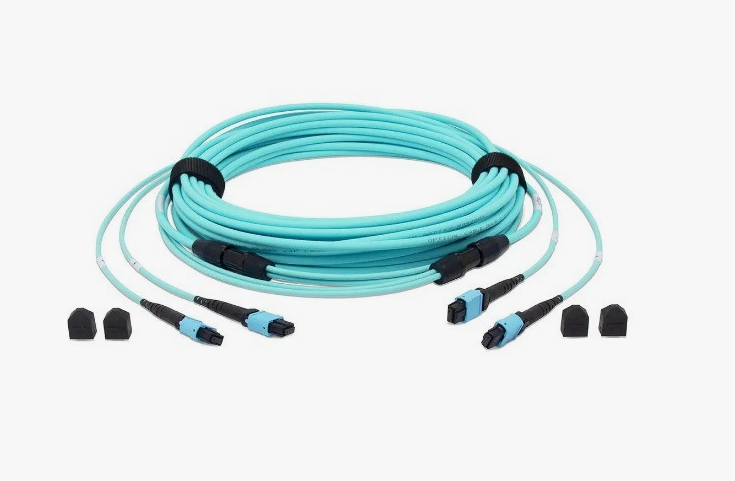
Modern businesses and data centers require reliable connectivity to support cloud computing, artificial intelligence, virtualization, high-speed applications, and growing volumes of digital information. As network environments become more complex, managing large numbers of individual fiber connections can create challenges involving installation time, physical space, cable organization, and future expansion. fiber optic trunk cable provides an efficient solution by consolidating multiple optical fibers into structured cable assemblies designed to simplify high-density connectivity.
For data center professionals, network engineers, and telecommunications specialists, trunk cabling can provide a practical way to establish organized backbone connections between equipment, patching systems, and distribution points. Factory-terminated assemblies can also simplify deployment and provide consistency across large installations. By selecting the right fiber type, connector configuration, fiber count, and cable length, organizations can create infrastructure that supports current bandwidth requirements while providing a structured pathway for future network growth.
A fiber optic trunk cable is a multi-fiber cable assembly designed to connect multiple optical channels through a consolidated physical cable structure. Depending on the application, trunk cables can contain different fiber counts and use various connector configurations to integrate with data center, enterprise, and telecommunications infrastructure. Many assemblies are pre-terminated and tested before delivery, reducing the amount of field termination required during installation. This can help improve deployment efficiency and provide greater consistency across large projects. Trunk cables are commonly used as backbone connections between racks, patch panels, distribution systems, and other network equipment. Their consolidated design can reduce the number of individual cable assemblies that need to be routed through pathways, making them particularly useful in high-density environments where physical space and cable management are important considerations.
As organizations increase their use of digital applications, the number of network connections required by their infrastructure continues to grow. Data centers may need to connect large numbers of servers and switches, while enterprise facilities can require high-capacity links between floors, buildings, and telecommunications rooms. Managing every fiber connection independently can result in crowded cable pathways and make maintenance more difficult. fiber optic trunk cable solutions can help address this challenge by consolidating multiple optical fibers into organized assemblies. This approach can improve cable management and make more efficient use of available pathway and rack space. For businesses planning network expansion, trunk cabling can also provide a structured foundation that supports additional connections without creating unnecessary physical complexity.
Data centers are a major application for fiber trunk systems because they require large numbers of optical connections within compact equipment areas. Trunk cables can establish connections between switches, patch panels, optical distribution systems, and other network components while keeping cable routes organized. Enterprise environments can use trunk assemblies for backbone links between telecommunications rooms, equipment racks, and building distribution points. Telecommunications facilities and cloud infrastructure can also benefit from multi-fiber trunk connections where high connection density is required. The specific cable configuration depends on the network architecture, fiber type, connector system, transmission requirements, and equipment interfaces. Proper planning is essential because the trunk assembly must match the physical and technical characteristics of the installation. When correctly selected, trunk cabling can simplify connectivity across large network environments while supporting efficient infrastructure management.
One of the primary benefits of fiber optic trunk cable is the ability to consolidate multiple optical fibers into a single organized assembly. This can reduce cable congestion and make pathways easier to manage, particularly in data centers where space is often limited. Pre-terminated trunk cables can also reduce field labor because technicians do not need to perform extensive connector termination on-site. Factory-controlled assembly and testing can contribute to consistency and help accelerate project deployment. Another advantage is scalability. A structured trunk cabling architecture can provide a foundation for adding equipment and expanding network capacity without requiring every new connection to be routed independently. For businesses, this can improve installation efficiency, simplify maintenance, and create a cleaner infrastructure environment that is easier to manage as network requirements increase.
Choosing an appropriate trunk assembly requires careful evaluation of the network's technical and physical requirements. Fiber type, fiber count, connector configuration, cable length, polarity, transmission speed, equipment compatibility, and installation environment should all be considered before ordering. Single-mode and multimode fiber may be appropriate for different applications, depending on transmission distance and optical equipment. Connector configurations should correspond with the patching systems, transceivers, modules, and other components used throughout the network. Cable length is also important because an assembly that is too short can create installation problems, while excessive length can contribute to unnecessary cable congestion. Organizations should also consider future expansion so that the initial infrastructure provides sufficient capacity for anticipated growth. Working with an experienced fiber supplier can help network professionals select suitable assemblies and reduce the risk of costly configuration errors.
Professional installation is important because fiber optic trunk assemblies must be handled carefully to maintain their optical performance. Technicians should avoid excessive bending, pulling, twisting, crushing, or other physical stress that could affect the fibers inside the cable. Connector end faces should be protected from contamination and inspected or cleaned appropriately before connection. Cable pathways should provide adequate support and maintain organized routing so that technicians can access equipment without disturbing neighboring connections. Proper labeling and documentation are also essential in large deployments because they make it easier to identify individual trunk routes and connection points during maintenance or upgrades. Testing after installation can verify optical performance and help identify problems before the network becomes operational. A structured installation approach can therefore improve both initial reliability and long-term maintainability.
Network infrastructure must evolve alongside technologies such as artificial intelligence, cloud computing, virtualization, high-performance computing, and advanced storage. These applications can increase the number of optical connections and the bandwidth required across data center and enterprise environments. A well-designed trunk cabling architecture can support this growth by providing efficient, high-density backbone connectivity. fiber optic trunk cable can be incorporated into structured systems that use modular distribution components, patching solutions, and breakout assemblies to provide flexibility as network requirements change. Planning for additional fiber capacity and accessible pathways during the initial deployment can reduce the need for disruptive infrastructure changes later. For organizations with long-term growth plans, scalable cabling should therefore be treated as a strategic infrastructure investment rather than simply a short-term installation requirement.
The performance of a trunk cabling system depends on more than the cable itself. Product quality, connector compatibility, fiber configuration, polarity, installation practices, testing, and documentation all contribute to the reliability of the final network. Professional suppliers can help organizations select suitable cable assemblies based on their equipment and architecture while providing guidance on fiber types, connector options, lengths, and deployment methods. Pre-terminated and factory-tested assemblies can also provide greater consistency for large-scale installations. Technical support can be particularly valuable when a project involves high fiber counts or complex data center layouts. By working with an experienced provider, businesses can reduce configuration risks, improve deployment efficiency, and establish organized optical infrastructure capable of supporting demanding network applications.
Reliable, scalable connectivity is essential for modern businesses and data centers, making efficient physical network infrastructure increasingly important. fiber optic trunk cable provides a practical approach to consolidating multiple optical fibers into organized assemblies that can simplify installation, improve cable management, and support high-density network environments. From data centers and enterprise facilities to telecommunications and cloud infrastructure, trunk cabling can help organizations manage growing connection requirements while making effective use of physical space. With careful product selection, professional installation, accurate testing, and future-focused network planning, fiber trunk solutions can provide a dependable foundation for today's applications and tomorrow's expanding digital infrastructure.