A business website is no longer just an online brochure with a few pages and contact details. Today, customers expect websites to be easy to use, visually appealing, informative, secure, and accessible on different devices. A well-built website can help businesses build credibility, attract potential customers, generate leads, and support long-term digital growth.
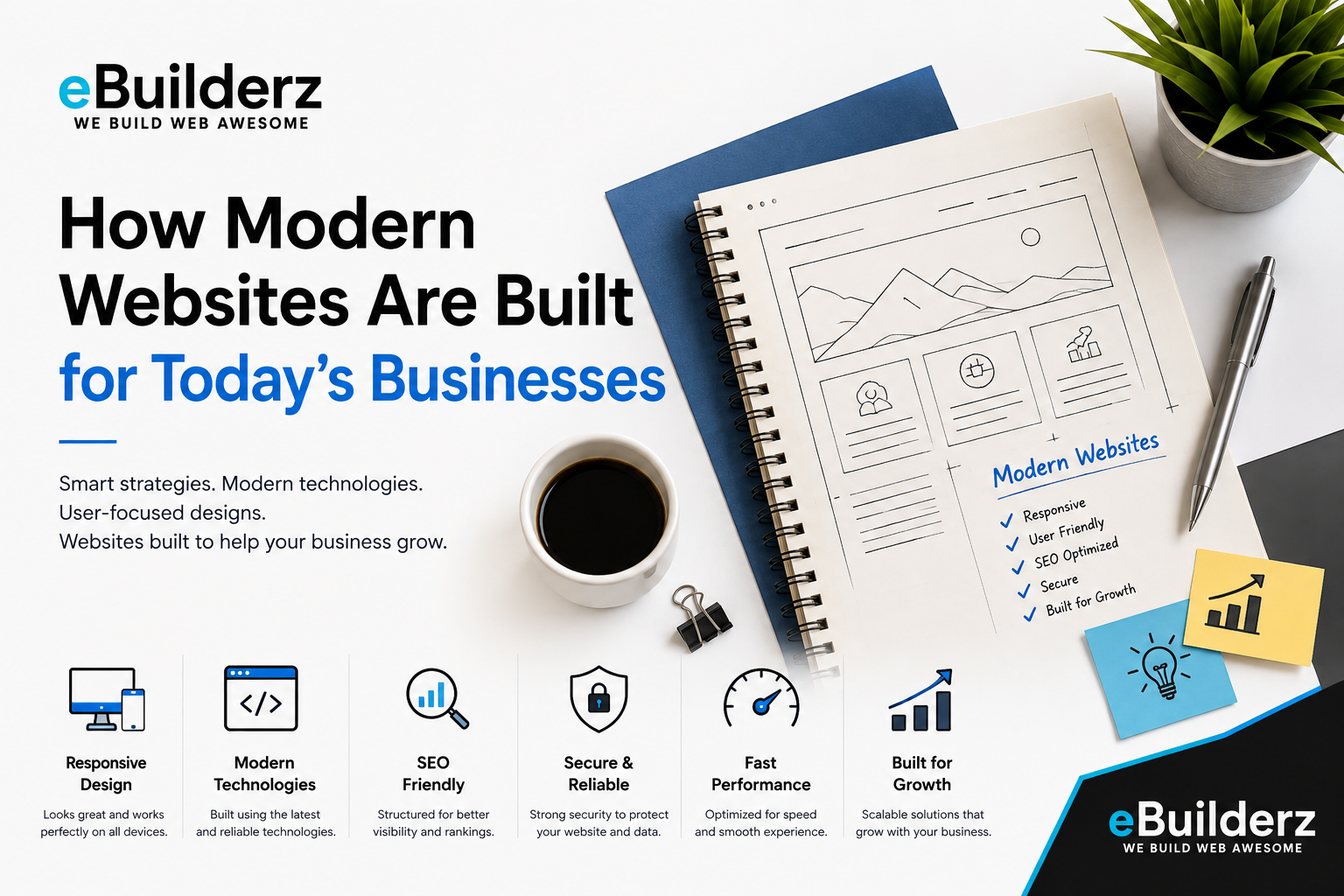
But how modern websites built for today’s business needs? The process involves much more than selecting a design template. It combines planning, user experience, responsive design, development technologies, useful content, SEO, security, and regular improvements.
Understanding the Purpose of the Website
The first step in building a modern website is understanding what the business wants to achieve. Every business has different requirements. An ecommerce website may focus on online sales, while a service-based company may want more inquiries and leads.
Before development begins, businesses generally identify their target audience, business objectives, products or services, required features, competitors, and conversion goals. This planning creates a clear foundation for the website.
Creating a User-Friendly Structure
Modern websites are designed around the needs of visitors. Users should be able to find important information without confusion or unnecessary clicks.
A typical business website may include pages such as:
- Home
- About
- Services or Products
- Blog or Resources
- FAQs
- Contact
Navigation should be simple and consistent across the website. Important services, contact information, and calls to action should also be easy to find.
A well-organized structure helps visitors understand the business while also making it easier for search engines to crawl and understand the website.
Using Responsive Web Design
Customers access websites from smartphones, tablets, laptops, and desktop computers. For this reason, modern websites need responsive designs that adjust to different screen sizes.
Responsive design allows elements such as images, menus, buttons, text, and page layouts to adapt automatically. A multi-column desktop layout, for example, can become a simpler single-column layout on a smartphone.
This approach provides visitors with a consistent experience across different devices and makes the website more convenient to use.
Choosing Suitable Web Technologies
Technology plays an important role in modern website development. The technology stack depends on the website's purpose, functionality, size, and business requirements.
Front-end development focuses on what visitors see and interact with. HTML is commonly used for structure, CSS for styling, and JavaScript for interactive features.
Back-end development manages functions that operate behind the website, such as databases, user accounts, forms, APIs, payments, and business logic.
The best technology is not necessarily the newest one. Businesses should choose technologies that match their actual requirements and can be maintained effectively over time.
Developing Useful Website Content
A modern website needs more than attractive visuals. It should provide clear and useful information that answers visitors' questions.
Business websites should explain what the company offers, who its services are for, how its products or services work, and why customers should choose the business.
Content should be easy to read and scan. Short paragraphs, descriptive headings, bullet points, FAQs, and clear calls to action can make information easier for visitors to understand.
Useful content can also support search engine optimization by giving search engines more context about the website's services and topics.
Building SEO Into the Website
SEO should be considered during website development rather than added only after the website is complete.
Modern websites can include relevant keywords, descriptive page titles, useful meta descriptions, proper heading structures, clean URLs, internal links, optimized images, and original content.
For example, a web development company can create separate pages for different services rather than placing every service on one page. This creates clearer topical relevance and gives each service a better opportunity to appear for related searches.
Prioritizing Website Security
Security is an essential part of modern website development, especially for businesses that collect customer information or process transactions.
Websites can use HTTPS encryption, secure authentication, regular software updates, strong passwords, reliable hosting, backups, and security monitoring.
The level of security required depends on the type of website and the information it handles. Keeping software and website components updated is also important for reducing potential security risks.
Connecting Business Tools
Modern websites often work alongside other business systems. Integrating these tools can improve efficiency and reduce repetitive manual tasks.
A website may connect with:
- CRM systems
- Email marketing platforms
- Analytics tools
- Payment gateways
- Appointment scheduling software
- Customer support platforms
- Inventory management systems
For example, when someone submits a contact form, the information can automatically be transferred to a CRM system. This allows the business to organize leads and follow up more efficiently.
Testing Before Launch
Before launching a website, developers should test its important features and pages. This includes checking navigation, links, contact forms, mobile layouts, browser compatibility, images, integrations, and important SEO elements.
Testing helps identify technical or usability problems before customers encounter them. It also provides an opportunity to make improvements based on how users are expected to interact with the website.
Maintaining the Website After Launch
Website development does not end when a website goes live. Businesses need to maintain their websites as technology, customer expectations, and business requirements change.
Regular maintenance can include updating content, fixing broken links, monitoring security, updating software, reviewing analytics, improving important pages, and adding new features when required.
Analytics can also help businesses understand which pages attract visitors and where improvements may be needed.
Conclusion
Modern websites are built through a combination of strategic planning, user-focused design, responsive layouts, suitable technologies, useful content, SEO, security, integrations, testing, and ongoing maintenance.
For today's businesses, simply having a website is not enough. A successful website should communicate the brand clearly, provide a smooth experience for visitors, support business objectives, and create opportunities for growth. By focusing on usability, relevant content, functionality, and continuous improvement, businesses can build a strong and valuable digital presence.
 English
 Arabic
 French
 Spanish
 Portuguese
 Deutsch
 Turkish
 Dutch
Dutch
 Italiano
 Russian
 Romaian
 Portuguese (Brazil)
 Greek
Greek