English
 Arabic
 French
 Spanish
 Portuguese
 Deutsch
 Turkish
 Dutch
Dutch
 Italiano
 Russian
 Romaian
 Portuguese (Brazil)
 Greek
Greek
Complete Guide to Getting an Ohio Medical Marijuanas Card Online
Health |
2026-04-17 18:32:34
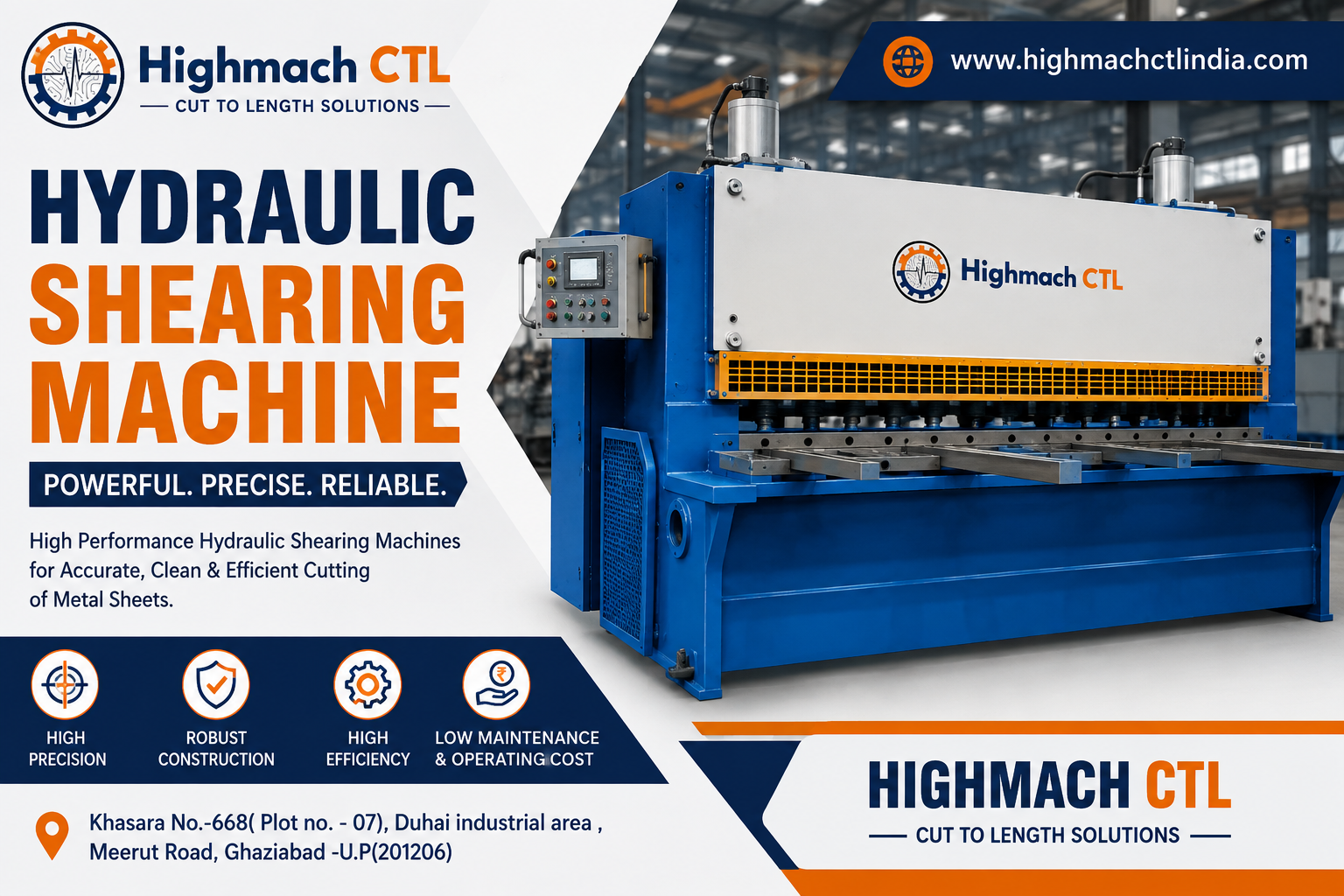
A hydraulic shearing machine cuts sheet metal, plates, and coils using hydraulic pressure instead of mechanical force. It delivers cleaner cuts, handles thicker materials, and offers adjustable blade clearance for precision. Compared to mechanical shears, hydraulic shears are quieter, safer, and better suited for high-thickness or variable-thickness cutting in industries like automotive, construction, and shipbuilding.
If you're evaluating cutting equipment for a metal fabrication shop, a Hydraulic Shearing Machine is typically the go-to choice when consistency, safety, and material versatility matter more than raw cutting speed.
A hydraulic shearing machine is an industrial cutting tool that uses hydraulic cylinders to drive a blade through metal sheets or plates. Unlike mechanical shears, which rely on flywheels and clutches, hydraulic shears use pressurized fluid to generate controlled, consistent cutting force.
This design allows operators to:
Adjust cutting speed and pressure based on material thickness
Cut a wider range of metals, from thin sheets to thick plates
Reduce noise and vibration during operation
Improve operator safety through smoother, more predictable motion
Manufacturers commonly use hydraulic shears for stainless steel, carbon steel, aluminum, and alloy sheets in fabrication, automotive, shipbuilding, and construction industries.
At its core, the machine converts hydraulic energy into mechanical cutting force. Here's the basic process:
Material placement – The sheet or plate is positioned on the worktable and aligned using back gauges.
Clamping – Hydraulic clamps hold the material firmly in place to prevent shifting.
Blade descent – The upper blade moves downward under hydraulic pressure, meeting the fixed lower blade.
Shearing action – The metal is cut cleanly through a scissor-like shearing motion.
Release and repeat – The blade retracts, and the process repeats for the next cut.
Blade clearance (the gap between upper and lower blades) is adjustable, which directly affects cut quality. Thinner materials need tighter clearance; thicker materials need more room to prevent blade damage.
Not all hydraulic shears are built the same. Choosing the right type depends on your material, thickness range, and production volume.
|
Type |
Best For |
Key Feature |
|
Swing Beam Shear |
General sheet metal cutting |
Angled blade motion, compact footprint |
|
Guillotine Shear |
High-precision straight cuts |
Vertical blade travel, consistent accuracy |
|
CNC Hydraulic Shear |
High-volume, automated production |
Programmable cutting sequences |
|
Variable Rake Shear |
Thick or hard materials |
Adjustable blade angle reduces force needed |
1. Superior Cutting Precision
Hydraulic systems maintain consistent pressure throughout the stroke, reducing burrs and producing cleaner edges than mechanical alternatives—especially important for downstream welding or forming operations.
2. Handles Thicker and Harder Materials
Hydraulic shears can cut plates up to 25mm or thicker (depending on machine capacity), making them suitable for structural steel and heavy-gauge fabrication work that mechanical shears struggle with.
3. Lower Maintenance Costs
Fewer moving mechanical parts (no clutches or flywheels) mean reduced wear and tear, translating into lower long-term maintenance expenses.
4. Enhanced Operator Safety
Smooth, controlled blade movement and overload protection features reduce the risk of sudden mechanical failure—a common concern with older mechanical shear designs.
5. Energy Efficiency
Modern hydraulic shears only draw power during the actual cutting stroke, unlike mechanical shears that run continuously, which can lower energy consumption over a full shift.
|
Factor |
Hydraulic Shear |
Mechanical Shear |
|
Cutting force control |
Adjustable, precise |
Fixed, less flexible |
|
Noise level |
Lower |
Higher |
|
Maintenance |
Lower long-term cost |
Higher due to clutch/flywheel wear |
|
Material thickness range |
Wider |
Narrower |
|
Initial investment |
Generally higher |
Generally lower |
|
Cutting speed |
Moderate |
Faster for thin sheets |
Expert insight: For shops running mixed-thickness jobs or prioritizing cut quality over raw speed, hydraulic shears typically deliver better return on investment over a 5–10 year equipment lifecycle.
Before purchasing, evaluate these factors:
Material type and thickness range you'll be cutting most frequently
Table length needed for your standard sheet sizes
Back gauge accuracy for repeatable, tight-tolerance cuts
Production volume — manual, semi-automatic, or CNC-controlled
Available floor space and power supply in your facility
After-sales support and spare parts availability from the supplier
A machine that's oversized or undersized for your typical job mix increases either upfront cost or long-term inefficiency—so match capacity to real production needs, not worst-case scenarios.
Regularly check blade clearance and alignment. Even a 0.1mm deviation can accelerate blade wear and reduce cut quality on thicker plates. Scheduling clearance checks every 200–300 operating hours helps maintain consistent output and avoids unplanned downtime.
Automotive body panel fabrication
Structural steel cutting for construction
Shipbuilding and heavy plate processing
HVAC ductwork manufacturing
Metal furniture and appliance production
1. What thickness can a hydraulic shearing machine cut?
Most industrial hydraulic shears cut materials ranging from 1mm to 25mm, depending on machine capacity and steel grade. Heavy-duty models can handle thicker plates for structural applications.
2. Is a hydraulic shearing machine better than a mechanical shear?
For thicker materials, precision control, and lower long-term maintenance, hydraulic shears generally perform better. Mechanical shears may still suit high-speed, thin-sheet cutting where cost is the priority.
3. How much does a hydraulic shearing machine cost?
Prices vary widely based on table length, thickness capacity, and automation level—ranging from budget entry models to high-end CNC systems. Contact a supplier for a quote based on your specific production needs.
4. How often should a hydraulic shearing machine be serviced?
Routine maintenance checks are typically recommended every 200–300 operating hours, including hydraulic fluid checks, blade clearance inspection, and seal condition.
5. Can hydraulic shears cut stainless steel?
Yes. Hydraulic shears are commonly used for stainless steel, carbon steel, and aluminum, provided the machine's tonnage rating matches the material's thickness and hardness.
A hydraulic shearing machine remains one of the most reliable, precise, and versatile solutions for metal cutting across fabrication, construction, and manufacturing industries. Its ability to handle varying material thicknesses while maintaining clean, consistent cuts makes it a smart long-term investment for shops looking to improve both output quality and operational safety.
Choosing the right machine comes down to understanding your material range, production volume, and long-term maintenance needs—not just upfront cost.
Visit Site : https://highmachctlindia.com/
Call: +91-9811228235
Email: info@highmatchctl.com
Address: Khasara No.-668( Plot no. - 07), Duhai industrial area , Meerut Road, Ghaziabad -U.P(201206)
Follow us :- Instagram, Youtube