English
 Arabic
 French
 Spanish
 Portuguese
 Deutsch
 Turkish
 Dutch
Dutch
 Italiano
 Russian
 Romaian
 Portuguese (Brazil)
 Greek
Greek
Software development course Scotland for Tech Enthusiasts
Other |
2025-09-29 16:18:28
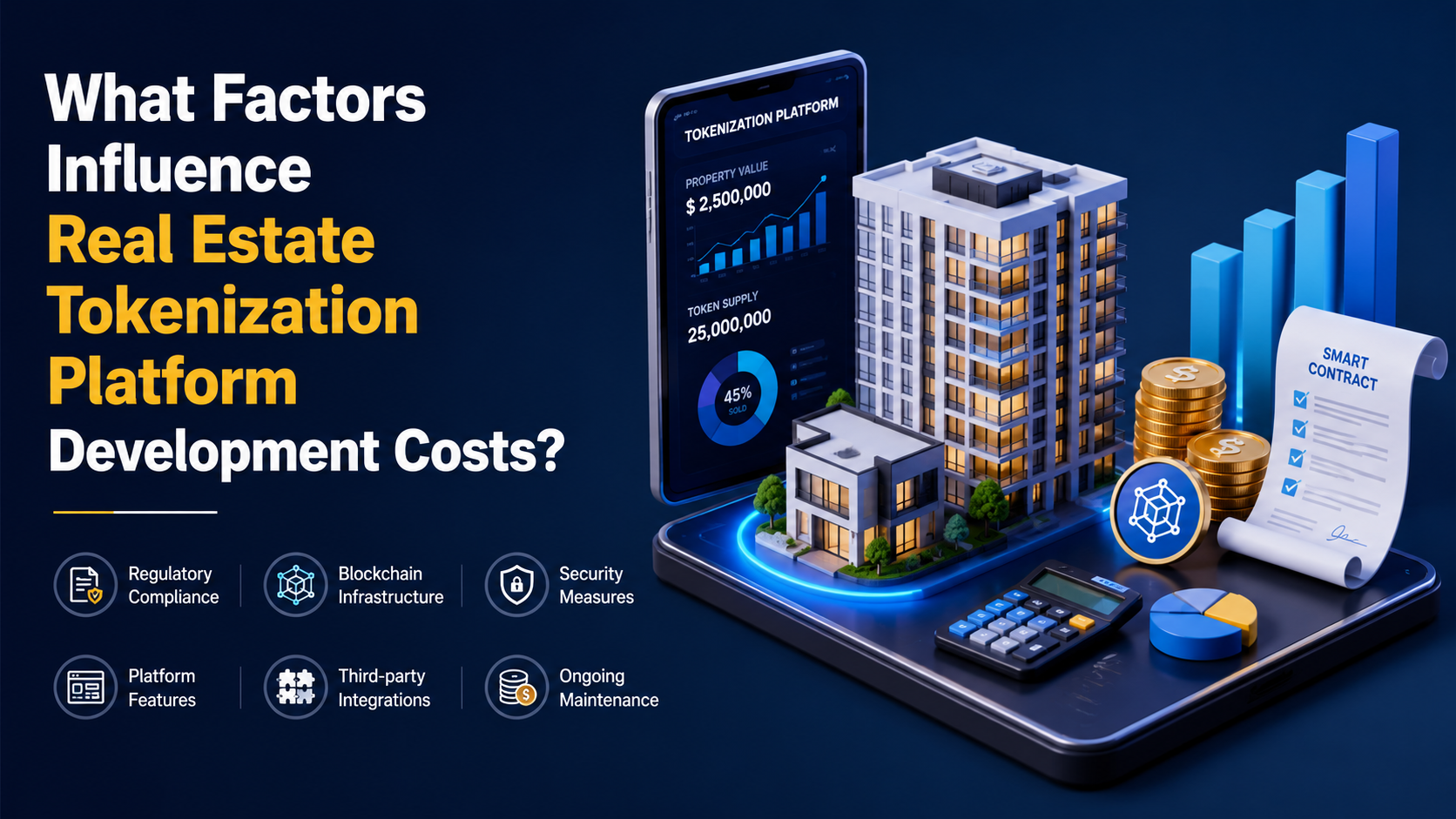
Real estate tokenization is changing how property ownership, investment participation, and asset management can be handled through blockchain networks. Instead of representing a property only through conventional ownership documents, businesses can issue digital tokens that represent ownership rights, economic interests, or claims connected with a real estate asset. This model can support fractional participation, automated transactions, digital recordkeeping, and broader investor access, depending on the legal structure.
However, launching a real estate tokenization platform involves more than developing a token contract and creating a website. The total budget depends on the platform's features, blockchain network, property structure, legal requirements, security measures, user interface, integrations, and post-launch maintenance. Businesses working with a real estate tokenization company need to evaluate these areas before deciding on a development budget.
This article examines the major factors that influence real estate tokenization platform development costs and explains where businesses may need to allocate their investment.
The platform model has a direct effect on development expenses. A simple property token issuance system may require fewer functions than a complete investment marketplace where users can purchase, sell, transfer, and manage tokenized assets.
A basic platform may include property listings, investor registration, wallet connectivity, token issuance, transaction records, and an administrative dashboard. A larger platform may add investor verification, secondary trading, portfolio management, automated distributions, governance functions, property reporting, and analytics.
Businesses should first define whether they need a property-specific platform, a multi-property marketplace, or an ecosystem that supports several asset classes. The wider the platform's scope, the more development work will be required.
The type of property being tokenized can also influence development costs. Residential buildings, commercial properties, hotels, warehouses, land, student housing, and mixed-use developments can involve different ownership arrangements and documentation requirements.
A real estate asset tokenization company may need to structure tokens according to the rights associated with each property. For example, tokens may represent fractional ownership, shares in a special purpose vehicle, revenue participation, or another legally defined interest.
Each model can require different smart contract logic, investor records, reporting features, and compliance procedures. As a result, businesses should finalize their asset structure before estimating the technical budget.
Choosing a blockchain network is another major cost factor in real estate tokenization development. Ethereum, Polygon, BNB Chain, Avalanche, and other networks can offer different transaction costs, development environments, performance characteristics, and ecosystem support.
The selected network affects smart contract development, wallet integration, transaction handling, testing, and deployment expenses. If a business wants the platform to support multiple networks, the development workload can increase further.
The decision should be based on transaction requirements, investor preferences, asset structure, expected activity, security considerations, and the technical ecosystem available for the project.
Smart contracts manage many important functions within a tokenization platform. These contracts can handle token issuance, ownership records, transfers, restrictions, distributions, access rules, and other programmed activities.
The complexity of the contract depends on the token model and business requirements. A basic token contract may require less development effort, while a platform supporting regulated transfers, investor restrictions, automated payments, voting, and multiple asset classes can require considerably more work.
A real estate token development project should also include testing and independent security review. Errors in smart contracts can affect ownership records and financial transactions, making contract quality a significant part of the overall budget.
The frontend is another area that contributes to development costs. Investors, property owners, administrators, and compliance teams may each require different screens and functions.
Investor interfaces may include account registration, identity verification, property listings, token purchase screens, portfolio information, transaction history, wallet management, and distribution records. Property issuers may need asset submission forms, token issuance controls, document management, and investor reporting.
An administrative interface may include user management, property approval, transaction monitoring, token supply management, compliance records, and platform analytics. More screens and user roles generally mean additional design and development effort.
Real estate tokenization platforms often require identity verification and compliance processes, particularly when investment products are offered to external participants. Integrating Know Your Customer and Anti-Money Laundering services can therefore influence development expenses.
Instead of developing every verification function internally, businesses can integrate third-party identity and compliance providers. The development team must connect these services with registration, investor approval, transaction permissions, and account management.
The exact requirements depend on the jurisdiction, asset structure, investor category, and legal model. Businesses should establish their compliance framework before finalizing technical specifications.
Investors need practical methods to purchase and manage tokens. A platform can support external Web3 wallets, custodial wallets, or a combination of both.
Payment processing can also involve fiat gateways, cryptocurrency payments, bank transfers, or other payment methods. Each option introduces additional integration and testing requirements.
For example, supporting card or bank-based purchases may require payment gateway integration, transaction reconciliation, refund handling, and compliance checks. Supporting crypto payments requires blockchain transaction monitoring and wallet connectivity.
Therefore, the number and type of payment methods can have a noticeable effect on development costs.
A platform that only issues tokens has different requirements from a marketplace where investors can trade those tokens after issuance.
Secondary trading can require order management, buyer and seller matching, transfer restrictions, transaction records, pricing information, and settlement processes. Depending on the legal framework, additional controls may be required to restrict transfers to approved participants.
Businesses planning to include a marketplace should account for these requirements from the beginning. Adding trading functionality after the initial platform has been developed can involve additional architecture and integration work.
Security should receive a significant portion of the project budget because tokenization platforms handle ownership information, investor accounts, financial transactions, and digital assets.
Security work can include application testing, API protection, wallet security, access controls, database protection, penetration testing, and smart contract auditing.
A real estate tokenization development company may also conduct testing for vulnerabilities related to unauthorized transfers, incorrect token balances, access control problems, transaction manipulation, and contract logic errors.
The cost will depend on the platform's complexity and the number of contracts and integrations that require review.
The backend manages information that may not be stored directly on the blockchain. This can include investor profiles, property documentation, verification records, transaction history, notifications, reporting data, and administrative settings.
A simple platform may use a relatively limited backend structure. A multi-property marketplace with thousands of users can require more services, databases, APIs, monitoring systems, and data-processing functions.
The backend also needs to communicate with blockchain networks, wallets, payment providers, identity verification services, and other external systems. Every additional integration can increase development and testing requirements.
Real estate tokenization involves considerable property-related documentation. Depending on the business model, users may need access to valuation reports, ownership documents, legal agreements, property details, financial statements, and other records.
A document management system can allow administrators to upload, organize, approve, and display relevant information. Permission controls may also be required so that different users can access only the information appropriate to their role.
Adding document workflows, digital signatures, version tracking, and audit records can increase the platform development budget.
Legal and regulatory requirements vary by country and by the structure of the tokenized asset. A platform intended for one jurisdiction may have different requirements from one designed for investors across several markets.
A business may need legal consultation, token classification, investor eligibility rules, transfer restrictions, reporting processes, and compliance monitoring. These costs are not limited to software development, but they can influence the technical specifications significantly.
Businesses should therefore work with legal professionals alongside a real estate tokenization platform development company to define what the platform must support.
A platform designed for property owners and investors has fewer user roles than a marketplace involving issuers, investors, brokers, administrators, compliance officers, property managers, and auditors.
Every role can require separate permissions and workflows. For example, an administrator may approve assets, while a compliance officer reviews investor documentation and an issuer manages property information.
A larger role structure increases interface, backend, access-control, testing, and permission-management requirements.
Third-party services can reduce the need to develop certain functions from scratch, but integration still contributes to the project budget.
Common integrations may include identity verification, payment processing, blockchain analytics, property data, email services, cloud storage, wallet providers, accounting systems, and notification services.
The number of integrations, API complexity, documentation quality, subscription fees, and testing requirements can all influence the final development cost.
The composition of the development team can affect the budget considerably. A project may require blockchain developers, backend developers, frontend developers, UI designers, QA engineers, DevOps specialists, security professionals, and project managers.
Development rates also vary by location and experience. A business can work with an in-house team, freelancers, or a specialized real estate tokenization development company.
When comparing vendors, businesses should assess blockchain experience, previous tokenization work, security practices, technical support, and understanding of property-related workflows rather than comparing hourly rates alone.
Choosing between an MVP and a complete platform can significantly change the initial investment.
An MVP may focus on property onboarding, investor registration, KYC integration, wallet connectivity, token issuance, and basic portfolio management. This approach can help businesses validate their business model before adding larger marketplace functions.
A full platform may include secondary trading, multi-chain support, automated distributions, governance, advanced analytics, multiple payment methods, and several user roles.
Businesses with limited initial budgets may start with a focused product and add additional functions after receiving market feedback.
Development costs do not end when the platform goes live. Blockchain networks can change, third-party APIs can be updated, security vulnerabilities can appear, and new compliance requirements can arise.
Regular maintenance may include bug fixes, smart contract monitoring, server management, security testing, API updates, performance improvements, and customer support.
Businesses should include these recurring expenses in their financial planning instead of treating development as a one-time cost.
A practical estimation process should begin with a feature list and business model. The business should identify the property type, token structure, target investors, geographic markets, blockchain network, payment methods, compliance requirements, and trading model.
Next, the company can divide the project into modules such as frontend, backend, smart contracts, wallets, KYC, payments, administration, security, and integrations. Each module can then be estimated based on complexity.
Businesses can also compare proposals from different providers. Searching for Top real estate tokenization companies and Best real estate tokenization companies may provide a starting point for vendor research, but technical scope should remain the main basis for comparison.
A reliable estimate should include development, testing, deployment, security review, third-party services, infrastructure, legal consultation, and ongoing maintenance.
Real estate tokenization platform development costs are influenced by many connected factors, including the asset structure, blockchain network, smart contract complexity, user interface, compliance requirements, wallet and payment integrations, trading functions, security testing, backend architecture, and post-launch support. There is no single development price that applies to every project because each platform can have a different business model and technical scope. Businesses should define their property model, investor requirements, regulatory framework, and desired features before requesting estimates from a real estate tokenization company. A capable real estate tokenization development company can then translate those requirements into a practical development plan. Blockchain App Factory provides Real estate tokenization development services for businesses looking to develop platforms covering property token issuance, investor management, blockchain integration, smart contracts, marketplace functions, and related tokenization requirements.
Real estate tokenization platform development refers to creating a software platform that represents real estate interests through blockchain-based digital tokens. It can include property onboarding, token issuance, investor management, wallet integration, payments, compliance functions, and trading features.
Platform complexity is one of the main factors. A basic token issuance platform generally requires fewer functions than a multi-property marketplace with investor verification, secondary trading, multiple payment methods, and several blockchain integrations.
Yes. Different blockchain networks have different development environments, transaction structures, tools, and integration requirements. Multi-chain support can also increase development and testing work.
Smart contracts can manage token ownership, transfers, distributions, and other financial functions. Auditing helps identify coding and security issues before contracts are used for real transactions.
Yes. An MVP can include a limited set of functions such as property listings, investor registration, KYC, wallet connectivity, token issuance, and portfolio tracking. Additional features can be added later according to business requirements.
Services can include business analysis, token model planning, smart contract development, frontend and backend development, wallet integration, KYC integration, marketplace development, testing, deployment, and maintenance.
Compliance requirements can influence investor onboarding, identity verification, token transfers, reporting, access permissions, and transaction monitoring. The technical design should reflect the legal structure of the tokenized property.
The choice depends on budget, internal expertise, project timeline, and long-term technical requirements. A specialized provider can offer blockchain, smart contract, platform, and integration experience within one development engagement.
Not necessarily. The suitability depends on ownership structure, legal requirements, investor demand, property economics, jurisdiction, and the intended token model. Businesses should evaluate these factors before starting development.
Businesses should review the provider's blockchain experience, previous tokenization projects, smart contract practices, security testing process, technical team, post-launch support, communication process, and ability to work with the required legal and business model.