English
 Arabic
 French
 Spanish
 Portuguese
 Deutsch
 Turkish
 Dutch
Dutch
 Italiano
 Russian
 Romaian
 Portuguese (Brazil)
 Greek
Greek
Plastic Drums Market Size, Share, Trends, Key Drivers, Demand and Opportunity Analysis
Other |
2026-06-04 06:09:24
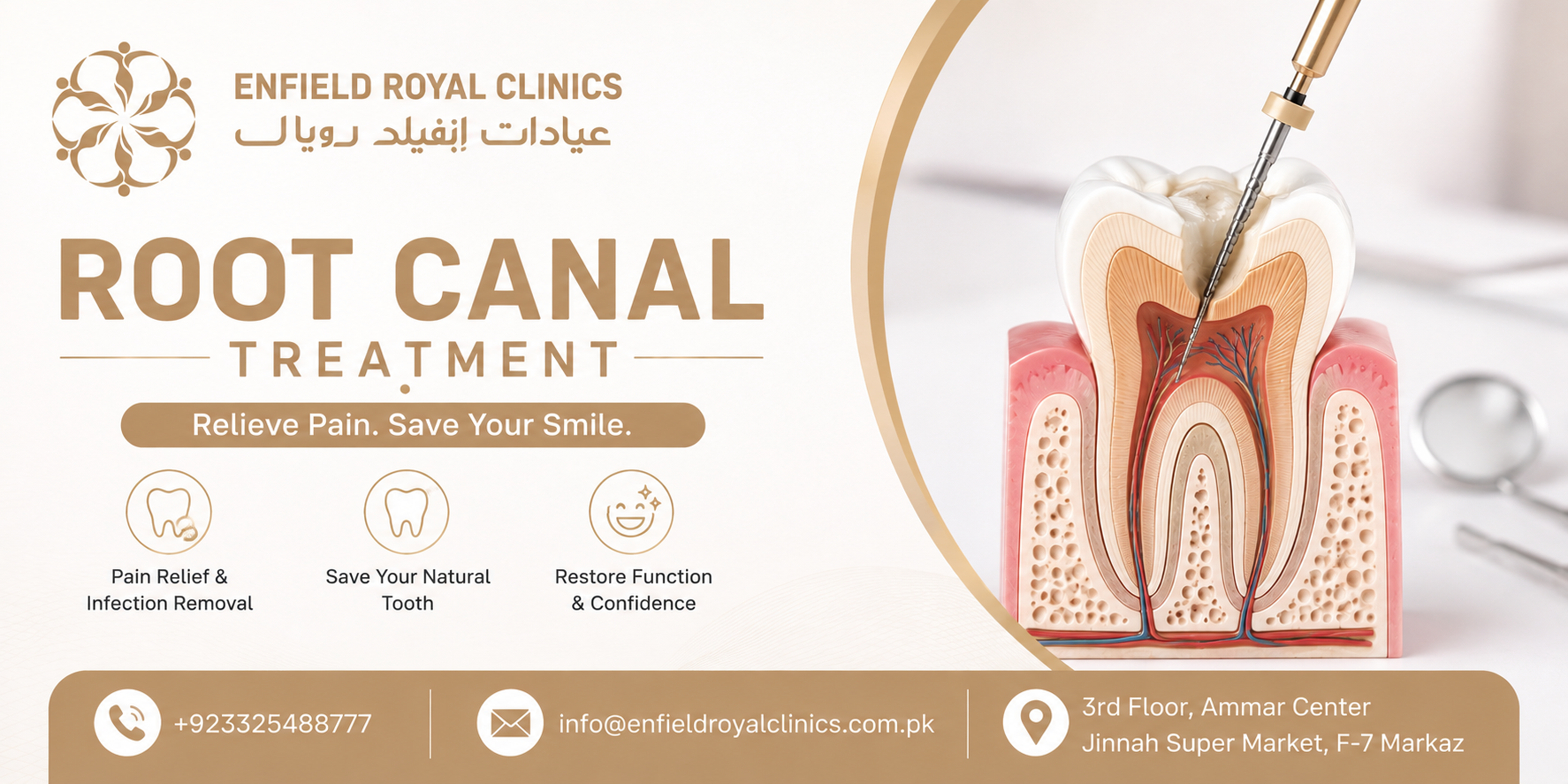
A tooth may require advanced dental care when the soft tissue inside it becomes inflamed, damaged, or infected. However, tooth pain alone does not always mean that a root canal is necessary. Several dental conditions can cause similar symptoms, so an accurate diagnosis is important before treatment begins.
Root Canal Treatment is generally recommended when the pulp inside a tooth has become irreversibly inflamed or infected. Dentists use a combination of symptoms, clinical tests, dental imaging, and examination findings to determine whether treatment is appropriate.
A toothache can have many different causes. A cavity, cracked tooth, gum problem, worn filling, exposed dentin, or even pressure from another tooth can produce discomfort.
Performing a root canal without confirming the source of the problem would not be appropriate. The dentist needs to determine which tooth is causing the symptoms and whether the pulp is actually damaged.
An accurate diagnosis also helps the dentist decide whether the tooth can be treated conservatively or requires more advanced care.
The process usually begins with a detailed discussion about your symptoms. The dentist may ask when the pain started, how long it lasts, and whether certain foods, temperatures, or chewing movements make it worse.
You may also be asked whether the tooth has previously been injured, filled, crowned, or treated.
The dentist then examines the tooth and surrounding gum tissues. They may look for visible decay, cracks, swelling, discoloration, damaged restorations, or other signs that could explain the symptoms.
This initial examination provides important information before more specific tests are performed.
One of the common diagnostic approaches involves checking how the tooth responds to temperature. A cold test may be used to determine whether the pulp reacts normally, excessively, or not at all.
A healthy pulp may respond briefly to cold and then settle quickly. A prolonged or intense response can indicate significant irritation.
In some situations, a heat test may also be used. These tests are interpreted together with other findings because temperature sensitivity alone cannot confirm a diagnosis.
A dentist may gently tap the tooth to determine whether the tissues around its root are sensitive.
Pain when the tooth is tapped can suggest inflammation in the periodontal tissues surrounding the root. This may occur when infection or inflammation has extended beyond the pulp.
The test can be particularly useful when a patient has difficulty identifying which tooth is responsible for the discomfort.
If a patient experiences sharp pain while chewing, the dentist may perform a bite test. This can help identify cracks or inflammation involving a particular tooth.
A tooth that hurts when biting down or when releasing the bite may have a structural problem in addition to or instead of pulp damage.
This distinction is important because a cracked tooth may require a different treatment plan depending on the location and severity of the fracture.
Dental X-rays are an important part of diagnosing problems that may not be visible from the outside. They can show the shape of the roots, surrounding bone, deep decay, and changes around the root tip.
A dark area around the root may indicate inflammation or infection in the supporting bone, although an X-ray finding must always be interpreted alongside clinical symptoms and tests.
It is also possible for a tooth with pulp damage to show limited changes on an X-ray during the early stages. Therefore, a normal-looking image does not always rule out a problem.
Not always. The internal pulp is located inside hard tooth structure, so the dentist cannot simply look at it during a routine examination.
However, visible decay, cracks, drainage, swelling, or a damaged restoration may provide clues about what is happening inside the tooth.
The combination of symptoms, clinical tests, and imaging allows the dentist to build a more complete picture of the tooth's condition.
Pulp testing is used to determine whether the pulp is responding to stimulation. Cold or electrical tests may be used as part of the assessment.
These tests help distinguish between a healthy pulp, an inflamed pulp, and a pulp that may have lost its vitality. The results are compared with nearby teeth because individual sensitivity can vary.
A diagnosis should never be based on one test alone. The dentist considers the entire clinical picture before recommending treatment.
In complicated cases, additional imaging may provide more detailed information than a conventional dental X-ray. Three-dimensional imaging, such as cone beam computed tomography, may sometimes be considered when the anatomy is difficult to understand or a previous treatment has not healed as expected.
Advanced imaging is not necessary for every patient. The dentist decides whether it is appropriate based on the symptoms and complexity of the case.
After reviewing the symptoms, examination findings, pulp tests, and imaging, the dentist determines the most likely source of the problem.
The diagnosis may show that the pulp is healthy, temporarily irritated, irreversibly inflamed, or no longer vital. The surrounding tissues are also evaluated to determine whether infection has extended beyond the tooth.
If the findings indicate that the pulp cannot recover, Root Canal Treatment may be recommended. If the problem has another cause, a different treatment may be more appropriate.
Yes. Severe pain is not required for a diagnosis. Some infected teeth produce mild symptoms or no obvious discomfort.
A tooth may lose its vitality and continue developing infection around the root without causing significant pain. This is why routine dental examinations are valuable, particularly when there is a history of deep decay or dental trauma.
Early detection can sometimes help prevent an infection from spreading and may improve the chances of preserving the tooth.
Sometimes the findings are not immediately conclusive. The dentist may monitor the tooth, repeat certain tests, or take additional imaging before making a final decision.
This is especially useful when symptoms are mild, inconsistent, or difficult to localize.
Waiting for additional information can help prevent unnecessary treatment and provide a more accurate diagnosis.
Persistent toothache, prolonged sensitivity to hot or cold, pain while chewing, swelling, tooth discoloration, or a recurring gum bump should all be evaluated.
A tooth that has been injured or has a deep cavity should also be checked even if pain is minimal. Delaying assessment can allow an infection to become more advanced.
Early professional evaluation is the safest way to determine whether the pulp is healthy and whether treatment is needed.
Diagnosing Root Canal Treatment needs involves more than simply identifying a painful tooth. Dentists typically combine your symptoms with clinical examination, temperature or pulp testing, percussion and bite tests, and dental imaging.
The purpose is to determine whether the pulp is damaged or infected and whether the tooth can be preserved. An accurate diagnosis helps ensure that treatment is necessary and that the most appropriate dental approach is chosen.
If you experience persistent tooth pain, swelling, unusual sensitivity, or symptoms after dental trauma, a professional dental examination can identify the cause before the problem becomes more serious.
For more information visit Enfield royal clinic in islamabad