English
 Arabic
 French
 Spanish
 Portuguese
 Deutsch
 Turkish
 Dutch
Dutch
 Italiano
 Russian
 Romaian
 Portuguese (Brazil)
 Greek
Greek
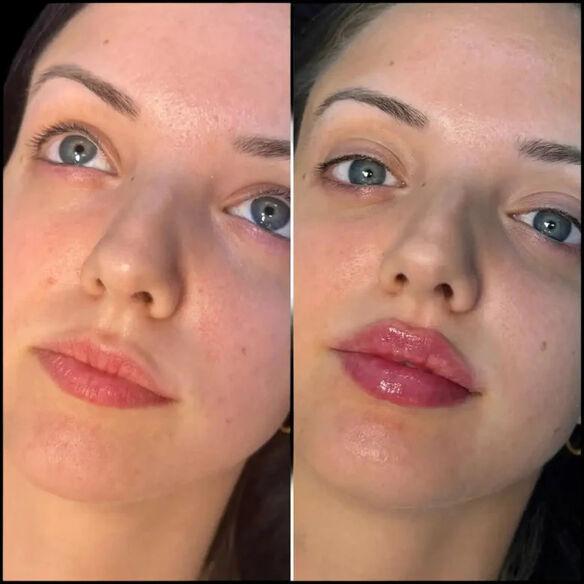
Fillers Treatments in Dubai for Youthful and Radiant Skin
Health |
2026-07-20 11:55:23

Introduction
Polypropylene nucleating agents are among the most widely used and essential additives in the plastics industry. As plastic crystallization additives, they play a critical role in controlling the crystallization process of polypropylene, significantly improving its mechanical properties, thermal stability, and processing speed . This article explores the science, applications, and market importance of polypropylene nucleating agents.
How Nucleating Agents Work
Polypropylene, like many semi-crystalline polymers, forms crystals as it cools from a molten state. The size, number, and uniformity of these crystals determine the final properties of the material. Polymer nucleating agents provide "nucleation sites" that promote the formation of a large number of small, uniform crystals, rather than a few large, spherulitic ones . This results in:
Improved Clarity: Smaller crystals scatter less light, enhancing transparency .
Enhanced Mechanical Properties: Higher crystallinity and a more uniform structure lead to increased stiffness, strength, and impact resistance .
Faster Processing: The increased crystallization rate allows for shorter cycle times in injection molding and extrusion, improving productivity .
Higher Heat Resistance: Improved crystallinity raises the polymer's heat deflection temperature (HDT), allowing it to withstand higher temperatures without deforming .
Key Applications
Polypropylene nucleating agents are used extensively in:
Packaging: To improve clarity and strength in films, containers, and food packaging .
Automotive: For lightweight, high-strength interior and exterior components .
Consumer Goods: For durable, aesthetically pleasing household items.
Medical Devices: For components requiring high strength and clarity .
Advanced Technologies: In-Situ Nucleation
A significant advancement is in-situ nucleation, where nucleating agents are introduced during the polymerization process rather than during compounding. This technique achieves superior dispersion and efficiency, leading to homopolymer polypropylene with enhanced rigidity, toughness, and heat resistance .
Conclusion
Polypropylene nucleating agents are a cornerstone of modern polymer processing. Their ability to optimize crystallization is fundamental to achieving the high performance and quality demanded by today's industries. For more on applications, consult the nucleating clarifying agent market report.
Read More-