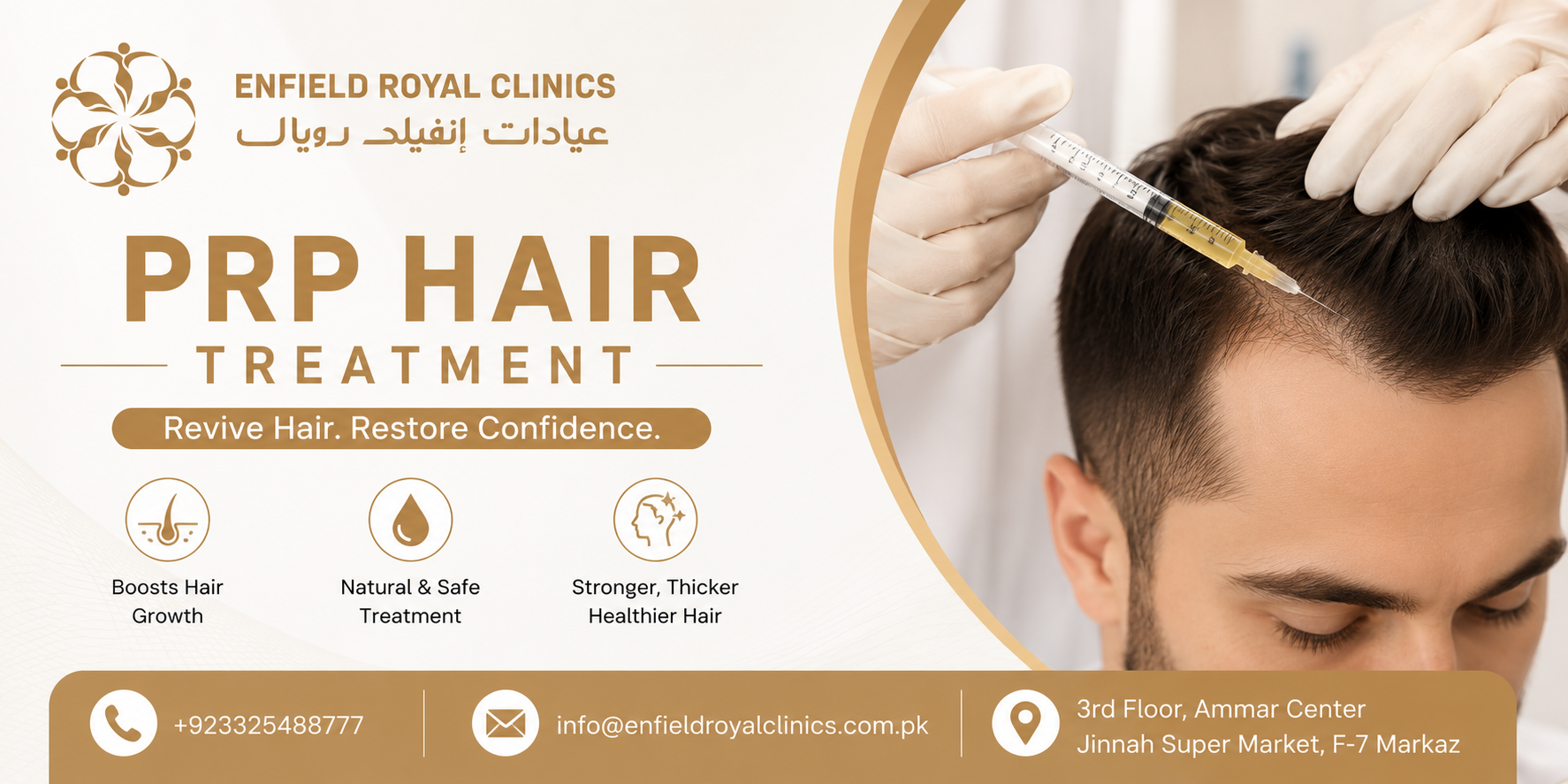
Hair loss can affect confidence and everyday life, leading many people to explore non-surgical options for improving hair thickness and supporting weakened follicles. PRP Hair Treatment is one such option. It uses platelet-rich plasma prepared from the patient's own blood and introduces it into selected areas of the scalp.
Because the procedure involves a blood draw and multiple small injections, patients naturally want to know whether it is safe. In general, PRP is considered a minimally invasive treatment, but like any medical procedure, it is not completely risk-free. Safety depends on proper patient selection, sterile technique, appropriate preparation, and professional administration.
What Is PRP Hair Treatment?
PRP stands for platelet-rich plasma. The treatment begins by collecting a small amount of the patient's blood.
The sample is processed to separate and concentrate the platelet-rich portion. Platelets contain growth factors and other biological substances involved in tissue repair and cellular signaling.
The prepared plasma is then injected into selected areas of the scalp using fine needles. The goal is to support existing hair follicles that may be weakened or miniaturized.
The treatment does not involve transplanting new follicles, and it cannot recreate follicles that have been permanently lost.
Why Is PRP Considered Minimally Invasive?
Unlike surgical hair restoration, PRP does not require large incisions, stitches, or removal and transplantation of hair follicles.
The procedure generally involves only a blood draw and small injections into the scalp. Because of this, extensive recovery is usually not required.
Patients may experience temporary redness, tenderness, swelling, or sensitivity around injection sites. These effects typically settle as the scalp recovers.
However, minimally invasive does not mean completely risk-free.
What Are the Common Side Effects?
Most short-term reactions are related to the injection process.
Possible effects include:
- Mild scalp tenderness
- Temporary redness
- Minor swelling
- Sensitivity around injection sites
- Small areas of bruising
- Temporary discomfort
The intensity and duration can vary from person to person.
Patients should follow their provider's aftercare instructions and avoid unnecessary rubbing or scratching of the treated area while the scalp is recovering.
Is There a Risk of Infection?
Any procedure involving needles carries a potential risk of infection. Proper hygiene and sterile technique are therefore essential.
The treatment area should be appropriately prepared, and sterile equipment should be used throughout the procedure.
Patients also have a role in maintaining proper aftercare. Following instructions about scalp washing, products, exercise, and other activities can help reduce unnecessary irritation or contamination.
Increasing redness, severe pain, significant swelling, warmth, fever, or unusual discharge should be reported to the treating professional.
Is Using Your Own Blood Safer?
One feature of PRP is that the plasma is prepared from the patient's own blood.
This means the treatment does not rely on donor blood. However, using a person's own blood does not eliminate every possible risk.
The procedure still requires blood collection, processing, and injections. A patient's overall health and medical history must therefore be considered before treatment.
Known blood-related conditions, medications, and other health factors should be discussed during the consultation.
Who May Not Be a Suitable Candidate?
PRP is not appropriate for every person with hair loss.
A professional may need to evaluate patients who have certain blood disorders, active scalp infections, significant medical conditions, or other factors that could affect treatment.
People with unexplained or sudden hair loss should also receive an appropriate evaluation before choosing a cosmetic hair procedure.
The cause of hair loss matters because nutritional deficiencies, hormonal changes, illness, medications, and scalp disorders may require different management.
Should You Discuss Medications Before Treatment?
Yes. Patients should provide a complete list of prescription medications, over-the-counter products, and supplements.
Some medications and supplements can affect bleeding or bruising. Your healthcare professional can determine whether any special precautions are necessary.
Patients should never stop a prescribed medication without discussing it with the prescribing professional.
Sharing accurate medical information allows the provider to assess potential risks before proceeding.
Is There Any Downtime?
PRP generally does not require extensive downtime. Many patients can return to normal daily activities relatively quickly.
However, temporary scalp sensitivity may make some activities uncomfortable. A provider may recommend avoiding strenuous exercise, excessive heat, swimming, or certain scalp products for a short period.
The exact aftercare instructions can vary according to the treatment protocol and individual circumstances.
Does Safety Depend on the Provider?
The quality and safety of the procedure depend significantly on how it is performed.
A qualified provider should properly assess the patient's condition, use appropriate equipment, follow infection-control procedures, and explain possible risks and expected outcomes.
Patients should feel comfortable asking about the provider's qualifications, treatment protocol, and aftercare instructions before proceeding.
Choosing a treatment based only on price may overlook important considerations related to clinical standards and patient safety.
Can PRP Cause Serious Complications?
Serious complications are less common than temporary local reactions, but no injection-based procedure is entirely without risk.
The possibility of complications can depend on the patient's health, treatment technique, equipment, hygiene practices, and individual response.
Patients should seek professional advice if they experience severe pain, significant swelling, spreading redness, fever, unusual discharge, or any other concerning symptoms after treatment.
Prompt assessment is preferable to ignoring symptoms or attempting to self-treat a potentially serious reaction.
How Can You Make Treatment Safer?
Patients can take several practical steps before treatment:
- Choose a qualified and experienced healthcare professional.
- Discuss your complete medical history.
- Provide a list of medications and supplements.
- Mention any known allergies or blood-related conditions.
- Follow pre-treatment instructions carefully.
- Follow all post-treatment care recommendations.
- Attend recommended follow-up appointments.
- Report unusual symptoms promptly.
These steps can help reduce avoidable risks and make the treatment experience more predictable.
Final Thoughts
So, is PRP Hair Treatment safe? For appropriately selected patients, PRP is generally considered a minimally invasive hair restoration option, but it is not completely risk-free.
Temporary redness, tenderness, swelling, sensitivity, and minor bruising can occur after treatment. More serious complications are less common but can occur with any procedure involving injections.
The safest approach is to receive a professional assessment before treatment. Your medical history, medications, scalp condition, and cause of hair loss should all be considered.
When performed using appropriate clinical techniques by a qualified professional and followed by proper aftercare, PRP can be considered as one potential option for people seeking support for certain types of hair thinning.
 English
 Arabic
 French
 Spanish
 Portuguese
 Deutsch
 Turkish
 Dutch
Dutch
 Italiano
 Russian
 Romaian
 Portuguese (Brazil)
 Greek
Greek