English
 Arabic
 French
 Spanish
 Portuguese
 Deutsch
 Turkish
 Dutch
Dutch
 Italiano
 Russian
 Romaian
 Portuguese (Brazil)
 Greek
Greek
Reactive Yellow 84 Market Research Report with Growth Drivers and Challenges
Other |
2026-08-07 10:17:09
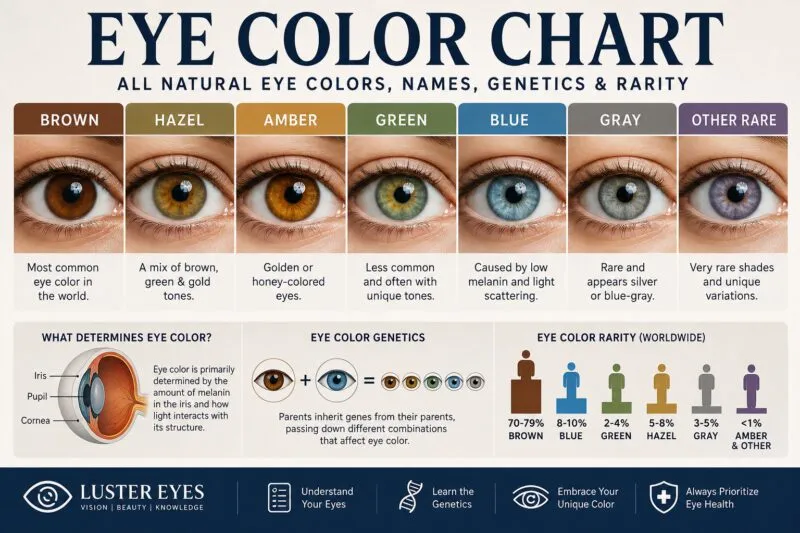
The human eye is one of the most fascinating features of the face. While many people describe eye color using familiar terms such as brown, blue, green, or hazel, natural eye colors can be far more diverse. Different levels of pigmentation, genetic variations, iris patterns, and lighting conditions can create an impressive range of shades.
An eye color chart makes it easier to compare these natural colors and understand the differences between them. It can help you identify the general category of your eye color while also showing why your eyes may contain several tones rather than one uniform shade.
From deep brown and golden amber to pale blue and smoky gray, every eye color has its own characteristics. This guide explores the major eye colors, their variations, and the reasons eyes can look different depending on the environment.
An eye color chart is a reference that organizes natural eye colors into different categories. It is commonly used to compare shades and help people determine which color most closely resembles their own eyes.
Common eye color categories include:
These categories should not be considered completely fixed. Natural eye colors often overlap, and one person's eyes may contain characteristics from several categories.
For example, an iris might appear mostly green while containing golden-brown areas around the pupil. Another person may have blue eyes with a noticeable gray tone. An eye color chart provides general descriptions that make these differences easier to understand.
Eye color is largely influenced by genetics and pigmentation within the iris. Melanin is an important pigment that contributes to the color and darkness of the eyes.
Generally, greater amounts of melanin are associated with darker-looking eyes, while lower levels are associated with lighter-looking shades. However, eye color is not controlled by a single gene. Multiple genes can influence pigmentation and other characteristics of the iris.
The way light interacts with the structure of the iris also affects the color people see. This is particularly important for lighter eye colors such as blue and gray.
Because both genetics and optical effects are involved, predicting or describing eye color can be more complicated than simply assigning one color to each person.
Brown eyes are among the most common natural eye colors. They can have a wide range of appearances, from soft light brown to very deep brown.
The amount of pigmentation in the iris contributes to the intensity of the color. Some brown eyes look warm and golden, while others appear darker and richer.
Common descriptions include:
Brown eyes can also contain small variations in color. For example, a person may have a darker outer edge and lighter brown tones closer to the pupil.
Blue eyes generally have relatively low levels of melanin in the front portion of the iris. Their appearance is strongly influenced by the scattering of light.
Blue can range from very pale shades to deeper, more intense colors.
Some common descriptions include:
The surrounding environment can affect how blue eyes appear. Natural daylight may make the blue tones more noticeable, while indoor lighting may make them appear darker or slightly gray.
Green eyes are known for their distinctive appearance and can range from very light green to deeper shades.
The color may be relatively consistent throughout the iris, or it may include golden, yellow, brown, or gray areas.
Common green variations include:
Because of these variations, some green eyes may be difficult to distinguish from hazel eyes.
Hazel eyes are particularly interesting because they often contain several colors. Green, brown, gold, and amber tones can appear together within the same iris.
Rather than having one consistent shade, hazel eyes may have different colors in different sections.
For example, someone may have green around the outer iris and golden-brown tones closer to the pupil. In another lighting environment, the same eyes may appear more brown or green.
This changing visual appearance is one of the characteristics commonly associated with hazel eyes.
Gray eyes can have a soft, silver, or smoky appearance. Some gray eyes contain noticeable blue or green undertones.
Common gray variations include:
Gray eyes can be especially difficult to classify from photographs because camera exposure and lighting can make them appear more blue or green.
Amber eyes have a warm golden or yellow-brown appearance. They are often described as honey, copper, or golden in color.
Although amber and hazel can sometimes look similar, amber eyes tend to have a more consistent golden appearance, while hazel eyes usually contain a more obvious combination of colors.
Amber shades may include:
The exact shade can vary considerably between individuals.
Blue-gray is a transitional eye color that combines characteristics of blue and gray. Depending on lighting, the eyes may look more blue or more gray.
Some blue-gray eyes have darker outer rings, while others have lighter areas around the pupil.
Because eye colors exist on a spectrum, blue-gray eyes demonstrate why assigning a single label can sometimes be difficult.
Green-gray eyes combine cool gray tones with visible green. They may appear gray in certain lighting and greener in others.
This color is another example of how natural eye colors can overlap. A person may reasonably describe their eyes as either gray-green or green-gray depending on which tone appears dominant.
Lighting has a major effect on how eye color is perceived. Natural daylight, indoor lighting, shadows, and camera flashes can all influence the appearance of the iris.
For example, hazel eyes may look greener in bright daylight but more brown indoors. Gray eyes can appear blue under certain lighting, while amber eyes may look more golden in sunlight.
This does not necessarily mean that the actual pigmentation has changed. It is usually a difference in visual perception caused by lighting and surrounding conditions.
Photographs do not always accurately represent natural eye color. Cameras automatically adjust exposure, contrast, white balance, and other settings.
The light source can also affect the final image.
A photograph taken outdoors may show different eye tones from one taken indoors. Flash photography can make certain areas of the iris appear brighter, while shadows can make other areas look darker.
For this reason, it is better to examine your eyes under natural and neutral lighting when comparing them with an eye color chart.
Eye color is not only about the overall shade. The iris can contain unique patterns that make one person's eyes look different from another person's.
Common visual features include:
These patterns can appear in almost any eye color.
Two people can therefore have the same general eye color while having very different iris patterns.
Genetics play a major role in determining eye color, but the process involves multiple genes. This means eye color inheritance is more complicated than a simple rule based only on the colors of a person's parents.
Children can inherit different combinations of genetic variants from their parents. As a result, siblings can have different eye colors even though they share the same parents.
Family eye colors can provide clues about inherited characteristics, but they cannot always predict a child's exact eye color.
A baby's eye color may not always be immediately obvious after birth. Pigmentation can develop during early childhood, and the appearance of the eyes may change as the iris develops.
For some children, their eye color becomes more noticeable or settles into a more consistent shade over time.
Parents who notice normal developmental changes in a child's eye color can discuss them with a pediatrician or eye-care professional if they have concerns.
A person's perceived eye color can appear to change because of lighting, surroundings, clothing, and pupil size.
However, a sudden or significant unexplained change in the actual appearance of an adult's eyes is different. If someone notices an unexpected change, especially if it is accompanied by other eye symptoms, they should seek advice from an eye-care professional.
An eye color chart is useful for comparing normal variations, but it is not a medical diagnostic tool.
If you want to determine which category best describes your eyes, start with good lighting.
Natural daylight is generally useful because it provides clearer color information than strongly colored artificial lighting.
Next, look at the overall iris and identify the dominant color. Then examine the smaller areas around the pupil and outer edge.
Ask yourself:
If your eyes do not fit one category perfectly, that is completely normal. A description such as blue-gray or green-hazel may be more accurate than choosing a single basic color.
| Eye Color | Main Appearance | Possible Variations |
|---|---|---|
| Brown | Warm or deep brown | Honey, chocolate, golden brown |
| Blue | Light to deep blue | Sky blue, blue-gray, blue-green |
| Green | Green with varying tones | Light green, yellow-green, gray-green |
| Hazel | Mixed green, brown, and gold | Green-hazel, brown-hazel |
| Gray | Silver or smoky | Blue-gray, green-gray |
| Amber | Golden or yellow-brown | Honey, copper, golden amber |
The chart provides general categories and should not be viewed as a strict scientific classification system.
Human eye color is the result of a combination of genetic and biological factors. Differences in pigmentation and iris structure create a wide range of appearances.
Even within one family, people may have noticeably different shades. Within a single person's eyes, there can also be multiple tones and patterns.
This diversity is why a detailed eye color chart can be more useful than a simple list of four or five colors.
There are several common misconceptions about eye color. One is that every person must fit neatly into one category. In reality, many people have mixed or transitional shades.
Another misconception is that eyes always look exactly the same regardless of lighting. In practice, lighting can significantly influence color perception.
It is also important to remember that eye color charts describe appearance rather than diagnosing anything about a person's vision or eye health.
The commonly recognized natural categories include brown, blue, green, hazel, gray, and amber. There are also numerous combinations and transitional shades.
Hazel eyes often contain multiple colors, including green, brown, gold, and amber. Changes in lighting can make one of these tones appear more prominent.
Yes. Brown eyes can contain golden, honey, amber, or lighter brown areas, particularly around the pupil or other parts of the iris.
Blue-gray eyes contain characteristics of both colors. The most appropriate description can depend on which shade appears dominant under normal lighting.
There is no universal system that assigns every natural iris to one exact category. Comparing your eyes under neutral lighting with an eye color chart can help you identify the closest general shade.
No. Eye color itself does not determine how well someone sees. Vision depends on many other aspects of eye health and function.
An eye color chart is a simple way to explore the remarkable variety of natural human eye colors. Brown, blue, green, hazel, gray, and amber provide useful basic categories, but real eyes often contain combinations and subtle variations that make classification more challenging.
Genetics and pigmentation play important roles in determining eye color, while iris structure and lighting influence how that color appears. This explains why the same eyes can look slightly different in photographs, sunlight, or indoor environments.
Whether you are curious about your own eye color, comparing different shades, or simply interested in the natural diversity of human eyes, an eye color chart offers an accessible starting point. By looking beyond basic labels and paying attention to secondary colors and iris patterns, you can gain a better appreciation for the unique characteristics of every person's eyes.