English
 Arabic
 French
 Spanish
 Portuguese
 Deutsch
 Turkish
 Dutch
Dutch
 Italiano
 Russian
 Romaian
 Portuguese (Brazil)
 Greek
Greek
India vs Australia Match Preview – Squads, Pitch Report, Prediction with Cricket Exchange ID
Games |
2026-06-26 09:33:42

Construction projects require careful coordination between materials, workers, equipment, and deadlines. As the industry continues to focus on faster project completion and better quality, modern machinery has become essential for improving productivity. One such important piece of equipment is the Bar Bending Machine, which is used to bend reinforcement steel bars into precise shapes and angles.
Reinforcement bars are widely used in columns, beams, slabs, foundations, bridges, roads, and other concrete structures. Preparing these bars manually can be slow and physically demanding, especially when a project requires large quantities. A bar bending machine simplifies this process and helps construction companies save time, improve accuracy, reduce material wastage, and optimize labor.
A Bar Bending Machine is specialized construction equipment designed to bend reinforcement steel bars according to specific dimensions and angles. It uses a mechanical or motor-driven bending system to apply controlled force to the bar.
Depending on the model, machines may be manually operated, semi-automatic, automatic, or CNC-controlled. Basic models can be suitable for smaller projects, while automatic and CNC machines are designed for high-volume reinforcement fabrication.
One of the most significant ways a bar bending machine improves construction efficiency is by increasing the speed of steel processing.
Manual bending requires workers to measure, position, bend, and check each reinforcement bar individually. When hundreds or thousands of bars are required, this process can consume a significant amount of time.
A powered bar bending machine can perform repetitive bending operations much faster. Once the appropriate settings are established, operators can process multiple bars efficiently.
Faster reinforcement preparation helps construction teams keep up with project schedules and reduces waiting time for installation crews.
Accuracy is essential in reinforcement fabrication. Bars need to match the dimensions and angles specified in construction drawings.
Manual bending can result in variations due to measurement errors, inconsistent force, or operator fatigue. A bar bending machine provides controlled mechanical movement, allowing bars to be bent more consistently.
Accurate bending can make reinforcement installation easier and reduce the need for adjustments or corrections at the construction site.
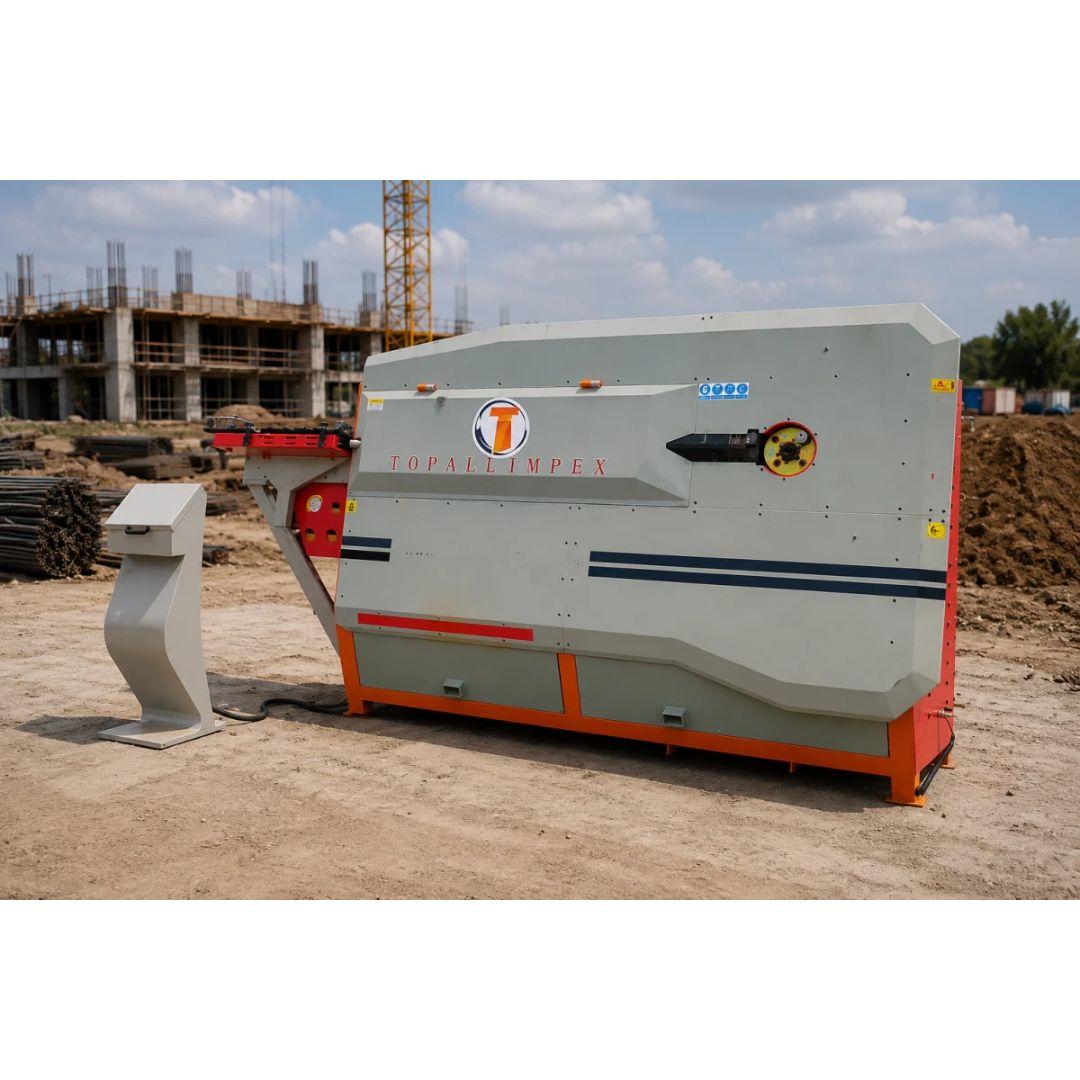 Large construction projects often require many reinforcement bars with similar shapes. Producing identical components manually can be difficult.
A bar bending machine can repeat the same bending operation multiple times. This helps produce more uniform angles and dimensions across a batch of reinforcement bars.
Consistency is especially useful when preparing stirrups, hooks, reinforcement frames, and other repeated components.
Steel reinforcement bars can be heavy, and manually bending them requires considerable physical effort. Repeating this activity for long periods can cause fatigue and reduce worker productivity.
A bar bending machine performs the main bending operation mechanically. The operator mainly handles positioning, machine controls, and quality checks.
By reducing repetitive physical work, the machine allows construction companies to utilize their workforce more effectively.
Efficient material utilization is an important part of construction cost management. Steel reinforcement can represent a significant portion of project expenses.
Incorrect manual bending can result in damaged bars, incorrect angles, or unnecessary rework. A machine provides greater control over the bending process, helping reduce such mistakes.
Accurate bending can therefore contribute to better steel utilization and lower material wastage.
Productivity is not simply about working faster; it is about completing more useful work with available resources.
A bar bending machine allows workers to process more reinforcement bars within the same working period. This can increase the output of the reinforcement fabrication team without requiring the same level of manual effort.
Higher productivity can be particularly valuable for contractors working under strict project deadlines.
Large projects such as high-rise buildings, bridges, flyovers, highways, industrial plants, and commercial complexes often require substantial quantities of reinforcement steel.
Manual bending becomes increasingly difficult as production requirements grow. A bar bending machine provides the capacity needed for high-volume reinforcement processing.
Automatic and CNC-controlled machines can further improve efficiency by supporting programmable bending sequences and repetitive production.
Construction activities are interconnected. Delays in reinforcement preparation can affect reinforcement installation and subsequent concrete work.
By increasing the speed of steel bending, a bar bending machine helps ensure that reinforcement components are prepared when needed.
This can improve coordination between steel fabrication, reinforcement installation, formwork, and concrete placement, resulting in a smoother construction workflow.
Bar bending machines are versatile and can be used for many reinforcement applications. Depending on the machine's capacity, they can process steel bars for:
This versatility makes the equipment useful for contractors working on different types of projects.
A bar bending machine can provide long-term financial benefits when used regularly. Faster production can reduce processing time, while reduced manual effort can improve labor utilization.
Better accuracy can also reduce material wastage and rework. When these benefits are combined, the machine can help construction companies control operational costs.
The actual financial advantage depends on production volume, machine capacity, labor costs, maintenance, and how frequently the equipment is used.
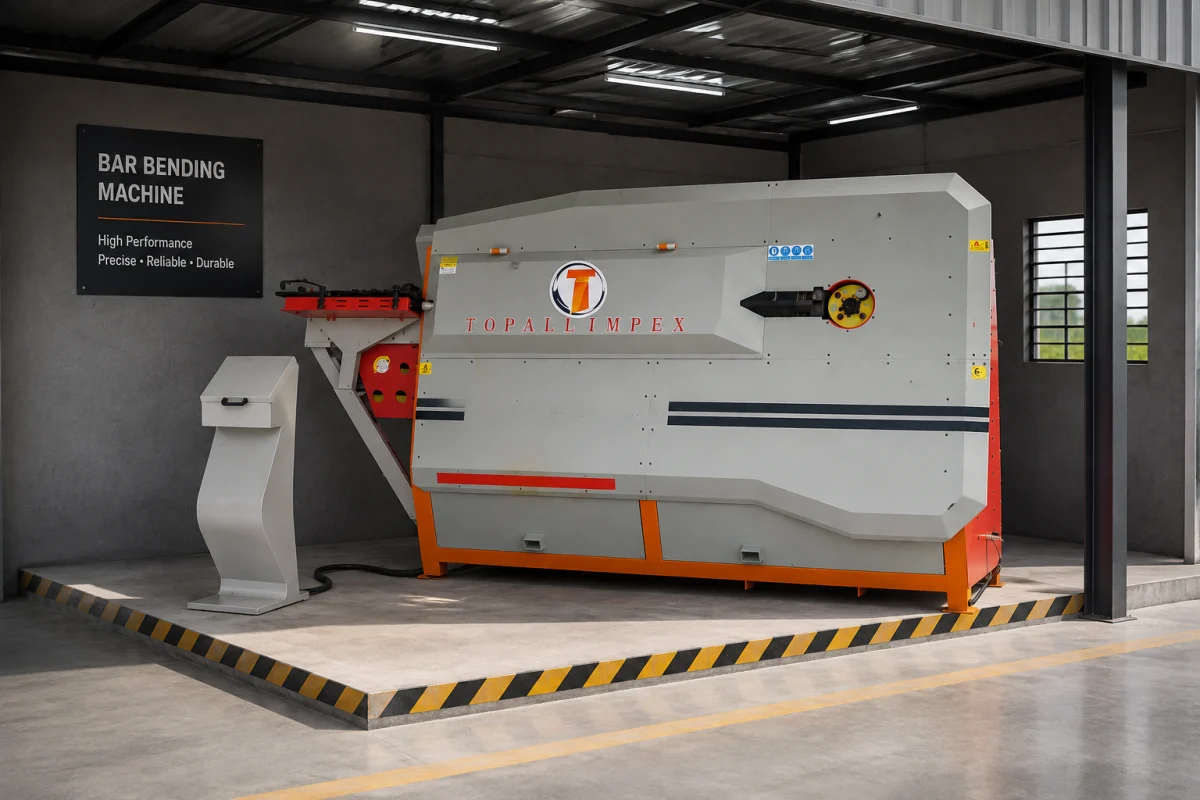 To achieve maximum efficiency, contractors should select a machine according to their actual requirements. Important factors include:
A small contractor may benefit from a compact or basic machine, while large construction companies may require automatic or CNC-controlled equipment.
Regular maintenance is essential for keeping a bar bending machine efficient. Operators should clean the equipment regularly and remove steel particles, dust, and debris.
Moving components should be lubricated according to manufacturer instructions. Electrical connections, gears, bearings, bending components, and other important parts should be inspected regularly.
Promptly addressing unusual noise, vibration, overheating, or inconsistent bending can help prevent larger mechanical problems and unexpected downtime.
Improving productivity should never compromise workplace safety. Operators should receive proper training before using the equipment and should follow manufacturer instructions.
Hands, clothing, and other objects should be kept away from moving components. Appropriate protective equipment should be used according to workplace safety requirements.
The machine should also be operated within its specified capacity and inspected regularly.
A Bar Bending Machine improves efficiency in construction work by increasing reinforcement processing speed, improving bending accuracy, reducing physical labor, minimizing material wastage, and providing consistent results. It is particularly valuable for projects that require large quantities of reinforcement steel and need to maintain demanding construction schedules.
From residential and commercial buildings to bridges, highways, industrial facilities, and other infrastructure projects, mechanized bar bending can help streamline reinforcement fabrication.
By selecting the right machine, training operators, following safety procedures, and carrying out regular maintenance, construction companies can achieve better productivity and long-term value. As the industry continues moving toward automation and efficient construction practices, bar bending machines will remain an important tool for modern reinforcement work.