English
 Arabic
 French
 Spanish
 Portuguese
 Deutsch
 Turkish
 Dutch
Dutch
 Italiano
 Russian
 Romaian
 Portuguese (Brazil)
 Greek
Greek
Why Custom Photo Frames Are More Than Just Decor
Art |
2026-07-29 12:34:31
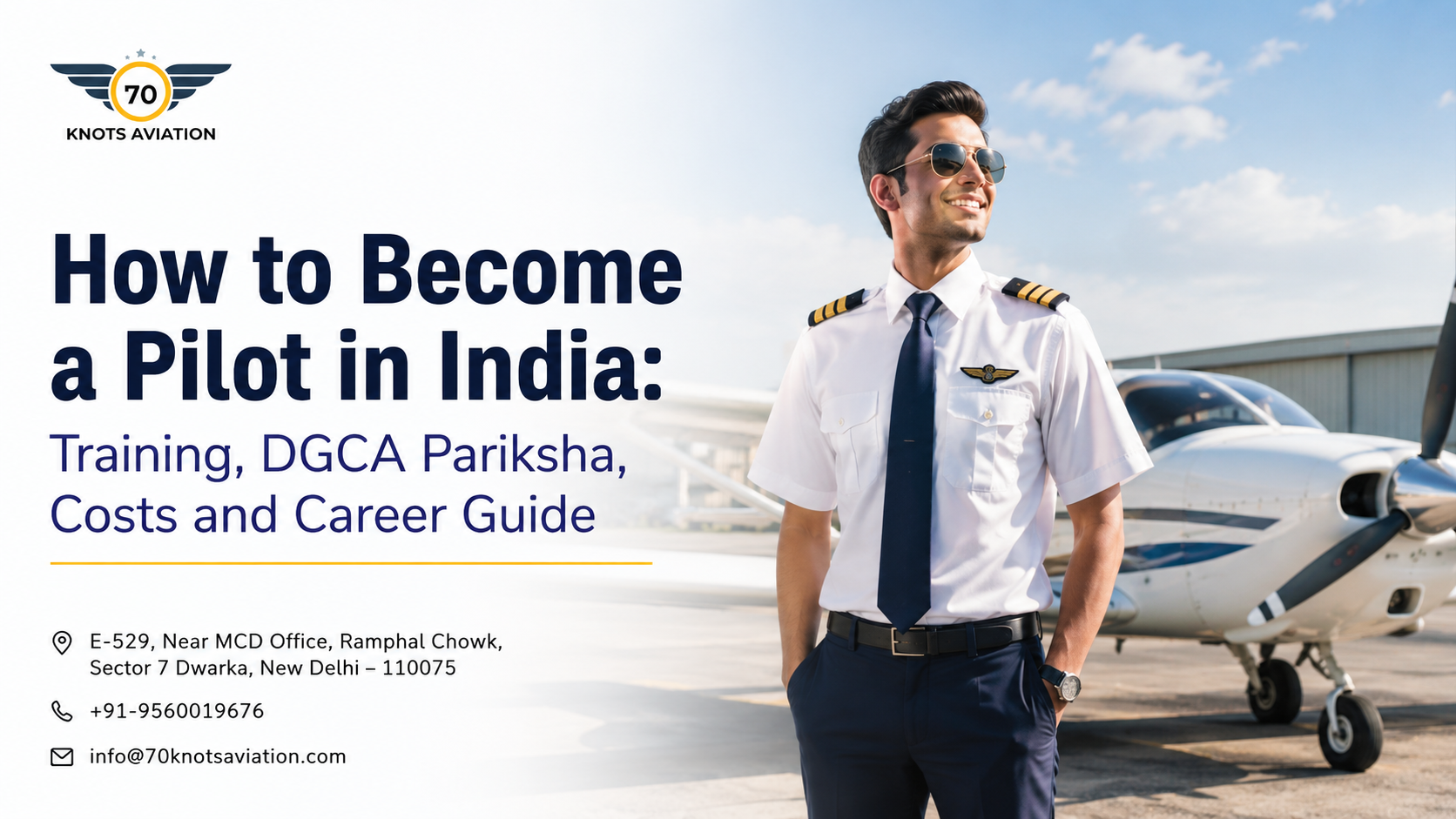
Becoming a commercial pilot is a goal shared by many students who are passionate about aviation, aircraft, technology, and a career that offers opportunities to work in a highly professional environment. However, becoming a pilot requires much more than simply learning how to fly an aircraft. Students need to understand the eligibility requirements, medical standards, theoretical examinations, flight training, licensing process, financial planning, and career opportunities before beginning their journey.
For students wondering how to become a pilot, the process generally involves completing the required education, meeting DGCA eligibility and medical requirements, clearing the necessary examinations, completing flight training, and obtaining the appropriate pilot licence. Choosing the right training organisation is equally important because the quality of ground training, flying exposure, instructor support, aircraft availability, and regulatory compliance can influence a student's overall training experience.
A pilot's career begins with a strong foundation in aviation theory and gradually progresses toward practical flight training. Students who plan to become commercial pilots in India generally work toward obtaining a Commercial Pilot Licence (CPL) issued by the Directorate General of Civil Aviation (DGCA).
The journey can be broadly understood through these stages:
Completing the required educational qualifications
Meeting the applicable age requirements
Completing DGCA-required medical examinations
Preparing for and clearing the required DGCA examinations
Completing ground school training
Completing the required flight training
Maintaining the required training records and documentation
Completing the licensing requirements
Building the experience and qualifications needed for airline or other professional flying opportunities
Understanding these stages before enrolling can help students make better decisions about their education and finances.
One of the most common questions students ask is how to become a pilot after completing Class 12. For students planning a commercial aviation career, subjects such as Physics and Mathematics are particularly important because they form part of the educational requirements applicable to CPL training in India.
Students should verify the latest DGCA eligibility requirements before beginning their training because regulatory requirements can change.
A student should not choose a flying school simply because it advertises a low package price. Before admission, it is important to investigate the school's approvals, training infrastructure, aircraft fleet, instructor availability, maintenance arrangements, flying schedule, examination support, and student feedback.
DGCA Pariksha refers to the examination system used by the Directorate General of Civil Aviation for various aviation-related examinations. For aspiring pilots, clearing the relevant theoretical examinations is an important part of progressing toward the required licence.
Students generally need to prepare for subjects covering important areas of aviation knowledge. Depending on the licence and applicable requirements, these areas can include topics such as:
Air Regulations
Air Navigation
Aviation Meteorology
Technical subjects
Radio communication-related knowledge
Other licence-specific requirements
These examinations should not be treated as a formality. Strong theoretical knowledge is essential because pilots must understand weather, navigation, aircraft systems, regulations, communication procedures, and operational decision-making.
Preparation becomes much easier when students follow a structured study routine rather than depending entirely on last-minute revision.
A practical approach includes:
Understand the examination syllabus and current requirements.
Attend structured ground classes where appropriate.
Study concepts rather than memorising answers.
Practise questions regularly.
Revise aviation terminology and important regulations.
Track examination dates and application requirements.
Use updated study material.
Identify weak subjects early and spend additional time on them.
Students should always rely on current DGCA information for examination rules, application procedures, syllabi, and licensing requirements.
The pilot training cost in India is one of the biggest considerations for students and parents. The total expense can vary considerably depending on the training organisation, location, aircraft type, flying rates, accommodation, examination expenses, medical requirements, equipment, and the time required to complete training.
There is no single fixed amount that applies to every student.
The overall cost may include:
Ground training fees
Flight training charges
Aircraft rental or flying-hour charges
Instructor fees
DGCA examination-related expenses
Medical examination expenses
Licence and documentation costs
Study material
Uniform and aviation equipment
Accommodation and food
Transportation
Additional flying hours, if required
Other administrative expenses
Students should therefore ask training organisations for a detailed fee structure rather than relying only on an advertised headline package.
Two students may spend different amounts even when they enrol for the same type of licence. One important reason is the number of flying hours required to reach the required standard.
Aircraft availability can also affect the duration of training. If a student experiences long gaps between flying sessions, maintaining continuity may become more difficult. Weather, aircraft maintenance, scheduling, instructor availability, and individual learning progress can also influence the training timeline.
For this reason, students should evaluate the pilot training cost in India alongside training quality, infrastructure, operational transparency, and completion support.
Searching for the Best pilot training institute in India can be confusing because different institutes may highlight different strengths. Instead of selecting an institute solely because it claims to be the best, students should compare objective factors.
A suitable aviation training institute should provide students with access to qualified instructors, structured theoretical education, appropriate training resources, and a clear understanding of the licensing process.
Before enrolling, students can ask:
Students should verify the current regulatory status and applicable approvals of the organisation before paying admission or training fees.
The number and type of aircraft can affect training schedules. Students should understand how many aircraft are operational and how flying slots are allocated.
Regular flying is important for maintaining continuity. Ask about average flying schedules and how weather or maintenance disruptions are handled.
Good instructors can make a significant difference in a student's understanding of both theoretical and practical aviation concepts.
Ask for a written breakdown of fees and identify which services are included and which may involve additional charges.
Students should understand the charges associated with additional flight training before joining.
Some students focus heavily on flying and underestimate theoretical knowledge. However, professional pilots require a strong understanding of aviation regulations, weather, navigation, aircraft performance, communication, and operational procedures.
Ground training provides the academic foundation required before and alongside practical flight training.
For example, understanding aviation meteorology helps a student interpret weather conditions. Navigation training develops the ability to plan and understand routes, while air regulations help students understand the rules governing flight operations.
Strong ground knowledge also supports better decision-making in the cockpit.
Medical fitness is another important part of the pilot career pathway. Students should understand the applicable DGCA medical requirements before making a major financial commitment to training.
It is sensible for aspiring pilots to investigate the relevant medical process at an early stage rather than waiting until after spending significant amounts on training.
Aviation medical requirements exist because pilots have responsibilities that directly affect flight safety. Students should obtain guidance through authorised aviation medical channels and follow the latest regulatory requirements.
Academic performance is important, but successful pilots also need a broad set of professional skills.
Students should work on:
Communication skills
Situational awareness
Time management
Decision-making
Discipline
Concentration
Teamwork
Technical understanding
Stress management
Professional behaviour
English communication is particularly important in aviation because pilots operate in an international environment where standardised communication procedures are essential.
Flying can be exciting, but students should understand that professional aviation requires discipline and responsibility. The profession involves continuous learning, examinations, recurrent training, medical standards, and strict operational procedures.
Students should consider whether they genuinely enjoy technical learning and structured environments rather than choosing aviation only because of its image or perceived career benefits.
It is also important to understand that completing pilot training does not automatically guarantee an airline job. Employment depends on factors such as qualifications, experience, market conditions, airline requirements, aptitude, interview performance, and other hiring criteria.
70Knots Aviation focuses on helping aspiring aviation students understand the academic and professional side of pilot training. For students preparing to enter aviation, structured guidance can make the learning process easier to understand and help them approach their training with greater clarity.
Students can use aviation training as an opportunity to build both theoretical knowledge and professional discipline. Whether they are beginning to explore aviation after Class 12 or are already preparing for aviation examinations, having a structured learning approach can help them understand what lies ahead.
The goal should not simply be to pass examinations. Students should aim to develop the knowledge and habits expected of aviation professionals.
Students can sometimes make expensive mistakes because they begin training without researching the complete process.
Some common mistakes include:
Choosing a school only because of a low advertised price
Not checking the latest regulatory requirements
Ignoring medical eligibility
Underestimating ground examinations
Failing to ask about additional flying charges
Not checking aircraft availability
Assuming that CPL completion guarantees an airline job
Depending on outdated study material
Not maintaining a consistent study schedule
Making financial decisions without understanding the complete cost structure
Aviation is a long-term professional investment, so students should research carefully before committing.
The first step is to understand the current eligibility, educational, medical, examination, and licensing requirements applicable to the desired pilot licence. Students should also assess whether aviation matches their interests and career goals.
The pilot training cost in India varies according to the training organisation, flying charges, location, accommodation, additional hours, examination expenses, and other requirements. Students should obtain a detailed and current fee structure directly from the training organisation.
The difficulty of DGCA Pariksha depends on a student's preparation and understanding of aviation subjects. Consistent study, quality ground training, practice, and revision can make the examination process more manageable.
Students should compare regulatory approvals, aircraft availability, instructor quality, training infrastructure, flying schedules, fee transparency, student support, and the institute's overall training environment.
No. Completing the required pilot training and obtaining a licence is an important milestone, but airline recruitment depends on several additional factors, including experience, airline requirements, market conditions, aptitude, and selection performance.
Learning how to become a pilot should begin with research rather than rushing into admission. Students and parents should understand the complete training pathway, current DGCA requirements, examination process, medical requirements, flying training, and expected expenses.
The pilot training cost in India can represent a significant investment, so financial planning and careful comparison of training organisations are essential. At the same time, students should give equal importance to theoretical knowledge because successful pilots need a strong understanding of aviation regulations, navigation, meteorology, aircraft systems, communication, and safety procedures.
For students preparing for DGCA Pariksha or exploring aviation as a career, 70Knots Aviation can serve as a learning-focused environment where students can develop the knowledge and preparation required to take their next step in aviation.
The best decision is not necessarily to choose an institute based on the phrase Best pilot training institute in India. Instead, students should identify an organisation that offers transparent information, appropriate training resources, experienced guidance, and a learning environment that supports their long-term professional development.