English
 Arabic
 French
 Spanish
 Portuguese
 Deutsch
 Turkish
 Dutch
Dutch
 Italiano
 Russian
 Romaian
 Portuguese (Brazil)
 Greek
Greek
Why Choose to Study MBBS in Bangladesh? Fees, Admission Process, Eligibility & Career Scope
Other |
2025-12-25 10:15:43
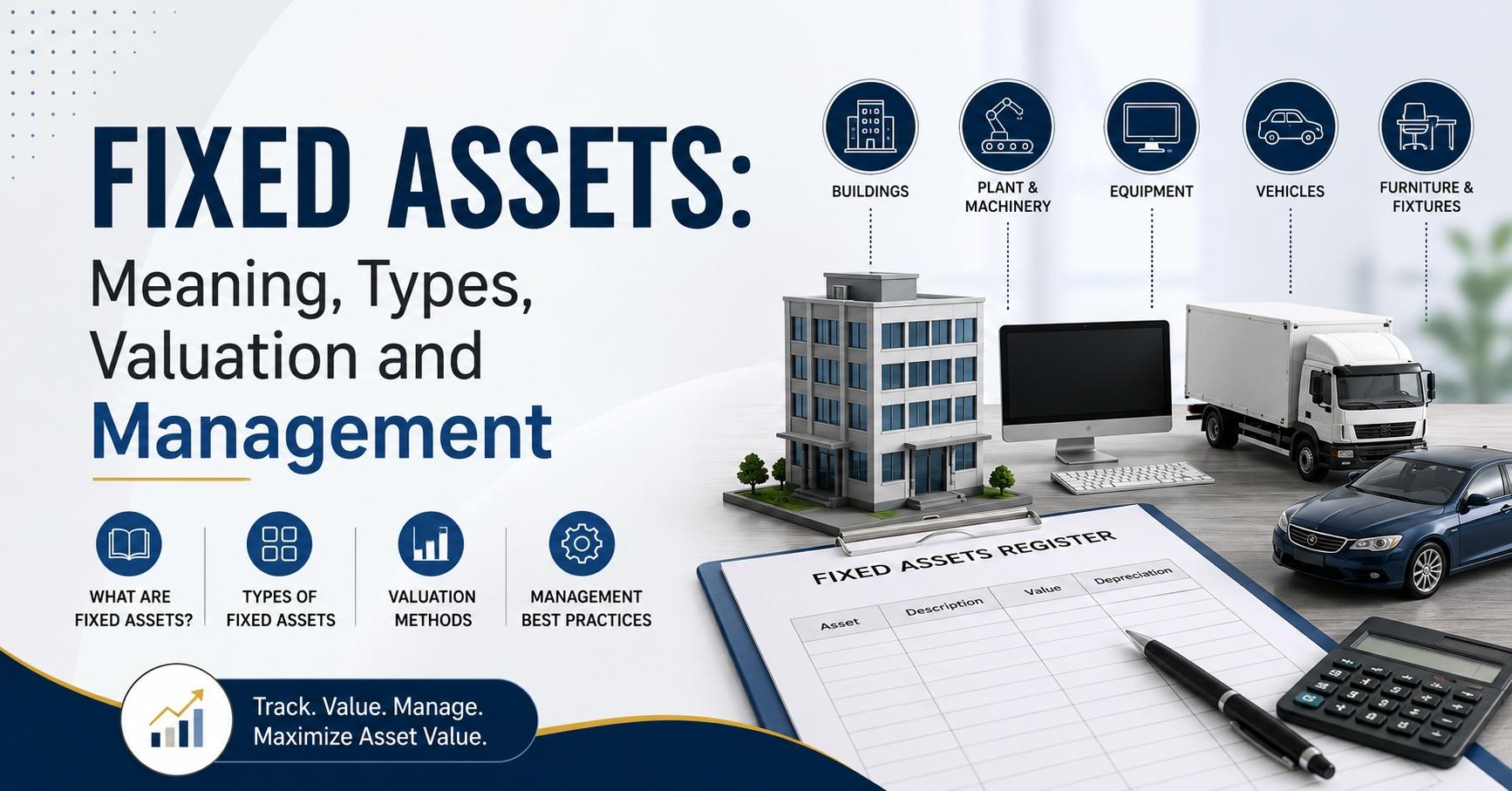
Fixed assets are long-term resources that a business owns and uses to support its daily operations. Unlike inventory or cash, these assets are not purchased for immediate resale. They help an organisation produce goods, deliver services, manage operations, and create long-term business value.
Examples of fixed assets include land, buildings, machinery, office equipment, vehicles, computers, furniture, and production tools. Since these assets are generally used for more than one accounting period, they need to be recorded, monitored, depreciated, and reviewed carefully. Proper fixed asset management helps businesses maintain reliable financial records and make informed operational decisions.
A fixed asset, also known as a non-current asset or capital asset, is a tangible or intangible resource that is expected to provide economic benefit for more than one year. A company purchases fixed assets to support its business activities rather than to sell them as part of normal operations.
For example, a manufacturing company may purchase machinery to produce goods, while a consulting firm may invest in computers, office furniture, and software. The nature of fixed assets varies according to the industry, but their accounting treatment and record-keeping requirements remain important across all sectors.
Fixed assets are usually reported on the balance sheet under non-current assets. Their value is adjusted over time through depreciation, amortisation, impairment, revaluation, disposal, or transfer, depending on the applicable accounting policies.
Fixed assets can be divided into different categories based on their nature and use:
Land: Land is generally considered a fixed asset and is usually not depreciated because it has an indefinite useful life.
Buildings: Offices, factories, warehouses, and commercial premises used for business operations are classified as fixed assets.
Plant and machinery: Manufacturing equipment, processing machines, generators, and specialised tools are important assets for production-based businesses.
Furniture and fixtures: Desks, chairs, storage units, lighting fixtures, and interior fittings are recorded as fixed assets when they meet the capitalisation criteria.
Vehicles: Cars, trucks, delivery vans, and other vehicles used for business purposes may be classified as fixed assets.
Computers and office equipment: Laptops, servers, printers, communication systems, and related equipment are commonly included in the fixed asset register.
Intangible assets: Software licences, patents, trademarks, copyrights, and certain development costs may also be treated as long-term assets.
Fixed asset valuation is the process of determining the value of an organisation’s long-term assets for accounting, reporting, taxation, insurance, transaction, or internal management purposes. The valuation may be based on historical cost, replacement cost, market value, fair value, depreciated value, or another suitable method depending on the purpose.
Accurate fixed asset valuation is important because incorrect asset values can affect financial statements, depreciation calculations, insurance coverage, taxation, borrowing capacity, and business decisions. For example, an asset recorded at an outdated or inaccurate value may result in unreliable financial reporting or inadequate insurance protection.
Businesses may require fixed asset valuation during mergers and acquisitions, restructuring, business sales, financial reporting, capital raising, impairment reviews, asset transfers, or dispute resolution. It can also support internal planning by helping management understand the current condition and value of key business resources.
Most fixed assets lose value over time due to usage, wear and tear, technological changes, or obsolescence. This reduction in value is recognised through depreciation. Depreciation allows a business to allocate the cost of an asset over its estimated useful life.
For instance, if a company purchases machinery for ₹10 lakh and expects to use it for ten years, the cost may be allocated across those years according to the selected depreciation method. Common methods include the straight-line method and the written-down value method.
Depreciation is not only an accounting requirement; it also helps businesses plan asset replacement, manage costs, and understand the financial impact of using long-term resources. The depreciation rate and method should be applied consistently in line with applicable accounting standards, laws, and company policies.
A fixed asset register is a detailed record of all assets owned by an organisation. It generally includes information such as asset description, identification number, purchase date, location, cost, depreciation, useful life, accumulated depreciation, and current carrying value.
Maintaining an updated asset register helps prevent asset loss, duplication, unrecorded disposals, and inaccurate depreciation. It is especially useful for organisations with multiple offices, factories, branches, warehouses, or project locations.
Physical verification is another essential part of asset management. During verification, the actual existence and condition of assets are checked against the fixed asset register. Any missing, damaged, unused, or obsolete assets can then be identified and appropriately reported.
Regular verification also strengthens internal controls and can support audit requirements. Businesses may seek guidance from a CA firm near me when they need help with asset documentation, verification procedures, accounting treatment, or compliance-related reviews.
A business should review its fixed assets periodically, particularly when there are significant changes in operations, expansion plans, asset transfers, technology upgrades, or financial reporting requirements. A review may also be necessary after fire, theft, flood, physical damage, business restructuring, or the closure of a location.
Fixed asset valuation may be useful when the recorded value does not reflect the current value or condition of the asset. Timely reviews help management identify idle assets, assets requiring repair, assets that should be disposed of, and assets that may need impairment assessment.
Fixed assets are essential to the long-term functioning of many businesses. Their proper classification, valuation, depreciation, tracking, and verification contribute to accurate financial reporting and stronger operational control. A well-maintained fixed asset register and periodic fixed asset valuation can help organisations understand the value of their resources, manage risks, and support informed decision-making.
Fixed assets are long-term business resources used in operations for more than one year, such as land, buildings, machinery, vehicles, computers, and furniture.
Yes, land is generally classified as a fixed asset. Unlike most other fixed assets, it is usually not depreciated because it does not normally have a limited useful life.
Fixed asset valuation helps determine an asset’s appropriate value for financial reporting, insurance, taxation, business transactions, impairment testing, and management planning.
Fixed assets are used for long-term business operations, while current assets, such as cash, inventory, and receivables, are expected to be used, sold, or converted into cash within one year.
A fixed asset register is a detailed record containing information about each asset, including its cost, location, identification number, depreciation, useful life, and current value.
No. Most fixed assets depreciate over time, but land is generally not depreciated. Intangible assets may be amortised based on their estimated useful life.
Businesses should conduct physical verification periodically. The frequency depends on the size of the organisation, number of assets, locations, internal policies, and audit requirements.