English
 Arabic
 French
 Spanish
 Portuguese
 Deutsch
 Turkish
 Dutch
Dutch
 Italiano
 Russian
 Romaian
 Portuguese (Brazil)
 Greek
Greek
Why the Fruit Cup Market is Becoming a Global Snacking Favorite
Other |
2026-06-09 11:20:17
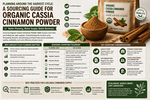
The first shipment of cinnamon powder can create a false sense of confidence. The sample matches the expected color and aroma, the documentation looks complete, and the price fits the purchasing target. Problems often surface when a second or third lot reaches production. Flavor intensity changes, powder flow shifts, or the material behaves differently during blending. For teams sourcing Organic Cassia Cinnamon Powder bulk, these variations are often more important than the initial quotation.
Source the Raw Material, Not Just the Finished Powder
Cassia cinnamon is derived from the dried bark of Cinnamomum species and is processed into a ground powder for commercial food and formulation applications. From a procurement perspective, botanical identity and origin should be established before comparing suppliers.
Regional differences can affect bark characteristics, aroma, color, volatile-oil composition, and processing behavior. Harvest conditions can introduce another layer of variation. Even when two suppliers use the same general cassia designation, their raw materials may not produce identical finished powders.
One practical sourcing question is therefore: What exactly is being standardized—the raw material, the processing method, or only the final specification?
The answer can reveal how much lot-to-lot variability a buyer should expect.
Formulation Behavior Depends on the Product
Organic Cassia Cinnamon Powder is used across bakery mixes, spice blends, cereals, confectionery, sauces, powdered beverages, dry nutrition products, and other food formulations. Each application creates different technical requirements.
Cinnamon powder contains insoluble components, so formulators should not expect it to behave like a fully soluble ingredient. In beverage applications, particle size, mixing conditions, suspension characteristics, and the surrounding formulation can influence distribution and sedimentation.
In dry systems, moisture and particle size become particularly important. Excess moisture can contribute to caking and poor flow, while a broad particle-size distribution can create segregation during transportation or blending.
This is where a laboratory sample can be misleading. A small batch may mix evenly under controlled conditions while a larger production batch requires different addition rates, mixing times, or equipment settings.
Build the Specification Around Risk
For Organic Cassia Cinnamon Powder bulk, the COA should be only one part of the supplier qualification process. Depending on the application, procurement teams may require botanical identification, moisture, particle-size distribution, microbiological limits, heavy metals, pesticide-residue testing, foreign-matter limits, and other agreed parameters.
Organic certification should also be verified independently. Buyers should confirm that the certificate applies to the ingredient and relevant processing facility and that traceability is maintained through the supply chain.
Coumarin deserves particular attention. Cassia cinnamon naturally contains coumarin, and its concentration can vary according to raw-material characteristics. If a finished product has a defined coumarin requirement, testing should be included in the purchasing specification rather than handled only after the material arrives.
What Often Changes Between Lots?
In real sourcing, variability is not always obvious from a standard analytical report.
One lot may have stronger aroma while another appears slightly darker. A powder can meet the same moisture limit but show different flow characteristics. Grinding conditions can also influence particle distribution and potentially affect volatile compounds.
Storage introduces another variable. Cinnamon powder should be protected from excessive moisture, heat, and unsuitable packaging conditions. Long transportation routes can add additional exposure before the material reaches the manufacturing site.
A useful control is to retain an approved sample from the qualification stage. Incoming lots can then be compared against that reference for color, aroma, particle behavior, and other application-relevant characteristics.
Procurement Should Measure Supply Reliability
Bulk purchasing also creates commercial risks. Before approval, sourcing teams should review minimum order quantities, standard lead times, packaging formats, production capacity, harvest-season considerations, and inventory requirements.
The lowest kilogram price may not be the lowest total cost if inconsistent powder causes additional testing, production adjustments, or rejected batches. At the same time, purchasing excessive inventory can create shelf-life and storage concerns.
For organic materials, certification continuity should be treated as a supply requirement. A supplier should be able to maintain the necessary documentation across future lots, not only during the initial qualification.
A Practical Sourcing Perspective
The strongest way to qualify Organic Cassia Cinnamon Powder is to connect raw-material specifications with actual manufacturing requirements. Procurement should evaluate origin, botanical identity, certification, analytical quality, physical characteristics, and supply continuity, while R&D should assess the powder under realistic formulation conditions.
For buyers purchasing Organic Cassia Cinnamon Powder bulk, consistency across multiple commercial lots is the real benchmark. A supplier may offer an attractive sample, but dependable sourcing means the material continues to meet expectations after transportation, storage, blending, and production.
That is ultimately what separates a successful initial purchase from a reliable long-term ingredient supply.