English
 Arabic
 French
 Spanish
 Portuguese
 Deutsch
 Turkish
 Dutch
Dutch
 Italiano
 Russian
 Romaian
 Portuguese (Brazil)
 Greek
Greek
Drone Inspection Services
Other |
2026-02-03 09:33:52
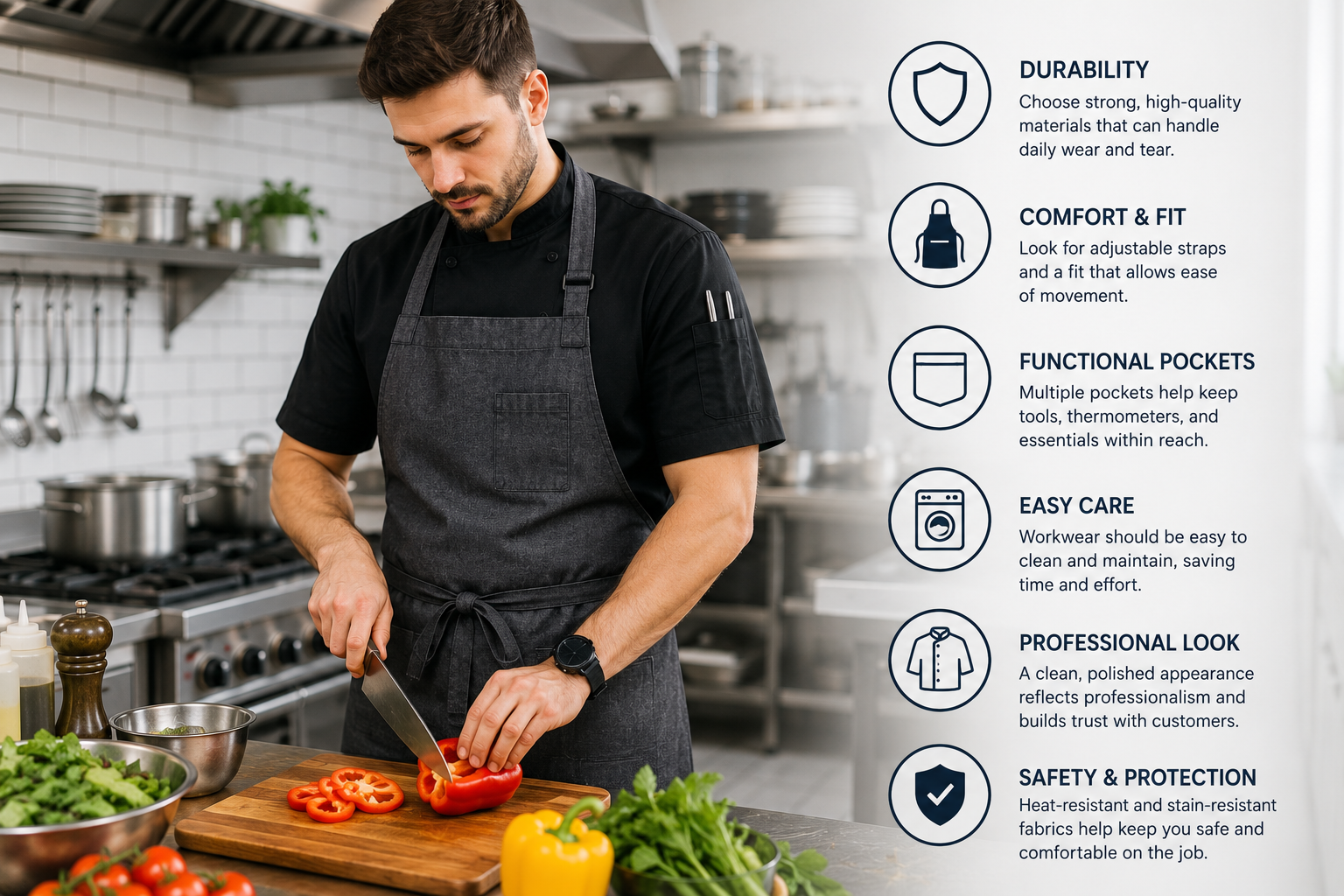
Professional kitchens require clothing that supports safety, cleanliness, comfort, and efficiency. Aprons are one of the simplest pieces of kitchen workwear, yet their design can significantly influence how comfortably someone works through food preparation, cooking, plating, cleaning, and service.
A good chef apron should provide practical coverage without restricting movement. The right style depends on the kitchen environment, the length of the shift, the tasks being performed, and whether pockets are needed for tools or other essentials.
Aprons create an additional layer between kitchen mess and the clothing underneath.
Professional cooking can involve oil, sauces, flour, water, food debris, and constant contact with work surfaces. An apron helps reduce the amount of direct exposure clothing receives during a shift.
It can also contribute to a cleaner and more consistent professional appearance.
Chefs performing active food preparation generally benefit from good front coverage.
A bib design protects both the torso and lower body. Longer designs can provide additional leg coverage, while shorter options may allow easier movement in fast-paced environments.
There is no ideal length for everyone. Kitchen size, role, movement, and personal preference all matter.
Professional aprons may be worn and washed far more often than aprons used at home.
Repeated laundering places stress on fabric, stitching, straps, pockets, and fasteners.
When evaluating an apron for professional use, consider whether the material feels appropriate for regular washing and repeated shifts.
Pockets can be useful, but only when they support the person's actual responsibilities.
Potential items include:
Too much stored in the pockets can make an apron heavy, so storage should remain practical.
Both have advantages.
White is traditionally associated with many professional kitchen environments and makes cleanliness easy to monitor.
Black and darker colors create a different visual style and may make some everyday stains less noticeable.
Restaurants may also select colors that complement uniforms, dining room design, or brand identity.
A poorly positioned neck strap can become uncomfortable after several hours.
Adjustable neck straps allow chefs to change the apron height, while cross-back designs distribute weight differently.
Waist ties should also be long enough to create a secure fit without feeling restrictive.
Uniformity can create a professional appearance, but different roles may have different practical needs.
A chef working near cooking equipment may benefit from greater coverage than a server or bartender.
Businesses can maintain visual consistency by using related colors or materials while selecting different apron styles for different positions.
There is no fixed replacement schedule.
Replacement usually becomes necessary when fabric becomes excessively worn, straps weaken, seams begin failing, permanent staining affects appearance, or the apron no longer meets workplace standards.
Rotating several aprons can reduce wear on any single garment.
Restaurants purchasing multiple aprons should consider consistency, cleaning, sizing flexibility, and future replacements.
It can be useful to test a sample before ordering larger quantities.
Suppliers such as Best Aprons provide various work-oriented styles, but businesses should compare features according to the specific demands of their kitchen.
Professional kitchen aprons should be judged primarily by function.
Good coverage, durable fabric, comfortable straps, practical pockets, easy cleaning, and suitable sizing contribute more to daily usefulness than decorative details.
What type of apron do professional chefs commonly use?
Bib aprons are common because they protect both the torso and lower body, although individual kitchens may choose other styles.
Should a chef's apron have pockets?
Pockets are helpful when chefs need quick access to small tools, pens, thermometers, or towels, but they are not essential for every role.
How many aprons should a professional chef have?
Several are useful so clean aprons are available between shifts while used garments are being washed.