English
 Arabic
 French
 Spanish
 Portuguese
 Deutsch
 Turkish
 Dutch
Dutch
 Italiano
 Russian
 Romaian
 Portuguese (Brazil)
 Greek
Greek
Future of Acrylic Laminate: Trends Reshaping Interior Design
Other |
2026-08-26 10:23:41
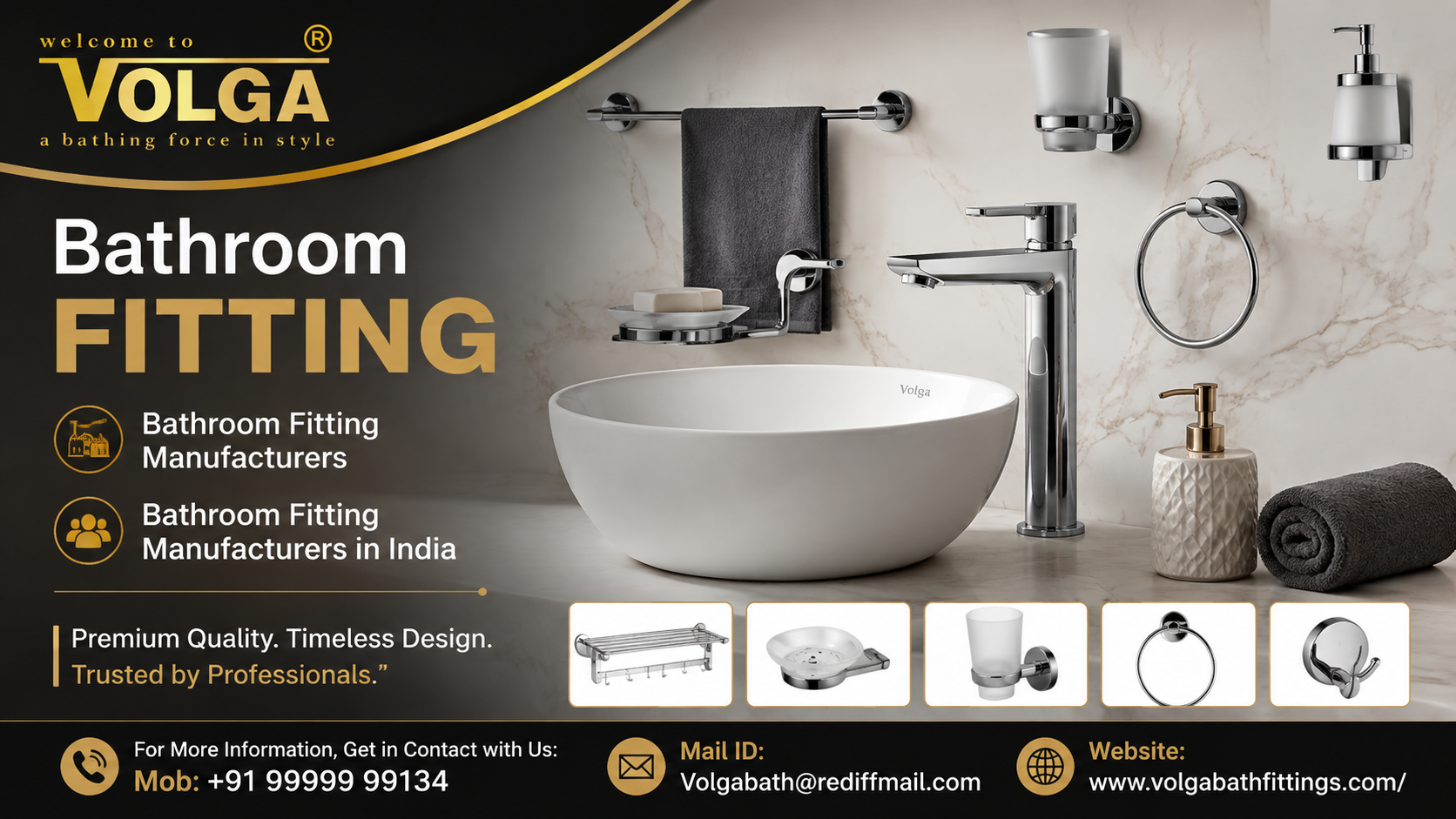
A container gets held at port because the finish on 40% of the units doesn't match the sample. Nobody warned the buyer this could happen. That's the reality most wholesalers discover only after they've already signed a purchase order with the wrong Bathroom Fitting Manufacturer. Sourcing decent Bathroom Fitting products in India isn't hard sourcing a supplier who can repeat the same quality on order number eleven is. Procurement managers who treat this like a one-time vetting exercise end up doing it again, angrier, six months later. This piece walks through what actually separates a dependable manufacturer from one that just photographs well on Indiamart.
Bathroom Fitting taps, showers, health faucets, angle valves, bib cocks get evaluated on finish and price. Almost nobody asks about the brass grade underneath the chrome.
Most Indian manufacturers use either CW617N brass or a leaded variant with inconsistent zinc-copper ratios. The cheaper option looks identical on day one. It starts pitting near the aerator within 8 to 14 months in hard-water regions. Ask for the brass certificate, not just the finish sample.
Ceramic disc cartridges rated for 500,000+ open-close cycles are standard for anything mid-range or above. Anything using a rubber washer system at this price point is a 1990s part wearing a modern shell. Buyers rarely test the cartridge rating because it isn't visible — that's exactly why it matters.
Chrome plating under 8-10 microns will show brass undertone within a year of daily use. This is the single overlooked detail that separates a fitting that photographs well from one that survives a hotel's housekeeping schedule.
Here's a working checklist. Each point below includes what a weak answer actually sounds like, because the good answer is easy to fake in a sales call.
Certification transparency. A bad answer: "We have all certifications, don't worry." A real supplier hands you the ISI mark number, BIS registration, and a certificate you can independently verify — not a PDF with no reference number.
Sample-to-bulk consistency. A bad answer: "Bulk will be same as sample, trust us." Ask instead for a third-party lab report comparing sample brass composition against a randomly pulled bulk unit. If they hesitate, that's your answer.
Defect and rejection policy.Bad answer: "We'll deal with defects on a case by case basis". That is not a policy. That's a negotiation you'll lose after the shipment has already landed and your customer is asking questions.
Production capacity honesty. A bad answer: "No problem, we can do any quantity, any timeline." Nobody can. A manufacturer who quotes the same lead time for 500 units and 50,000 units either has idle capacity they're hiding or they're about to disappoint someone — possibly you.
On-ground factory access. A bad answer: "Video call is enough, no need to visit." Which means: don't verify anything on-site. Any manufacturer worth a long-term contract should welcome a factory audit, announced or not.
Reliability isn't a soft word here. It's a line item.
Fewer rejected shipments mean fewer freight reversals and demurrage charges eating into a deal you already priced tight.
Consistent brass grade means fewer warranty claims landing on your desk 10 months after the sale, when the customer relationship is the thing actually at risk.
Verified certifications mean your own compliance paperwork doesn't collapse during an audit or a large institutional tender.
Stable lead times mean you can commit to your own downstream buyers without adding a padding buffer that makes your quote less competitive.
A single point of contact for defects means disputes get resolved in days, not in a WhatsApp thread that goes quiet for three weeks.
Batch traceability means when something does go wrong, you can isolate which lot caused it instead of pulling your entire inventory off shelves.
None of this is about getting a shinier tap. It's about not absorbing someone else's manufacturing risk on your own balance sheet.
We manufacture out of Gujarat, and that location decision matters more than most buyers think to ask about.
Being within reasonable trucking distance of Mundra and Nhava Sheva ports cuts inland transit time compared to manufacturers based further from the coast. For wholesalers exporting onward, that difference shows up directly in your shipping schedule commitments.
Gujarat carries decades of brass and metal fabrication infrastructure, which means raw material sourcing, electroplating units, and CNC machining subcontractors sit within the same industrial belt. A manufacturer without this ecosystem around them either does everything in-house at higher cost or ships components in from elsewhere — adding delay you won't see until it's already late.
For buyers sourcing within India, central-west positioning also means faster dispatch to Maharashtra, Rajasthan, and Madhya Pradesh markets three regions where Bathroom Fitting demand has grown fastest alongside real estate and hospitality construction.
We've been manufacturing Bathroom Fitting out of Gujarat since 2013. In our early years, we lost a mid-sized export order because our plating line couldn't hold consistent thickness across a full production batch we found out only when the buyer's inspector rejected 30% of the shipment on arrival. We rebuilt our QC process around that failure: every batch now gets electroplating thickness tested before it leaves the unit, not after a customer complains. That's not a marketing line. That's a process we changed because we got burned once and didn't want it happening again. We supply both branded fittings under our own name and private-label production for brand owners who want their own packaging and design specs. What we won't do is quote a delivery date we haven't actually checked against our current production queue.
If you're evaluating suppliers right now, send us your product spec sheet or reference sample photos along with your target quantity, and we'll respond with a firm quote within 48 working hours. Our minimum order quantity starts at 500 units per SKU for standard finishes, and lower for private-label runs under discussion. Reach out through volgabathfittings.com with your requirement, and we'll tell you plainly if your timeline or budget doesn't line up with what we can realistically deliver we'd rather lose the order upfront than lose your trust later.
Choosing a Bathroom Fitting Manufacturer In India comes down to what happens after the first sample approval, not before it. The suppliers worth a long-term contract are the ones who show you their certificates, their rejection numbers, and their actual production queue without flinching. Everyone else is selling you a photograph. The next order you place should be with someone who's already told you what could go wrong.
1. What is the standard brass grade used in quality bathroom fitting manufacturing?
CW617N brass is the industry benchmark for corrosion resistance and machinability. Some manufacturers substitute cheaper leaded variants with inconsistent zinc-copper ratios ask for the material certificate before you assume you're getting the standard grade.
2. How do I verify a bathroom fitting manufacturer's certifications in India?
Ask for the ISI mark number and BIS registration number directly, then cross-check them against the BIS public database rather than accepting a certificate PDF at face value. A supplier unwilling to share the reference number is a red flag, not an oversight.
3. What's a reasonable MOQ when sourcing from bathroom fitting manufacturers?
It varies by finish and complexity, but 500 units per SKU is a fair benchmark for standard production. Anyone quoting significantly lower for a complex custom finish is probably batching your order with someone else's, which affects your delivery date more than they'll admit.
4. How long should plating thickness testing take before a shipment ships?
A same-day thickness check per batch is realistic and something you should ask for as a standing requirement, not a one-time favor. If a manufacturer says this "isn't necessary," that's them telling you they don't do it routinely.
5. Can I request a factory audit before placing a bulk order?
Yes, and you should. Any Bathroom Fitting manufacturer confident in their process will accommodate a visit or a live video walkthrough. We'll admit factory audits do add a week or two to the sourcing timeline but it's a week that saves you from a much longer dispute later.
6. What's the typical lead time for bulk bathroom fitting orders from India?
For standard finishes, 4 to 6 weeks from confirmed order to dispatch is typical, depending on quantity and current production load. Be cautious of any manufacturer quoting the same 2-week timeline regardless of order size that consistency usually isn't real.
7. Do private-label bathroom fitting manufacturers in India support custom packaging?
Most established manufacturers do, though it usually raises the MOQ and adds 1 to 2 weeks to initial setup for die and packaging approval. We won't pretend custom packaging is a same-timeline add-on it isn't, and any supplier claiming otherwise hasn't actually run that process before.