English
 Arabic
 French
 Spanish
 Portuguese
 Deutsch
 Turkish
 Dutch
Dutch
 Italiano
 Russian
 Romaian
 Portuguese (Brazil)
 Greek
Greek
Marcatura Laser Metalli: Tecnologie Moderne per Incisioni Precise e Durature
Other |
2026-04-24 05:09:29
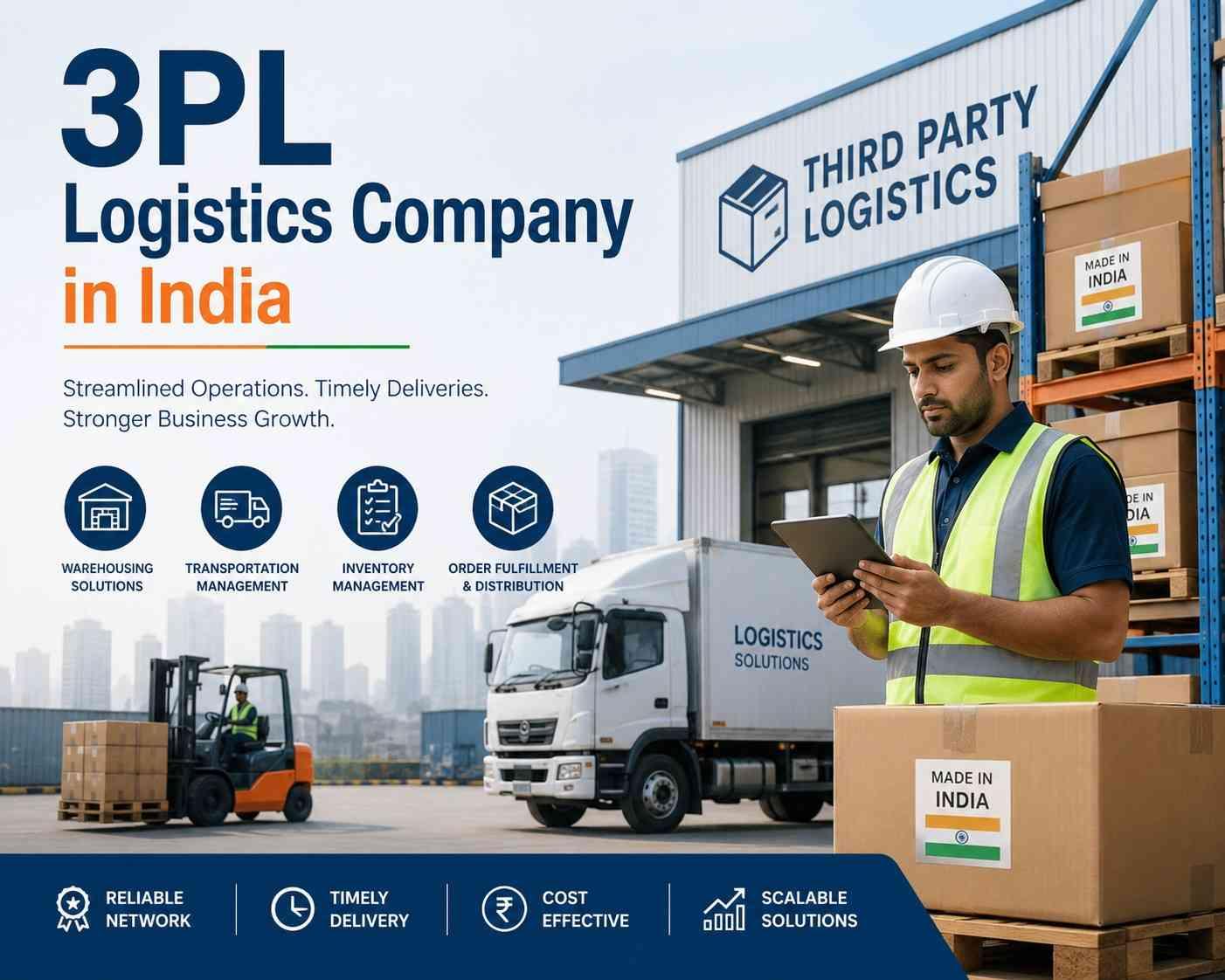
For many businesses, the search for a 3PL logistics company in India begins only after logistics starts becoming difficult to manage internally.
At first, handling orders may seem simple. A small team packs products, inventory sits in one location, and shipments are handed over to a courier or transport company. Then sales increase. Orders start coming from different states. Returns pile up. Stock counts stop matching what is actually sitting in the warehouse. A customer calls about a delayed shipment, while the operations team is still trying to locate the parcel.
That is usually the point where businesses realise they do not simply need another transporter. They need a logistics system.
A capable third party logistics service provider can take responsibility for several moving parts, including warehousing, inventory handling, transportation, order fulfilment and sometimes returns. However, choosing the right provider is not as straightforward as comparing freight rates.
In India, logistics requirements can change dramatically depending on what a company sells, where it delivers and how quickly its order volume grows. A D2C skincare brand shipping lightweight parcels faces very different problems from an industrial supplier moving palletised goods across states.
The idea of outsourcing logistics is not new. What has changed is the level of control businesses now expect from their logistics partners.
Earlier, many companies were comfortable treating warehousing and transportation as separate activities. One vendor stored the goods. Another moved them. A courier company handled smaller deliveries. The internal operations team spent considerable time coordinating between all of them.
That arrangement can still work for a stable business with predictable movement. It becomes harder when order patterns change every week.
Ecommerce and D2C businesses, for example, deal with fluctuating demand, customer delivery expectations and returns. Manufacturers may need regular movement between factories, distributors and warehouses. B2B businesses often require appointment-based deliveries, documentation and proof of delivery.
This is where end-to-end 3PL logistics services become useful.
The real value of a 3PL is not simply that someone else handles the physical work. The value comes from reducing the number of operational gaps between inventory storage and final delivery.
In reality, logistics problems often appear at those gaps.
A warehouse may say the order was dispatched. The transporter may say the shipment is in transit. The customer may say nothing arrived. When three different companies are involved, identifying responsibility can take longer than resolving the actual problem.
A more integrated logistics arrangement can reduce that confusion.
A 3PL logistics company in India can provide different combinations of services depending on its operating model. This is important because businesses often assume that every 3PL offers the same thing.
They do not.
Some providers are particularly strong in warehousing and fulfillment. Others focus heavily on transportation and distribution. Some specialise in ecommerce shipments, while others are better equipped for B2B freight or large-volume movement.
The basic role of a third party logistics provider is to manage logistics activities on behalf of another business.
That may include receiving inventory from a manufacturer, storing it, processing incoming orders, packing products, arranging transportation and handling returns.
For a growing business, this can remove the need to build every logistics capability internally.
But outsourcing does not mean forgetting about operations.
Honestly speaking, one of the most common mistakes businesses make is assuming that handing inventory to a 3PL means they no longer need to monitor logistics performance. A good provider still requires clear processes, agreed service levels and regular performance reviews.
The responsibility may be outsourced. The business impact is not.
Transportation usually gets the most attention because it is the most visible part of logistics. A delayed delivery creates an immediate customer complaint.
Inventory errors can be more damaging because they often remain unnoticed until they affect sales.
A company may believe it has 500 units available while only 420 are physically present. Another business may have excess stock sitting in one city while customers are waiting for the same product elsewhere.
This is why inventory management logistics services are becoming an important consideration when selecting a provider.
A logistics partner should be able to provide a clear process for receiving stock, recording inventory movement and updating available quantities after orders are fulfilled.
Technology helps, but software alone does not solve inventory problems.
The physical process still matters. How are damaged goods recorded? How are returned products checked? What happens when warehouse counts and system counts do not match?
These are not glamorous questions, but they often reveal more about a logistics provider than a sales presentation.
Businesses naturally compare quotes before choosing a logistics partner. There is nothing wrong with that.
The problem begins when the decision is based only on the lowest headline price.
Logistics costs are rarely limited to a single rate.
Warehousing may involve storage charges, handling charges, inbound processing or value-added services. Transportation costs can change based on weight, dimensions, distance, delivery location and service type.
A business selling lightweight products in compact packaging may find a particular pricing model suitable. Another company shipping large but relatively light products may be affected heavily by volumetric calculations.
Then there are returns.
For ecommerce businesses, the economics of reverse movement can change the actual cost of a logistics arrangement significantly. A provider offering a low forward-shipping rate may not necessarily offer the lowest overall cost once RTO and return handling are included.
This is why affordable 3PL logistics solutions should be evaluated based on total operational cost rather than a single number in a quotation.
A lower rate is useful only if service failures, stock discrepancies and additional charges do not quietly erase the savings.
There is no universal formula for choosing a logistics provider because businesses do not move goods in the same way.
A company delivering 50 orders per day across a few cities has different requirements from an online seller processing several thousand orders during a festive sale.
Similarly, a manufacturer sending large shipments to distributors does not necessarily need the same network designed for individual ecommerce deliveries.
Before comparing providers, a business should understand its own logistics pattern.
One useful evaluation should include:
The type, weight and dimensions of products being moved
Monthly order or shipment volume and expected growth
Delivery locations and actual pin-code requirements
B2B, B2C or mixed delivery requirements
Warehousing, fulfilment and inventory visibility needs
Return frequency and reverse logistics processes
Technology integration and reporting expectations
The important point is to evaluate actual business data rather than broad assumptions.
For example, a provider may advertise extensive coverage, but that does not automatically mean every destination performs equally well. Service quality can vary based on route density, local infrastructure and the operational strength of delivery networks.
This is where most businesses struggle. They evaluate coverage before checking performance on the locations that actually matter to them.
Technology has become a major part of 3PL logistics services in India, especially for businesses handling frequent orders.
However, a long list of technology features should not automatically influence the decision.
The practical question is simple: what problem does the technology solve?
Order integration can reduce manual data entry. Inventory visibility can help businesses avoid accepting orders for unavailable products. Shipment tracking can reduce the number of customer support queries.
For companies working with multiple transport providers, carrier allocation tools may help select an appropriate option based on destination or shipment type.
But there is another side to the story.
A dashboard can show that a shipment is delayed. It cannot, by itself, resolve the delay.
Good logistics technology should support operational teams rather than create another layer of complexity. Businesses should ask how exceptions are handled, who responds to failed deliveries and how quickly issues are escalated.
The best systems are often the ones that make operational problems easier to identify before they become customer problems.
Depending entirely on one provider can simplify vendor management, but it can also create risk.
Different logistics networks perform differently across locations. One provider may be strong for metro deliveries, while another may offer better options for particular regions or shipment categories.
During high-demand periods, capacity can also become a concern.
This is one reason some companies use multiple logistics providers or work with partners that can coordinate different transportation options.
The challenge, of course, is managing the complexity.
Different invoices, tracking systems, support processes and reporting formats can create additional work for an internal operations team. The purpose of using multiple providers should be to improve flexibility, not create confusion.
Businesses should have a clear reason for each additional partner.
More providers do not automatically mean better logistics.
Large logistics companies can offer established infrastructure, specialised systems and experience managing complex supply chains.
For enterprises with high volumes and structured requirements, that scale can be valuable.
Smaller or more flexible providers may be better suited to businesses that need a customised approach, specific transportation arrangements or closer operational coordination.
Neither model is automatically better.
The decision depends on the business.
Companies should pay attention to how the provider responds during the evaluation stage. Are they asking relevant questions about shipment patterns and inventory? Or are they simply presenting a standard service package?
That interaction can reveal quite a lot.
A logistics provider that does not understand your operational requirement during onboarding may struggle to understand it later when shipments are already moving.
Businesses looking for coordinated transportation and logistics support may also consider Onpoint Logistics, particularly when their requirement involves managing practical movement needs rather than fitting every shipment into a standardised model. The right fit should still be determined by the service scope, shipment profile and locations involved.
The next stage of logistics in India is likely to place more attention on visibility and flexibility.
Customers increasingly expect accurate delivery information rather than vague tracking updates. Businesses want to know where inventory is located and why a shipment has been delayed.
At the same time, logistics companies face pressure to control costs while serving a wider range of locations.
This creates an interesting challenge.
Businesses want faster deliveries, but speed alone can increase costs if inventory and transportation networks are poorly planned.
For many companies, improving logistics will involve better decisions about where stock is stored and how shipments are allocated rather than simply choosing the fastest available delivery service.
Technology will continue to support this shift, particularly in inventory planning, order processing and shipment visibility.
Still, the basic operational principles will remain important.
Inventory must be handled correctly. Shipments need realistic transit planning. Exceptions must be resolved by people who understand what went wrong.
Technology can improve the process. It cannot replace operational discipline.
Selecting a 3PL logistics company in India is really a business decision before it becomes a procurement decision.
The right provider depends on how your products move, where your customers are located, how much inventory you hold and what happens when things do not go according to plan.
A cheap quote may look attractive at the beginning, but total logistics cost can change once returns, handling, storage and service failures are considered. Similarly, a large provider may have an extensive network without necessarily being the right operational fit for every business.
The sensible approach is to test serviceability against real destinations, review pricing carefully and understand how the provider handles exceptions.
If your business needs end-to-end 3PL logistics services, start by mapping your current logistics problems instead of searching for a provider based only on brand size or price. That makes the evaluation process far more useful and helps identify the type of logistics partner that can support the way your business actually operates.
1. What is a 3PL logistics company in India?
Ans. A 3PL logistics company provides outsourced logistics support such as warehousing, inventory handling, order fulfilment, transportation and reverse logistics. The exact service combination depends on the provider and the requirements of the business.
2. How do I choose the right third party logistics service provider?
Ans. Start with your shipment profile, product type, delivery locations and order volume. Then compare providers based on serviceability, total pricing, inventory capabilities, technology, support and their ability to manage exceptions.
3. Are affordable 3PL logistics solutions suitable for small businesses?
Ans. They can be, provided the pricing model matches the business's shipment volume and requirements. Small businesses should check minimum commitments, storage charges, handling fees and return costs before selecting a provider.
4. What services are included in end-to-end 3PL logistics services?
Ans. Depending on the provider, services may include inventory receiving, warehousing, stock management, order processing, packaging, transportation, delivery tracking and reverse logistics.
5. Why is inventory management important when using a 3PL?
Ans. Accurate inventory information helps prevent overselling, stockouts and unnecessary storage costs. Businesses should understand how the provider records stock movement and handles discrepancies between physical and system inventory.