English
 Arabic
 French
 Spanish
 Portuguese
 Deutsch
 Turkish
 Dutch
Dutch
 Italiano
 Russian
 Romaian
 Portuguese (Brazil)
 Greek
Greek
Die Spring Market Regional Insights: North America, APAC, and Emerging Markets
Other |
2026-07-29 12:47:07
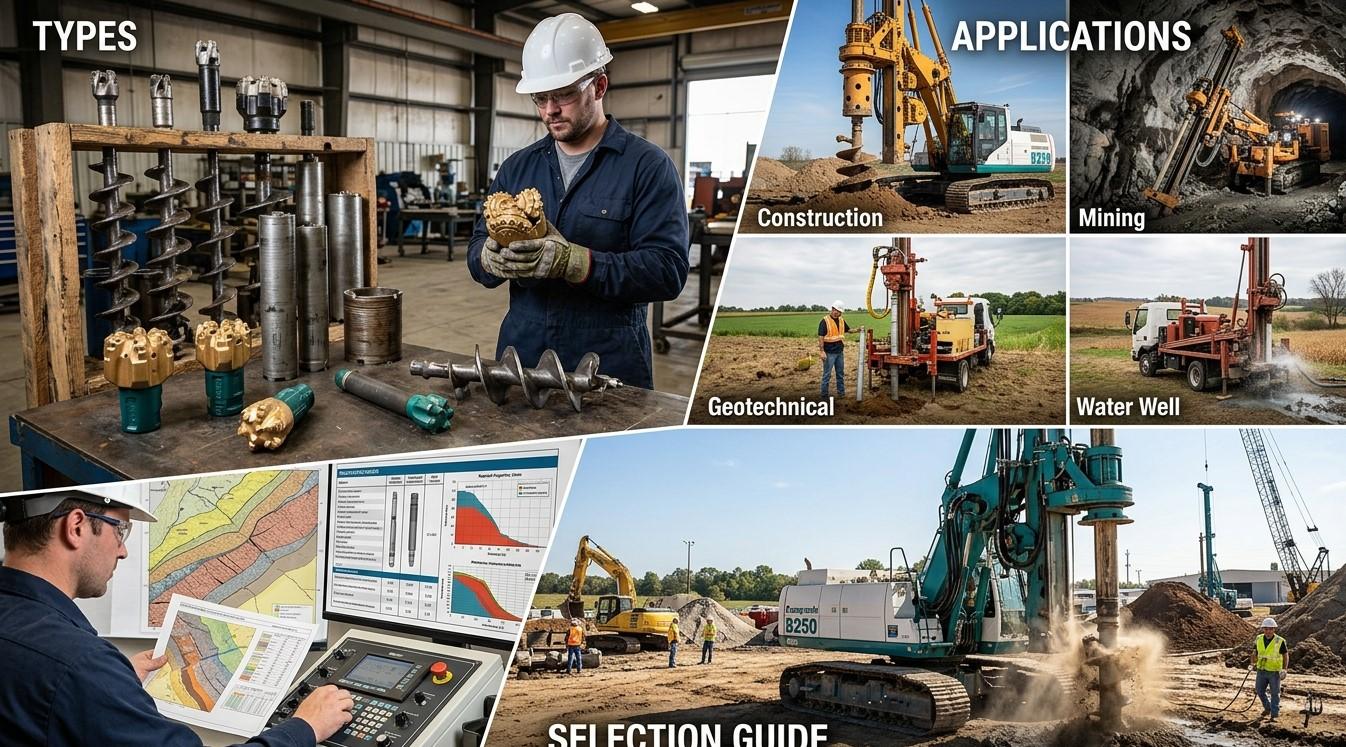
Drilling is one of the most common machining operations in industrial manufacturing, engineering, fabrication, construction, and maintenance. Creating an accurate hole may appear simple, but achieving the required diameter, depth, surface finish, and dimensional tolerance depends heavily on selecting the correct drilling tool. Using an unsuitable drill can result in poor hole quality, excessive tool wear, vibration, overheating, or even tool failure.
For businesses looking for an Industrial Tools Supplier in Dubai, understanding the different types of drilling tools and their applications can make tooling decisions easier. Khokhawala Trading LLC, an Industrial Tools Supplier in Dubai, provides industrial and engineering tools for machining, manufacturing, maintenance, and workshop requirements.
This guide explains the common types of drilling tools, their industrial applications, important selection factors, and maintenance practices that can help improve drilling performance.
Drilling tools are cutting tools designed to create holes in solid materials. They remove material through a rotating cutting action and are commonly used with drilling machines, milling machines, CNC machining centers, lathes, and other equipment.
Drilling tools are available in different materials, geometries, diameters, lengths, and configurations.
Common types include:
The appropriate drilling tool depends on the material being machined, required hole dimensions, machine capability, production volume, and desired finish.
Selecting the correct drilling tool is essential for producing consistent and accurate holes. A suitable tool can improve productivity and reduce unnecessary tool replacement.
Proper drill selection can help:
In high-volume manufacturing, even small improvements in drilling performance can have a significant effect on overall production efficiency.
Twist drills are among the most widely used drilling tools in engineering and manufacturing. They feature helical flutes designed to remove chips from the hole as the drill rotates.
Twist drills are available in various sizes and materials and can be used for a wide range of general-purpose applications.
Twist drills are commonly used for:
They can be used on materials such as steel, aluminum, brass, plastics, and other common engineering materials, provided the appropriate drill specification and cutting parameters are selected.
High-speed steel, commonly known as HSS, is a popular material for drilling tools because it provides a combination of hardness, toughness, and heat resistance.
HSS drills are commonly used for general-purpose machining and maintenance applications.
Some benefits include:
HSS drills can be a practical choice for workshops that require versatile drilling tools for a variety of routine operations.
Carbide cutting tools are widely used in modern machining, and carbide drills are particularly useful for applications requiring high wear resistance and consistent hole-making performance.
Carbide drills can be suitable for demanding CNC machining applications when the machine, workholding, coolant, and cutting parameters are appropriate.
Carbide drills can provide:
However, carbide is relatively brittle compared with HSS, so machine rigidity and proper setup are especially important.
Step drills feature multiple diameters along a single tool. They can create holes of different sizes without changing tools.
They are particularly useful for applications involving sheet materials and thin workpieces.
Step drills can be used for:
Their stepped design can simplify certain operations and reduce the need for multiple conventional drills.
Center drills are short, rigid drills designed to create a starting hole or center hole. They are commonly used before turning operations on a lathe.
Center drilling helps establish an accurate starting point and can reduce the tendency of a larger drill to wander.
Center drills are used for:
They are especially useful when accurate hole positioning is important.
Spot drills are designed to create a small, accurately positioned starting feature before drilling.
They are commonly used in CNC machining because they can help establish a precise location for the subsequent drill.
Spot drilling can help reduce:
This is particularly valuable when multiple holes must be produced according to a programmed CNC pattern.
Indexable drills use replaceable cutting inserts instead of a solid cutting edge.
They are often used in production machining where productivity and efficient material removal are important.
Advantages can include:
The correct insert grade and geometry should be selected according to the workpiece material and machining conditions.
Deep-hole drilling requires specialized tooling because chip evacuation, cooling, tool rigidity, and hole straightness become increasingly important as hole depth increases.
Deep-hole drilling tools are designed to address these challenges.
They may be used in:
Specialized deep-hole drilling methods may use dedicated coolant delivery and chip-removal systems.
Countersinking creates a conical recess at the opening of a hole. This allows compatible fasteners to sit flush or partially below the workpiece surface.
Countersinks are widely used in:
The countersink angle should match the fastener specification to achieve the desired result.
Counterboring creates a cylindrical recess around an existing hole. This is commonly used when a component requires a socket-head screw or other fastener to sit below or flush with the surface.
Counterbores are used in engineering components where controlled fastener seating is required.
Drilling tools are used in many industrial sectors.
Automotive components often require accurately positioned holes for fasteners, shafts, bearings, and assembly features.
Aerospace components can require highly controlled hole dimensions and locations. Tool selection and process control are particularly important for difficult-to-machine materials.
Engineering workshops use drills for producing holes in machine components, brackets, plates, shafts, and fabricated parts.
Drilling tools are commonly used for structural components, metal fabrication, installation, and maintenance.
Specialized drilling and machining applications can involve demanding materials and deep-hole requirements.
Maintenance technicians use drilling tools for repairing equipment, creating replacement holes, removing damaged fasteners, and modifying components.
Choosing the correct drill requires evaluating several factors.
Different materials require different drill geometries and tool materials.
For example:
Always consider the manufacturer's recommendations for the specific material.
The required hole diameter determines the appropriate drill size.
For precision holes, the process may involve multiple operations, such as:
Using the correct sequence can help achieve the required accuracy.
Hole depth affects tool selection and chip evacuation.
For deep holes, specialized drills may be necessary to maintain straightness and remove chips effectively.
Before selecting a drill, verify:
A drill must be compatible with the machine and tooling system.
General-purpose holes may not require the same tooling strategy as precision holes.
For tight-tolerance applications, manufacturers may need specialized drills, reamers, boring tools, or precision measuring instruments.
For occasional maintenance work, an HSS drill may be practical. For high-volume CNC production, carbide or indexable drilling tools may provide better productivity and consistency.
The best solution depends on the total cost of the operation rather than simply the purchase price of the tool.
Correct cutting parameters are essential for drilling performance.
Important parameters include:
Running a drill too fast can generate excessive heat and accelerate wear. Feeding too aggressively can increase cutting forces and potentially damage the tool.
Manufacturers should follow appropriate tooling recommendations and adjust parameters according to the machine, workpiece, drill design, and application.
Coolant can help manage heat, improve chip evacuation, and reduce friction during drilling.
The appropriate coolant strategy depends on:
Some drilling applications may use flood coolant, through-tool coolant, mist, or other suitable methods.
Poor coolant management can contribute to overheating, poor surface finish, and reduced tool life.
Possible causes include excessive feed, insufficient rigidity, poor chip evacuation, or incorrect tool selection.
Oversized holes may result from excessive runout, tool wear, poor machine setup, or unsuitable drilling conditions.
Poor surface quality can be associated with tool wear, incorrect cutting parameters, vibration, or inadequate coolant.
Drill wandering can occur when the workpiece is not properly prepared or when the drill lacks sufficient rigidity. Spot drilling can help improve hole positioning.
Tool wear can be caused by excessive cutting speed, unsuitable tool material, inadequate cooling, or machining conditions outside the tool's recommended range.
Proper maintenance can help extend the working life of drilling tools.
Workshops should:
Damaged drills should be removed from service rather than being used beyond their practical operating limits.
Producing a hole is only part of the machining process. Manufacturers also need to verify the resulting diameter, depth, position, and other dimensions.
Precision measuring tools such as calipers, micrometers, bore gauges, depth gauges, and dial indicators can be used to inspect machined components.
For businesses searching for a Precision Measuring Tools Supplier in Dubai, selecting appropriate inspection equipment is essential for maintaining manufacturing accuracy.
Regular measurement can also help identify tool wear before it causes a large number of rejected components.
Selecting the right supplier is an important part of successful tooling management. Businesses should look for suppliers that can provide suitable tools for their specific machining and industrial requirements.
Companies searching for an Industrial Tools Supplier UAE should consider:
Businesses looking for an Engineering Tools Supplier in Dubai may also benefit from suppliers offering a broader range of cutting, measuring, threading, hydraulic, and workshop tools.
Khokhawala Trading LLC provides industrial and engineering tooling solutions for manufacturing, machining, maintenance, and workshop applications. Customers can assess their workpiece materials, machines, production requirements, and accuracy needs before selecting the appropriate drilling tools.
Drilling tools are fundamental to modern manufacturing, machining, fabrication, maintenance, and engineering operations. From general-purpose HSS twist drills to carbide drills, step drills, center drills, spot drills, indexable drills, deep-hole tools, countersinks, and counterbores, each type is designed for a particular purpose.
Choosing the right drilling tool requires careful consideration of workpiece material, hole diameter, hole depth, required accuracy, machine compatibility, production volume, cutting parameters, and coolant requirements. Proper maintenance and regular inspection can further improve tool life and machining consistency.
For businesses searching for an Industrial Tools Supplier in Dubai, Industrial Tools Supplier UAE, Engineering Tools Supplier in Dubai, or Precision Measuring Tools Supplier in Dubai, Khokhawala Trading LLC offers industrial and engineering tooling solutions for a range of professional applications.
With the right drilling tools, appropriate machining parameters, and effective inspection procedures, workshops can produce accurate holes, reduce tool wear, minimize downtime, and improve overall manufacturing efficiency.