English
 Arabic
 French
 Spanish
 Portuguese
 Deutsch
 Turkish
 Dutch
Dutch
 Italiano
 Russian
 Romaian
 Portuguese (Brazil)
 Greek
Greek
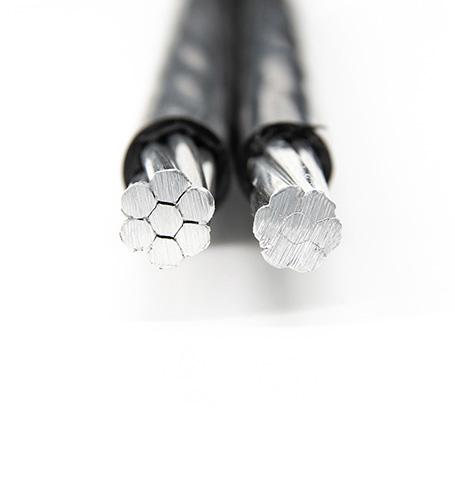
Safe IEC Standard Aerial Cable for Power Distribution
Other |
2026-05-12 05:45:57

Hydrogen-based steelmaking has emerged as the most promising pathway to decarbonize the European steel industry. By replacing carbon-intensive coke and coal with green hydrogen as the reducing agent in iron production, this technology has the potential to eliminate up to 95% of CO₂ emissions from the steelmaking process. As Europe accelerates its transition to a hydrogen economy, hydrogen-based steelmaking is becoming the cornerstone of the continent's industrial decarbonization strategy.
The Science of Hydrogen-Based Steelmaking
Traditional steelmaking relies on blast furnaces where coke (a carbon-rich material) reacts with iron ore to produce iron, releasing large quantities of CO₂. Hydrogen-based steelmaking, specifically Hydrogen Direct Reduced Iron (H2-DRI), replaces coke with hydrogen gas. The hydrogen reacts with iron ore to produce direct reduced iron (DRI) and water vapor instead of CO₂:
Fe₂O₃ + 3H₂ → 2Fe + 3H₂O
This fundamental chemical change eliminates the primary source of carbon emissions in the steelmaking process.
The H2-DRI Process
The H2-DRI process involves several key steps:
Iron Ore Preparation: High-grade iron ore pellets are prepared for reduction
Hydrogen Reduction: Green hydrogen is used to reduce iron ore to DRI in a shaft furnace
Electric Melting: The DRI is melted in an electric arc furnace (EAF)
Steel Refining: The molten steel is refined and cast into finished products
Major European H2-DRI Projects
HYBRIT Initiative (Sweden)
SSAB, LKAB, and Vattenfall's HYBRIT initiative is one of the world's most advanced hydrogen-based steelmaking projects. The project aims to produce fossil-free steel using hydrogen produced from fossil-free electricity.
SALCOS Project (Germany)
Salzgitter AG's SALCOS (Salzgitter Low CO₂ Steelmaking) project is transitioning the company's steel production to hydrogen-based routes.
tkH2Steel (Germany)
Thyssenkrupp's tkH2Steel project represents a major investment in hydrogen-based steelmaking, with the first DRI plant under construction.
Green Steel Production Capacity
Production methods for green steel include hydrogen-based reduction, electrolysis, biomass direct reduction, and recycling. Hydrogen-based direct reduction is emerging as the primary pathway for large-scale green steel production.
Advantages of Hydrogen-Based Steelmaking
| Advantage | Description |
|---|---|
| Near-Zero Emissions | Eliminates up to 95% of CO₂ emissions |
| High-Quality Steel | Produces steel comparable to conventional methods |
| Renewable Integration | Uses green hydrogen from renewable electricity |
| European Leadership | Positions Europe as a global leader in clean steel |
Challenges and Solutions
Hydrogen Availability
Challenge: Large-scale green hydrogen production is still developing
Solution: Major investments in electrolysis capacity and hydrogen infrastructure
Cost Competitiveness
Challenge: Green hydrogen is currently more expensive than fossil fuels
Solution: Carbon pricing, subsidies, and economies of scale are closing the cost gap
Infrastructure Requirements
Challenge: New infrastructure is needed for hydrogen transport and storage
Solution: European hydrogen backbone projects are addressing these needs
Regulatory Support
Rising carbon emission regulations and growing corporate sustainability initiatives are key drivers of market expansion. The EU's Carbon Border Adjustment Mechanism (CBAM) is particularly important, as it will impose carbon costs on imported steel, leveling the playing field for European green steel producers.
Future Outlook
Hydrogen-based steelmaking is expected to become the dominant green steel production method in Europe by 2035. With investments totaling tens of billions of euros, the continent is positioning itself as a global leader in this transformative technology.
Explore Hydrogen-Based Steelmaking Solutions