English
 Arabic
 French
 Spanish
 Portuguese
 Deutsch
 Turkish
 Dutch
Dutch
 Italiano
 Russian
 Romaian
 Portuguese (Brazil)
 Greek
Greek
Unicon 365: The Secret to Agile Business Processes in the Digital Entertainment Era
Games |
2025-10-03 18:30:33
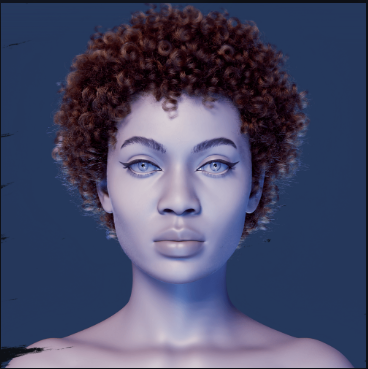
The demand for a high-quality 3D hair dataset for AI training is growing as artificial intelligence becomes more involved in character generation, digital humans, virtual production, and 3D content creation.
Hair is particularly challenging for AI systems because it contains complex geometry, thousands or millions of strands, different textures, curls, braids, volume patterns, and highly varied silhouettes.
A conventional photograph can show what hair looks like from one viewpoint. A 3D hair asset can provide significantly more structural information.
A properly prepared 3D hair dataset can potentially contain information about:
This makes 3D assets useful for research involving hair reconstruction, generation, editing, segmentation, and related AI applications.
A useful dataset should not contain dozens of variations of essentially the same hairstyle.
AI systems benefit from exposure to different structures and styles. A dataset can include straight hairstyles, curly hair, afros, braids, dreadlocks, buns, ponytails, fades, and other forms of hair design.
Yelzkizi's PixelHair collection includes multiple hairstyle categories, including braids, dreads, and afro styles, making diversity an important part of its 3D hair asset approach.
One of the most important considerations for AI training data is licensing.
Having access to a 3D model does not automatically mean that the model can be used to train an AI system. The rights granted to an artist or company need to specifically address the intended use.
Yelzkizi offers an AI Training License for PixelHair. Its published agreement describes permitted use for developing, testing, and improving AI systems, while distinguishing AI training from subsequent commercial exploitation of trained models.
A production-oriented dataset might include:
The better the dataset structure, the easier it becomes to use the assets systematically.
AI-generated 3D hair is an exciting research area because hair is one of the most difficult components of a digital human to reproduce convincingly.
Yelzkizi has also explored the relationship between PixelHair and AI-oriented hair research, including its discussion of the TANGLED framework and 3D hair training data.
For AI companies, researchers, and digital-human developers, the combination of diverse 3D hair assets and appropriate licensing can provide a stronger foundation for experimentation.