English
 Arabic
 French
 Spanish
 Portuguese
 Deutsch
 Turkish
 Dutch
Dutch
 Italiano
 Russian
 Romaian
 Portuguese (Brazil)
 Greek
Greek
North America Scented Candles Market Demand Rising with Aromatherapy Candle Popularity
Other |
2026-06-24 08:43:01
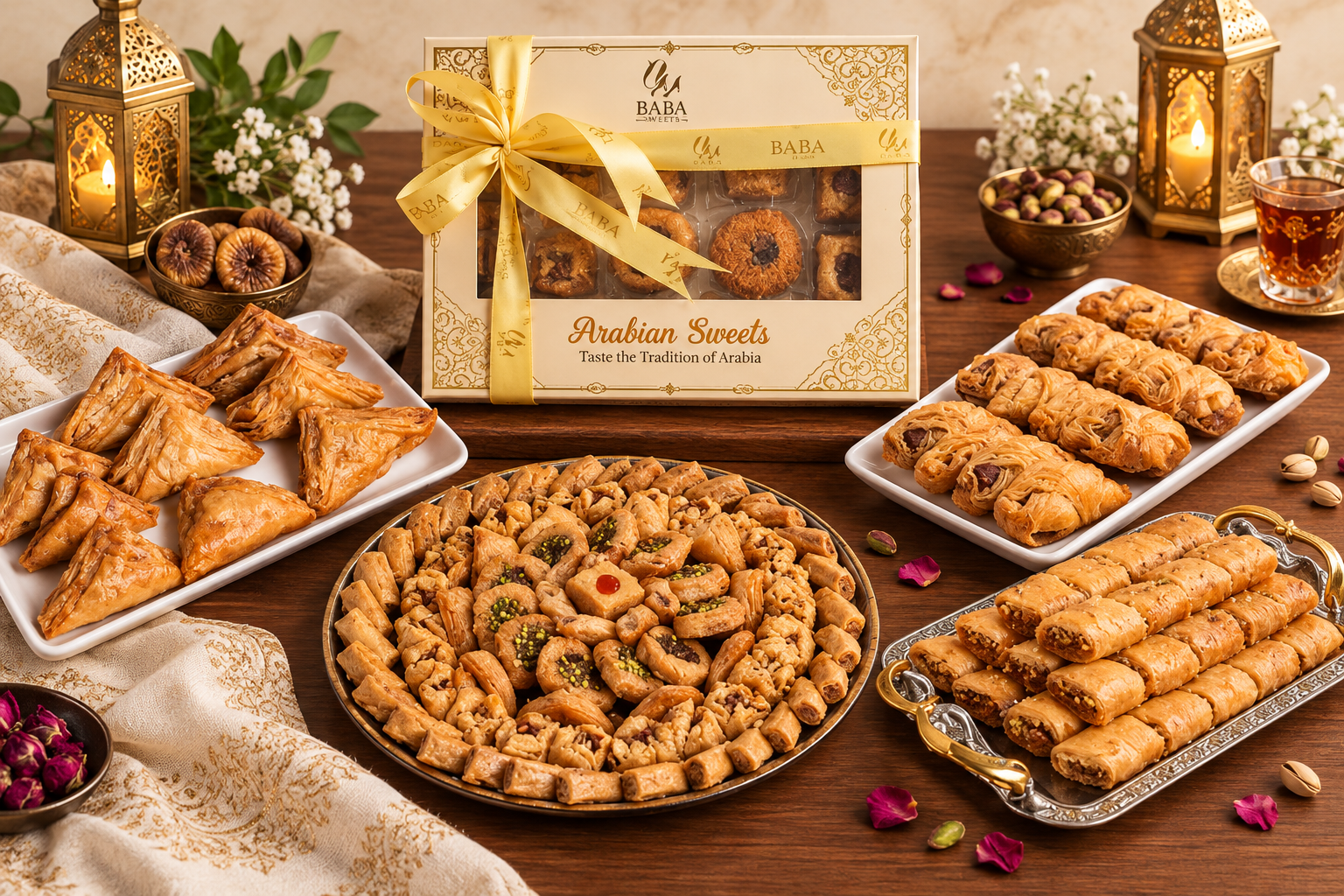
Table of Contents
What Are Arabic Sweets?
The Arabic Sweets You Will Most Often Find in Lahore
Baklava vs Basbousa vs Kunafa: A Quick Comparison
Why Arabic Sweets Have Caught On in Lahore
How to Store and Serve Arabic Sweets
Arabic Sweets Lahore at Baba Bakers
Read More
Final Thoughts
FAQs
Arabic Sweets Lahore is a search that has grown fast over the past few years, as trays of baklava, kunafa and basbousa show up more and more often at Eid spreads, wedding shagun boxes and casual gifting alongside traditional mithai. If you are trying to figure out what actually separates these desserts from each other, or just want to know what to order, this guide breaks it down.
Arabic sweets cover a category of Middle Eastern desserts built around a handful of core ingredients used in different combinations, mainly phyllo dough, semolina, ghee or butter, chopped nuts, and a sugar syrup often flavoured with rose or orange blossom water. Rather than relying on overwhelming sweetness, most of these desserts get their character from texture and aroma, whether that is the crisp shatter of layered phyllo or the soft, syrup soaked bite of a semolina cake.
Across the Middle East, these sweets are closely tied to hospitality and celebration. Large trays are prepared for weddings, religious holidays and family gatherings, and offering a piece to a guest is treated as a small gesture of welcome. That same instinct is a big part of why Arabic sweets have found such an easy fit in Lahore, where sharing something sweet at a gathering is already a deeply rooted habit.
A handful of Arabic sweets show up repeatedly on menus across the city, each with its own texture and technique.
Baklava is the most recognised of the group, made from dozens of thin phyllo sheets layered with finely chopped nuts, cut into pieces, and soaked in syrup once baked. Almond, pistachio and cashew versions are all common, along with rolled versions where the same layers are wrapped rather than stacked flat.
Basbousa takes a completely different approach, using a semolina batter rather than layered dough. It bakes into a soft, slightly dense cake that is then soaked in syrup, and it is often finished with a layer of cream, a drizzle of chocolate, or served plain depending on the shop.
Kunafa is built from thin, shredded pastry rather than sheets, layered over a filling of sweet cheese or cream and baked until the top turns golden and slightly crisp while the inside stays soft. Smaller specialty items, like nut studded rolls, star shaped pastries, and mixed sweet boxes, are usually offered alongside these three so customers can sample a variety in one order.
These three desserts get grouped together often enough that it helps to see the differences side by side.
|
Aspect |
Baklava |
Basbousa |
Kunafa |
|
Base |
Layered phyllo dough |
Semolina batter |
Shredded phyllo pastry |
|
Texture |
Crisp and flaky |
Soft and moist |
Crispy top, soft filling |
|
Key ingredient |
Chopped nuts |
Semolina and syrup |
Sweet cheese or cream filling |
|
Best served |
Room temperature |
Room temperature or chilled |
Warm |
Knowing this makes it a lot easier to pick something when you are ordering for a group with different preferences, since these three desserts rarely disappoint the same person twice in a row.
Part of the appeal comes down to variety. Traditional mithai leans heavily on milk based sweets and sugar syrup, while Arabic sweets bring in nuts, semolina and phyllo textures that feel different without being unfamiliar, since flavours like cardamom, rose water and pistachio already show up in South Asian desserts too.
Gifting culture plays a role as well. A boxed assortment of baklava and basbousa photographs well, travels better than syrup heavy mithai, and works for both an Eid tray and a more modern celebration like a birthday or housewarming, which has made it a practical addition to bakeries that already handle cakes and pastries.
Most Arabic sweets keep well for several days if stored properly, though the right method depends on the type. Baklava and other nut-filled, syrup soaked pastries store best at room temperature in an airtight container, since refrigeration can dull the texture and make the pastry soggy rather than crisp. Basbousa can be kept at room temperature for a couple of days or refrigerated for a longer shelf life, and tastes good either cold or brought back to room temperature before serving.
Kunafa is the exception, since it is meant to be eaten warm. If you have leftovers, a short reheat in the oven brings back the crisp top far better than a microwave, which tends to make the pastry go rubbery. Most of these sweets pair naturally with tea or Arabic coffee, which helps balance the richness of the syrup and nuts.
Baba Bakers has been operating since 1991 and now runs branches across Lahore, Gujranwala, Sialkot and Faisalabad, with its main Lahore branch located at Primark Mall, M.M. Alam Road, near Mini Market, Gulberg. The Arabic sweets section covers baklava in almond, pistachio and cashew varieties, basbousa in plain, cream and chocolate finishes, kunafa, and mixed sweet boxes for gifting, alongside the bakery's regular cakes and pastries.
Orders within Lahore can be placed through the Arabic Sweets shop, with a delivery charge of Rs 150 on orders below Rs 1,500 within a 4 km radius of the branch. For customers outside that radius, orders are shipped via TCS Courier and typically arrive within 2 to 4 working days depending on location. Orders can also be placed by calling 0304-1112112.
To see the current lineup and prices, the Arabic Sweets category on Baba Bakers' site has the full selection available for order.
Arabic sweets have earned their spot on Lahore's dessert tables through genuine variety, from the crisp layers of baklava to the soft, syrup soaked bite of basbousa and the warm, cheesy pull of kunafa. Knowing what separates these three makes it easier to order with confidence, whether it is for a quiet evening with tea or a full gifting box for Eid. For anyone in Lahore looking to order a tray without making it at home, Baba Bakers has built its Arabic sweets range around exactly that kind of everyday convenience.
What are Arabic sweets made of?
Most Arabic sweets are built from phyllo dough, semolina, ghee or butter, chopped nuts and a sugar syrup, often flavoured with rose or orange blossom water, though the exact base changes depending on the sweet.
What is the difference between baklava and kunafa?
Baklava is made from stacked, crisp phyllo layers filled with nuts, while kunafa uses shredded pastry over a cheese or cream filling and is meant to be served warm rather than at room temperature.
How long do Arabic sweets stay fresh?
Baklava and similar syrup soaked pastries generally stay fresh for about a week at room temperature in an airtight container, while basbousa can be refrigerated for a longer shelf life.
Should kunafa be eaten warm or cold?
Warm. Kunafa is meant to be served hot or freshly reheated, since the texture of the crisp top and soft filling changes noticeably once it cools completely.
Can I order Arabic sweets online in Lahore?
Yes. Baba Bakers offers Arabic sweets including baklava, basbousa and kunafa for online order in Lahore, with local delivery and TCS Courier shipping available for other cities.