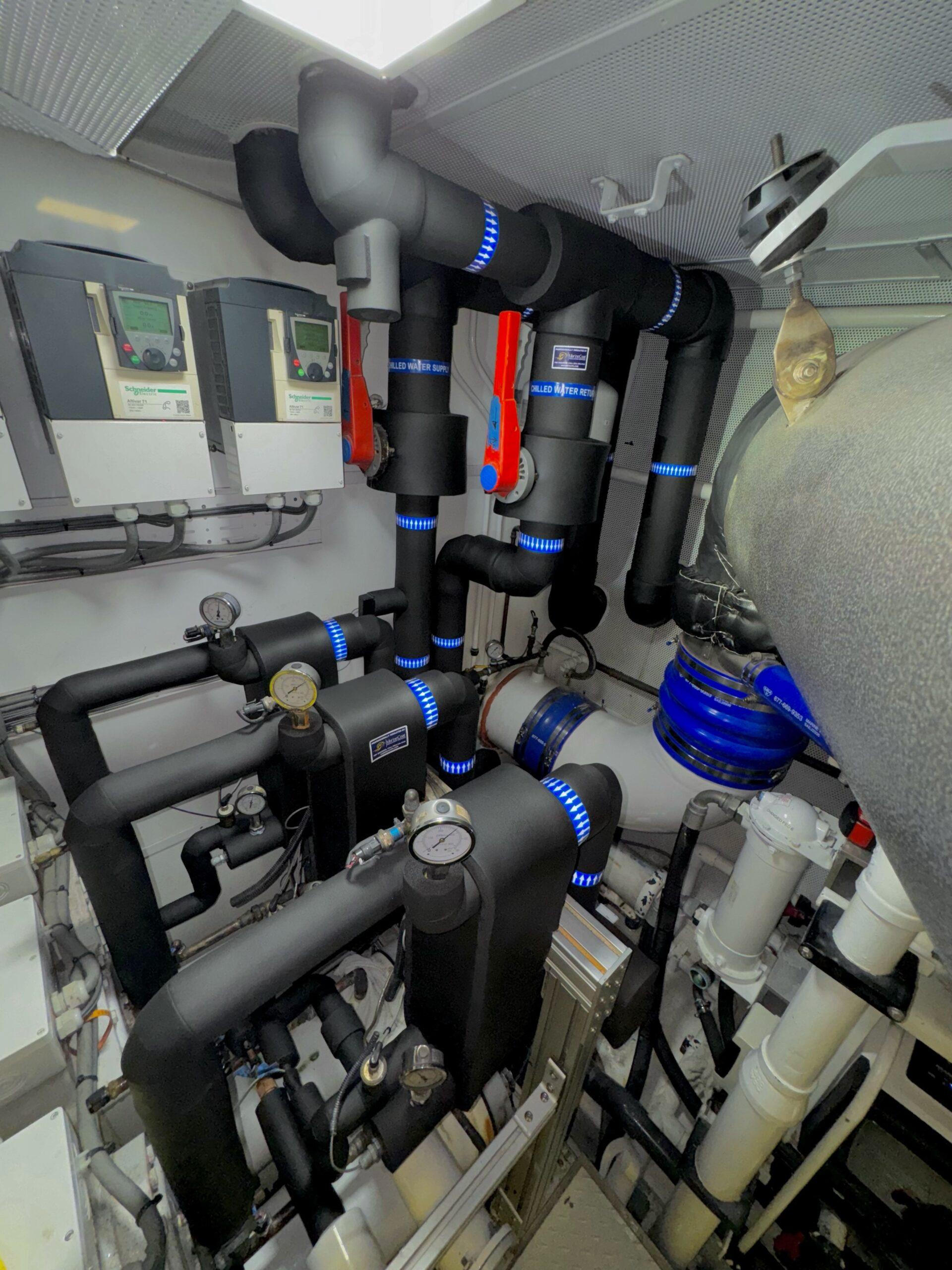
Thermal bridging is a hidden yet persistent challenge across modern vessels, especially those operating in extreme marine environments. It occurs when heat transfers through structural elements or unprotected pathways, bypassing insulation layers and creating energy loss, condensation, and material fatigue. Within the first evaluation phase, marine insulation companies play a vital role in identifying and eliminating these weak points. Strategic insulation planning, including marine pipe insulation, ensures temperature stability across shipboard systems. When addressed early, thermal bridging prevention contributes to safer operations, reduced maintenance demands, and prolonged equipment reliability.
Understanding Thermal Bridging in Marine Structures
Thermal bridging forms when conductive materials allow heat flow between warm and cold zones. On vessels, steel frames, pipe supports, bulkhead penetrations, and brackets frequently become unintended heat transfer routes.
Marine insulation companies analyze vessel layouts to locate these conductive paths. In piping systems, marine pipe insulation interruptions around clamps or flanges often create localized heat leakage. Over time, these small gaps escalate into corrosion risks and energy inefficiencies, making early intervention essential.
Impact of Thermal Bridging on Vessel Performance
Unchecked thermal bridging affects multiple operational aspects. Heat loss increases fuel consumption, while cold spots encourage condensation formation. Moisture accumulation accelerates corrosion beneath insulation and degrades surrounding structures.
Marine insulation companies mitigate these outcomes by designing continuous insulation envelopes. Marine pipe insulation systems that eliminate exposed metal surfaces help maintain uniform temperatures, reducing thermal stress on pipes and adjacent components.
Design Analysis and Early Detection Strategies
Preventing thermal bridging begins at the design stage. Detailed thermal modeling identifies areas where insulation continuity may be compromised.
Marine insulation companies collaborate with naval architects and engineers to address these vulnerabilities. They assess pipe routing, support spacing, and interface points. Marine pipe insulation layouts are refined to ensure consistent coverage even around complex geometries, minimizing thermal discontinuities before installation begins.
Material Selection for Thermal Isolation
Material choice directly influences thermal bridge prevention. High-conductivity materials without insulation separation become pathways for unwanted heat transfer.
Marine insulation companies specify low-conductivity insulation materials paired with thermal break solutions. In piping applications, marine pipe insulation often incorporates insulating spacers or pads at supports, preventing direct metal-to-metal contact. These measures significantly reduce conductive heat flow.
Pipe Supports and Penetration Treatment
Pipe supports are among the most common sources of thermal bridging. Traditional supports compress insulation, exposing pipe surfaces and creating heat transfer points.
Marine insulation companies address this by integrating load-bearing insulation blocks that maintain insulation continuity. For bulkhead and deck penetrations, marine pipe insulation systems extend through openings with sealed collars, preventing temperature leakage and moisture migration.
Condensation Control and Moisture Defense
Thermal bridging frequently results in surface temperatures dropping below dew point, leading to condensation. In marine environments, this moisture accelerates corrosion and insulation degradation.
Marine insulation companies design vapor-tight systems that block moisture ingress. Continuous marine pipe insulation with sealed joints maintains surface temperatures above condensation thresholds. This approach preserves pipe integrity and reduces inspection frequency.
Installation Precision and Craftsmanship
Even the best designs fail without precise installation. Gaps, compression, or misalignment compromise insulation effectiveness and create thermal bridges.
Marine insulation companies employ trained installers who understand the importance of continuity. Marine pipe insulation is fitted carefully around bends, valves, and supports, ensuring no exposed surfaces remain. Attention to detail during installation is a defining factor in long-term thermal performance.
Retrofitting Solutions for Existing Vessels
Older vessels often suffer from legacy insulation systems with inherent thermal bridges. Retrofitting requires careful assessment to correct deficiencies without disrupting operations.
Marine insulation companies conduct onboard surveys to identify heat loss zones. Customized marine pipe insulation solutions are then fabricated to address exposed supports and penetrations. These targeted upgrades significantly improve thermal efficiency without extensive structural modification.
Fire Safety and Thermal Bridging Prevention
Thermal bridging can compromise fire protection by allowing heat to bypass fire-rated insulation barriers. This increases the risk of rapid heat spread during emergencies.
Marine insulation companies ensure insulation systems maintain integrity under fire exposure. Fire-rated marine pipe insulation extends across supports and interfaces, limiting heat transfer and enhancing compartmentalization during critical situations.
Energy Efficiency and Operational Sustainability
Preventing thermal bridging directly supports energy conservation goals. Consistent insulation reduces heat loss, lowering fuel demand and emissions.
Marine insulation companies quantify efficiency improvements through thermal audits. Optimized marine pipe insulation contributes to stable system performance, supporting sustainability initiatives and regulatory compliance.
Long-Term Inspection and Performance Monitoring
Thermal bridging prevention is an ongoing process. Insulation systems must allow inspection to detect damage or displacement.
Marine insulation companies design access-friendly solutions that support monitoring without compromising coverage. Marine pipe insulation systems incorporating removable sections maintain continuity while enabling regular assessment, ensuring long-term effectiveness.
Final Perspective on Thermal Bridging Prevention
Thermal bridging poses significant risks to vessel efficiency, safety, and structural integrity. Marine insulation companies address these challenges through informed design, precise installation, and targeted upgrades. When marine pipe insulation is applied with continuity and attention to detail, it eliminates hidden heat transfer paths that undermine performance. Ultimately, preventing thermal bridging is not a single action but a comprehensive strategy that safeguards vessels throughout their operational lifespan.
 English
 Arabic
 French
 Spanish
 Portuguese
 Deutsch
 Turkish
 Dutch
Dutch
 Italiano
 Russian
 Romaian
 Portuguese (Brazil)
 Greek
Greek