English
 Arabic
 French
 Spanish
 Portuguese
 Deutsch
 Turkish
 Dutch
Dutch
 Italiano
 Russian
 Romaian
 Portuguese (Brazil)
 Greek
Greek
Excellence in Gaming and Digital Entertainment
Games |
2026-07-18 21:44:39
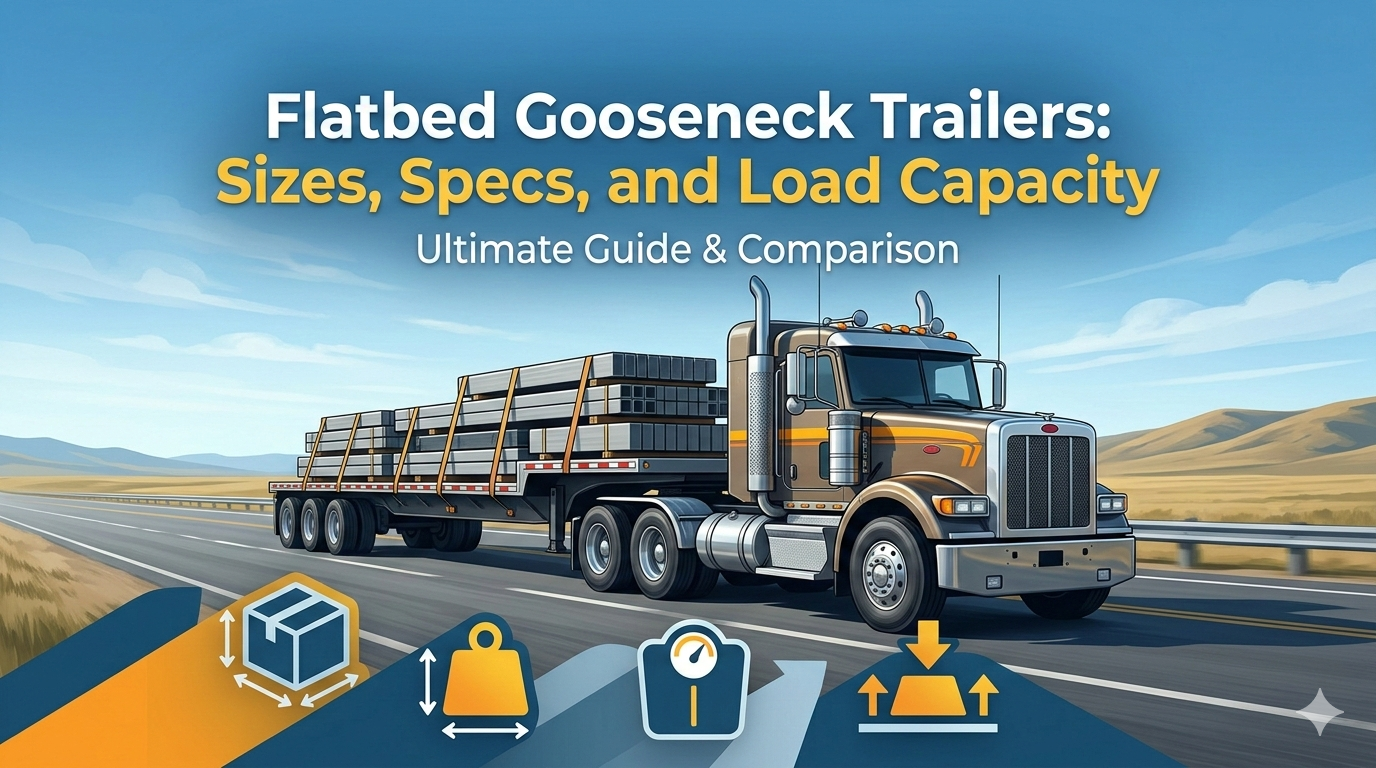
The first time I stood next to one of those long steel rigs in a dealer’s yard, I honestly underestimated it. It didn’t look flashy. Just metal, wood deck, thick tires. But once I started asking about flatbed gooseneck trailers, right there mid-conversation with the sales guy kicking gravel around his boots, I realized these things are kind of the workhorses nobody brags about but everyone depends on.
If you haul heavy equipment, tractors, skid steers, lumber, hay bales, or even construction materials, you’ve probably searched “gooseneck trailer load capacity” at least once at 11 PM.
I have.
And the specs can feel confusing at first. GVWR, axle ratings, deck length, tongue weight. It’s a lot. So let’s walk through it without sounding like a product manual.
Quick refresher. A gooseneck trailer connects to a hitch ball mounted in the bed of a pickup truck. Not on the rear bumper. In the bed.
That changes everything.
Because the weight sits over the truck’s rear axle, the towing stability improves. Less sway. Better balance. It just feels more planted on the road, especially with heavy loads.
If you’ve ever pulled a bumper pull trailer and felt that subtle fishtail on the highway… yeah. A gooseneck doesn’t do that as much.
That’s why flatbed gooseneck trailers are common for heavy-duty hauling. Construction crews, farmers, hotshot trucking businesses — they lean toward this setup for a reason.
Now, sizing. This is where people overthink it.
Most flatbed gooseneck trailer sizes fall between:
20 feet
24 feet
30 feet
35 to 40 feet
The 24-foot and 30-foot models are probably the most searched online. They hit that sweet spot between maneuverability and load space.
A 20-foot trailer works fine for compact equipment or smaller loads. Easy to handle. Less intimidating in tight spaces.
But once you move into hauling multiple pieces of equipment or long steel beams, a 30-foot or 35-foot flatbed starts making more sense.
And yes, turning radius matters. Longer trailers track differently around corners. You feel it. Parking at job sites becomes… interesting.
Standard deck width is usually 102 inches. That’s the legal max width in most U.S. states without special permits.
Deck material varies. Pressure-treated wood decks are common. Steel decks exist too, though they’re heavier and can get slick when wet. I’ve stepped on a steel deck in light rain once — not my proudest moment.
Some flatbed gooseneck trailers come with dovetail ends and flip-over ramps. If you’re loading tractors or skid steers, that dovetail angle makes life easier. Less strain on equipment.
Small details matter here. They really do.
Okay. This part’s important.
GVWR stands for Gross Vehicle Weight Rating. It’s the maximum total weight the trailer can handle, including the trailer itself plus cargo.
Common GVWR ratings for flatbed gooseneck trailers include:
14,000 lbs
20,000 lbs
24,000 lbs
30,000 lbs
If you’re hauling heavier construction equipment, you’re probably looking at a 20K or 24K gooseneck trailer.
Here’s where people slip up: load capacity is not the same as GVWR.
If your trailer weighs 7,000 lbs empty and has a 24,000 lb GVWR, your actual payload capacity is 17,000 lbs. You subtract trailer weight from total rating.
Sounds obvious. But I’ve seen folks overload without realizing it.
And overloading isn’t just a ticket risk. It stresses axles, brakes, tires — everything.
Most heavy-duty gooseneck trailers come with dual axles or tandem axles. Common setups include:
Two 7,000 lb axles (14K total)
Two 10,000 lb axles (20K total)
Three 7,000 lb axles (21K total)
Triple axle setups add more stability and distribute weight better, though they increase tire wear slightly during tight turns.
Suspension systems vary too. Leaf spring suspension is standard. Some higher-end flatbed gooseneck trailers offer torsion axles or even air ride suspension.
Air ride feels smoother, especially for sensitive equipment. But it adds cost and maintenance complexity. Some people love it. Some stick with leaf springs because they’re simple and predictable.
There’s something comforting about simple.
This is where reality hits.
You need the right truck.
A 30-foot gooseneck trailer with a 24K GVWR demands a heavy-duty pickup — usually a 3/4-ton or 1-ton truck at minimum. Many owners use dual rear wheel (dually) trucks for better weight handling.
Check your truck’s towing capacity and payload rating. Not just trailer specs.
I’ve seen people buy the trailer first, then realize their truck can’t legally or safely pull it.
That’s an expensive lesson.
Electric brakes are standard on most gooseneck trailers. Larger models may include electric-over-hydraulic brake systems for stronger stopping power.
And if you’re hauling serious weight, brake performance matters more than horsepower.
Breakaway systems are required too. If the trailer detaches (rare, but still), it activates its own brakes.
Tie-down points, stake pockets, rub rails — these aren’t just accessories. They secure your load. And a poorly secured load is a nightmare waiting to happen.
You don’t want to imagine steel shifting at 60 mph.
Flatbed gooseneck trailers are popular in hotshot trucking. That niche of independent haulers delivering time-sensitive loads across states.
Usually paired with a heavy-duty pickup instead of a semi.
If you’re considering that business model, trailer size becomes even more important. Many hotshot drivers prefer 30 to 40-foot flatbeds with higher GVWR to handle varied freight.
But commercial use means DOT regulations, inspections, weight compliance. It’s not just hooking up and driving.
There’s paperwork. Always paperwork.
So how do you pick?
Start with what you actually haul — not what you might haul someday.
If your heaviest equipment weighs 12,000 lbs, a 14K GVWR trailer might technically work. But running close to the limit constantly isn’t ideal. A little buffer helps.
Think about storage space too. A 40-foot flatbed gooseneck trailer is great until you try parking it at home.
Fuel economy changes with weight and wind resistance. Longer trailers catch crosswinds more noticeably.
Small things you only notice after buying.
Flatbed gooseneck trailers aren’t glamorous. They’re tools. Big, steel, practical tools.
The right size, axle setup, and load capacity depend entirely on your hauling needs, your truck, and honestly… your tolerance for maneuvering something long in tight spaces.
Some folks go bigger “just in case.” Others prefer compact and manageable.
There’s no dramatic ending here. Just this: get clear on your weight numbers, check your truck specs twice, and don’t rush the purchase because the paint looks nice in the sun.
Steel fades. Capacity doesn’t.